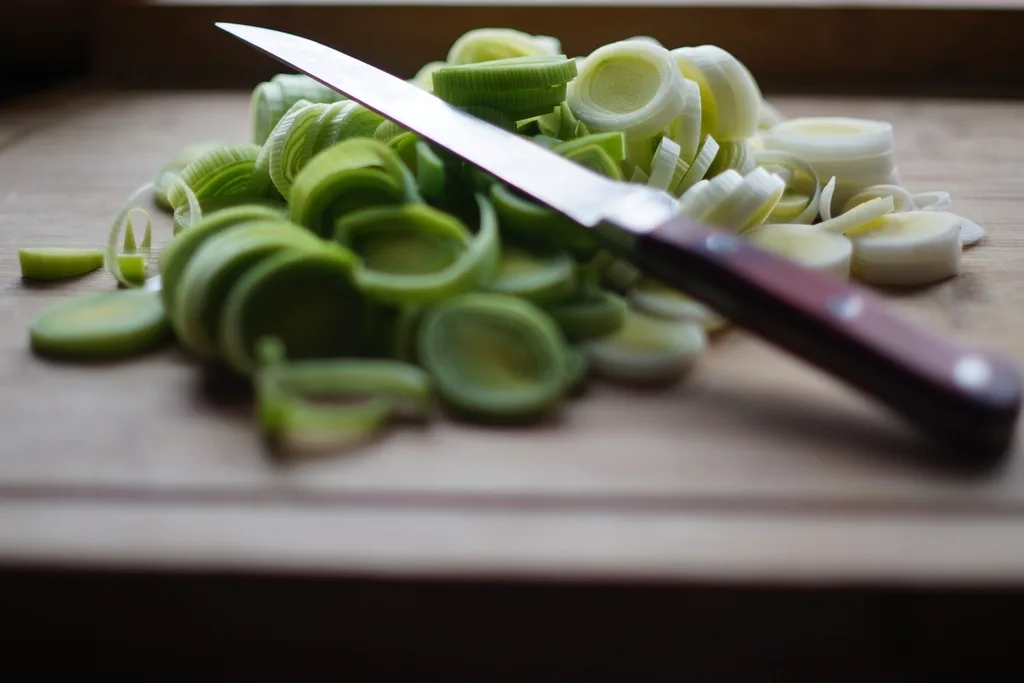
"Will it ruin my knives?" is the first question almost everyone asks before switching to titanium. It makes sense. A metal board sounds like the opposite of what a sharp edge needs.
The good news is that the real answer is much more reassuring than the worry. In this guide we look at the hardness numbers, how titanium compares with every other board material, what actually dulls a knife, and the simple habits that keep your edge sharp for months.
Do titanium cutting boards dull knives?
Every cutting board dulls a knife a little. That includes wood, bamboo and plastic. A knife edge is a strip of steel thinner than a hair, and each time it hits any surface, it bends or wears very slightly.
The question that matters is how fast a board does that compared with the alternatives. Here, titanium does well, for one simple reason: it is softer than your knife.
When the board is softer than the blade, the edge isn't chipped or crushed on impact. It wears slowly and evenly, which is exactly the kind of wear a honing rod fixes in seconds.
That is very different from glass, marble or granite boards. Those are hard, slick surfaces that roll an edge over after just a few cuts, and that is where the "metal and stone boards ruin knives" reputation comes from.
How hard is titanium compared with a kitchen knife?
Knife makers measure steel hardness on the Rockwell C scale (HRC). Most good kitchen knives sit between about 55 and 62 HRC. German-style knives are usually at the lower end, Japanese knives at the higher end.
The titanium used for cutting boards is much softer than that hardened steel. That's the key point: the knife is the harder of the two, so the board gives way to the blade rather than grinding it down.
Compare that with a glass board. Glass is a hard, brittle material with zero give. Every cut slams the delicate edge into a surface that won't yield, and the edge bends or chips instead.
| Board material | Harder or softer than your knife? | Effect on the edge |
|---|---|---|
| End-grain wood | Much softer | Very gentle |
| Plastic | Much softer | Gentle, but the board itself scores and sheds microplastics |
| Titanium | Softer | Gentle, slow even wear that honing fixes |
| Stainless steel | Softer | Similar to titanium, but heavier and slicker |
| Glass, marble, granite | Hard and unforgiving | Rolls and chips edges fast |
So titanium sits in the "gentle" group with wood and plastic, not in the knife-killer group with glass and stone. And unlike plastic, it doesn't leave you with a scored board full of grooves and plastic particles.
What actually dulls a knife?
It helps to know that the board is only one part of the story. Most dull knives in home kitchens come from habits, not boards.
- Scraping food with the edge. Dragging the sharp side sideways across the board to move chopped onions is the fastest way to flatten an edge on any surface.
- Chopping straight down hard. Hammering the blade into the board puts a lot of force on a tiny area of steel.
- Never honing. An edge that has bent slightly to one side feels dull even though the metal is still there. A honing rod pushes it back straight.
- The dishwasher. Knocking against other utensils and harsh detergent are hard on knives (the board can go in the dishwasher; the knife shouldn't).
- Storing loose in a drawer. Blades banging into other tools chip and dull quickly.
Fix these five habits and your knives will stay sharp longer on any board, titanium included.
How do you keep knives sharp on a titanium board?
This is the easy part. Four habits are all you need.
1. Slice, don't hammer
Use a rocking motion with a chef's knife, or a forward-and-down push or pull. Let the blade glide through the food rather than slamming into the board.
2. Use the spine to move food
Flip the knife over and sweep chopped ingredients with the dull back of the blade, or use a bench scraper. This one habit can double the time between sharpenings.
3. Hone every week or two
A few light strokes on each side with a honing rod realigns the edge. It takes about 20 seconds and keeps that "just sharpened" feel.
4. Sharpen a couple of times a year
Honing straightens; sharpening removes a tiny bit of metal to create a fresh edge. For most home cooks, sharpening two or three times a year is plenty.
Is the Vanotium board knife-friendly?
Vanotium, the titanium board we recommend, describes its surface as knife-friendly, saying that "with proper maintenance" it protects blades from dulling. That lines up with everything above: titanium is softer than knife steel, and the simple care routine keeps edges in great shape.
Vanotium also checks the other boxes that matter for everyday cooking. The surface is non-porous, odor-resistant and dishwasher-safe, and it adds no microplastics to your food. You can read the full breakdown, prices and guarantee in our Vanotium review, including the knife section.
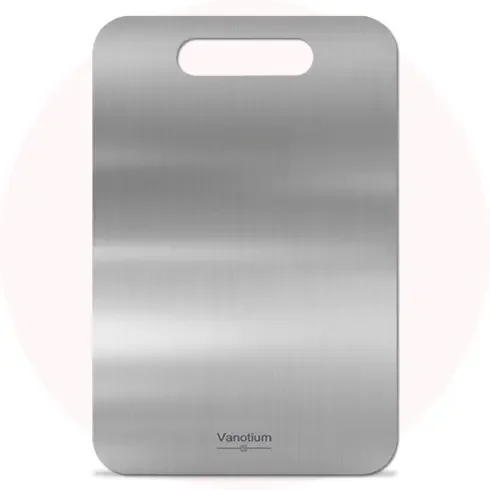
Our pick: the Vanotium titanium cutting board
Non-porous titanium, no microplastics, dishwasher-safe and backed by a 30-day money-back guarantee. Multi-board deals bring it down to $42.77 per board.
Check today's Vanotium price →Ships in 5–7 days with tracking · 30-day guarantee
Is titanium worse for knives than plastic?
Plastic is softer, so a plastic board is a little gentler on the edge. But that softness has a cost: the knife cuts into the plastic itself.
That is how plastic boards end up covered in grooves, and why they shed particles into food. Researchers at North Dakota State University estimated 1 to 15 microplastic particles per cut from common plastic boards, adding up to as much as 50 grams a year per person (Yadav et al., 2023).
The USDA also advises replacing boards once they develop hard-to-clean grooves, which means plastic boards need replacing regularly.
With titanium, the trade is simple: a tiny bit more honing in exchange for no plastic in your food, no grooves for juices to settle into, and a board that lasts for years.
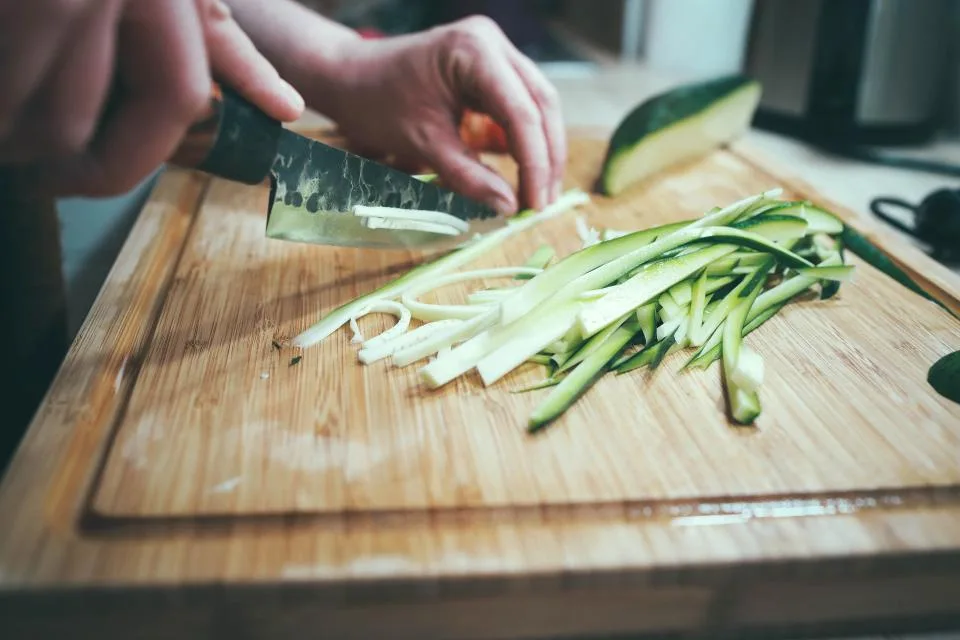
Is titanium worse for knives than wood?
End-grain wood is the gentlest board for a knife edge, because the blade slips between the wood fibers. That's why serious knife enthusiasts love big end-grain blocks.
The catch is everything else. Wood absorbs juices and smells, should be oiled regularly, and is usually kept out of the dishwasher because it can crack or warp. That makes it a less convenient choice for raw meat, fish and garlic.
A popular setup is to use both: titanium for raw proteins and smelly ingredients, where hygiene and easy cleaning matter most, and wood for bread and herbs. Our titanium vs wood vs plastic vs glass table shows how they stack up on every point.
Which knives work best on titanium?
Any normal kitchen knife works well on titanium. A few notes:
- German-style chef's knives (softer, tougher steel) are very forgiving and easy to hone.
- Japanese knives (harder, thinner steel) hold an edge for a long time. Use a gentle slicing motion and avoid twisting the blade in hard foods.
- Serrated knives barely notice the board at all and are great for tomatoes and bread.
- Cleavers for chopping through bone are best used on a heavy wooden block, whatever your everyday board is.
How do you know when a knife needs honing or sharpening?
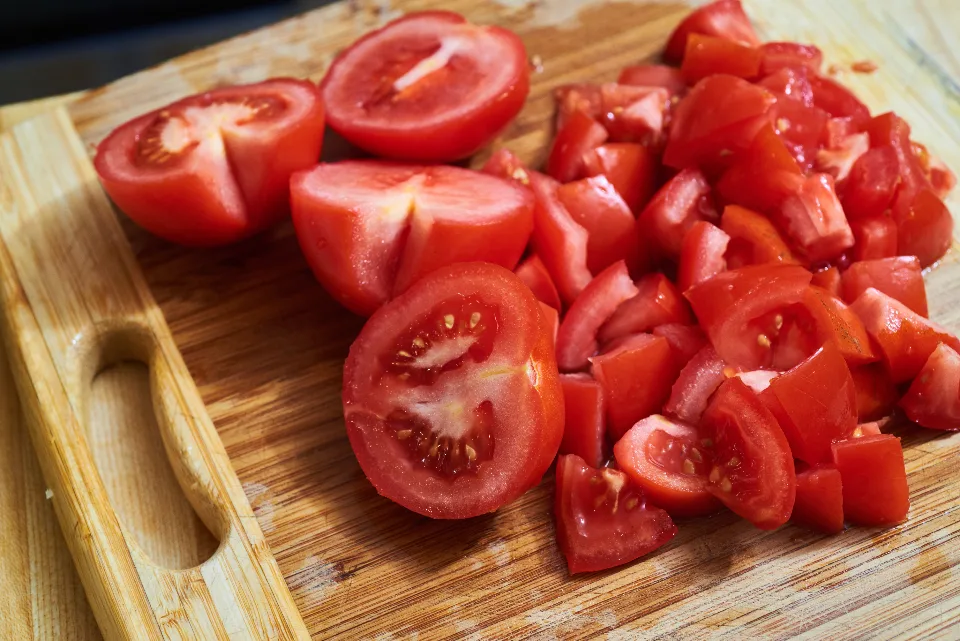
Try the tomato test. A sharp knife slices through tomato skin with almost no pressure. If the blade slides on the skin or squashes the tomato, it's time to hone.
If honing doesn't bring the bite back, the edge needs sharpening. You can use a whetstone, a pull-through sharpener for convenience, or a local sharpening service once or twice a year.
How do you care for the board itself?
Titanium needs almost no care, which is part of its appeal.
- Rinse or wash with hot soapy water after use, or put it in the dishwasher.
- Stand it up to dry. It dries in minutes.
- No oiling, no sanding, no special cleaners.
For step-by-step tips on a specific board, see how to use and clean Vanotium.
The bottom line
A titanium cutting board is not a knife-killer. It is softer than knife steel, far gentler than glass or stone, and asks only for the same simple care any good knife needs: slice smoothly, sweep with the spine, and hone now and then.
In return you get a board that adds no microplastics to your food, doesn't hold smells or stains, and lasts for years. If that sounds like the right trade, Vanotium is the titanium board we recommend. Read our Vanotium review or check today's price on the official site.
Sources
- Yadav H. et al. (2023). Cutting Boards: An Overlooked Source of Microplastics in Human Food? Environmental Science & Technology, 57(22), 8225–8235.
- USDA Food Safety and Inspection Service. Cutting Boards and Food Safety.
- Official Vanotium product page, checked October 2026.
Frequently asked questions
Do titanium cutting boards ruin knives?
No. Titanium is softer than the hardened steel in kitchen knives, so it wears an edge slowly and evenly instead of chipping or rolling it. Glass, marble and granite boards are the ones that damage edges quickly.
Is titanium harder than a knife?
No. Most kitchen knives are hardened to about 55 to 62 on the Rockwell C scale, which is harder than the titanium used for cutting boards. The knife is the harder of the two, so the board gives way to the blade.
Do titanium boards dull knives faster than wood?
End-grain wood is the gentlest surface for an edge, so titanium wears an edge a little faster than wood. The difference is easy to manage with a few strokes on a honing rod every week or two, and titanium avoids wood's problems with juices, odors and oiling.
How often should I hone my knife on a titanium board?
For most home cooks, a few light strokes on each side with a honing rod every week or two is plenty. Sharpen the knife properly two or three times a year.
Is a titanium board better for knives than glass?
Yes, by a wide margin. Glass is hard and unforgiving and rolls an edge after just a few cuts. Titanium is much gentler on knives while still being non-porous and easy to clean like glass.
Is the Vanotium board knife-friendly?
Yes. Vanotium describes its titanium surface as knife-friendly with proper maintenance. Slice with a smooth motion, sweep food with the spine of the knife and hone regularly, and your knives will stay sharp.

Michelle Hert
Michelle is a home cook who cooks for a family every day and spends a lot of her free time reading the research behind the products that end up in our kitchens. She started Less Plastic Kitchen after the 2023 cutting board study made her look twice at the scratched plastic board on her own counter. Her guides are built on published studies, manufacturer specifications and verified buyer feedback, and she updates them when new information comes out. More about Michelle.