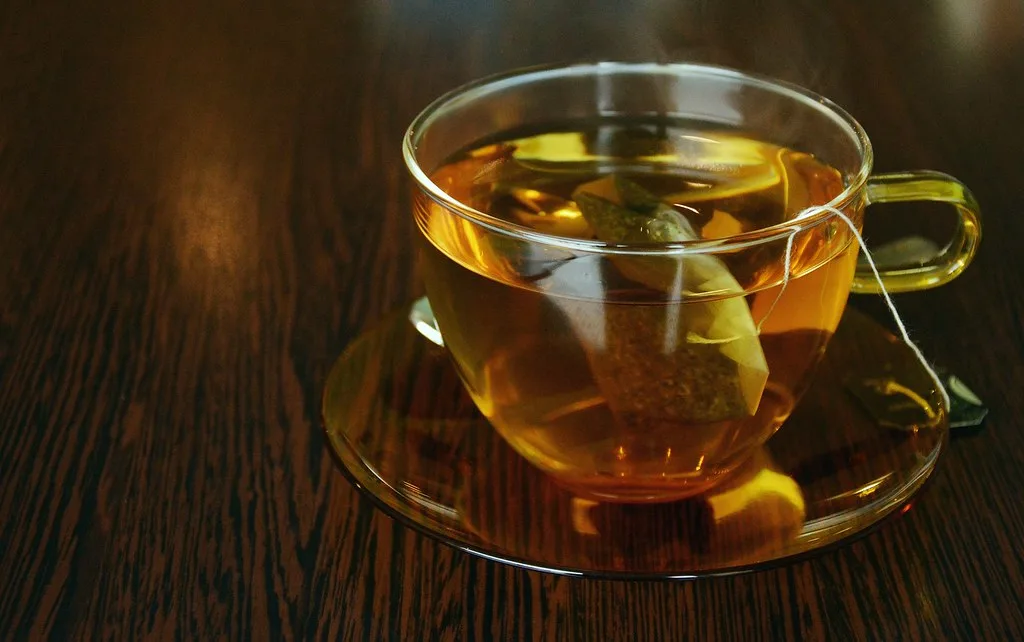
Tea feels like one of the most natural drinks there is: leaves and hot water. So it surprised a lot of people when researchers found that the bag, not the tea, could be adding billions of plastic particles to every cup.
This guide explains what the studies found, which tea bags are most likely to contain plastic, how to spot them, and the easiest swaps if you drink tea every day.
What did the McGill tea bag study find?
In 2019, researchers at McGill University in Montreal published a study in Environmental Science & Technology that tested four brands of tea sold in plastic tea bags.
They emptied the bags, rinsed them, and steeped the empty bags in water at 95°C (203°F), a normal brewing temperature, for five minutes. Then they counted the particles in the water.
The result: about 11.6 billion microplastics and 3.1 billion nanoplastics released into a single cup from one tea bag. The researchers noted that this was several orders of magnitude higher than plastic levels previously reported in other foods (Beyond Plastics summary of the McGill study).
The bags tested were made from nylon or PET (the same plastic used in soda bottles), the materials used for the shiny, "silky" mesh bags often sold as premium tea.
What did the 2024 Barcelona study add?
In 2024, researchers at the Autonomous University of Barcelona (UAB) studied commercial tea bags made of nylon-6, polypropylene and cellulose, and found that infusing them released millions to billions of micro- and nanoplastic particles per milliliter, depending on the material (EurekAlert, UAB).
For the first time, the team also showed in the lab that these particles could be taken up by human intestinal cells. The study was published in the journal Chemosphere.
Lab studies like these don't tell us exactly what happens in a person drinking tea every day, but they're a clear reason to choose plastic-free options where it's easy.
This article is general information, not medical advice.
Which tea bags contain plastic?
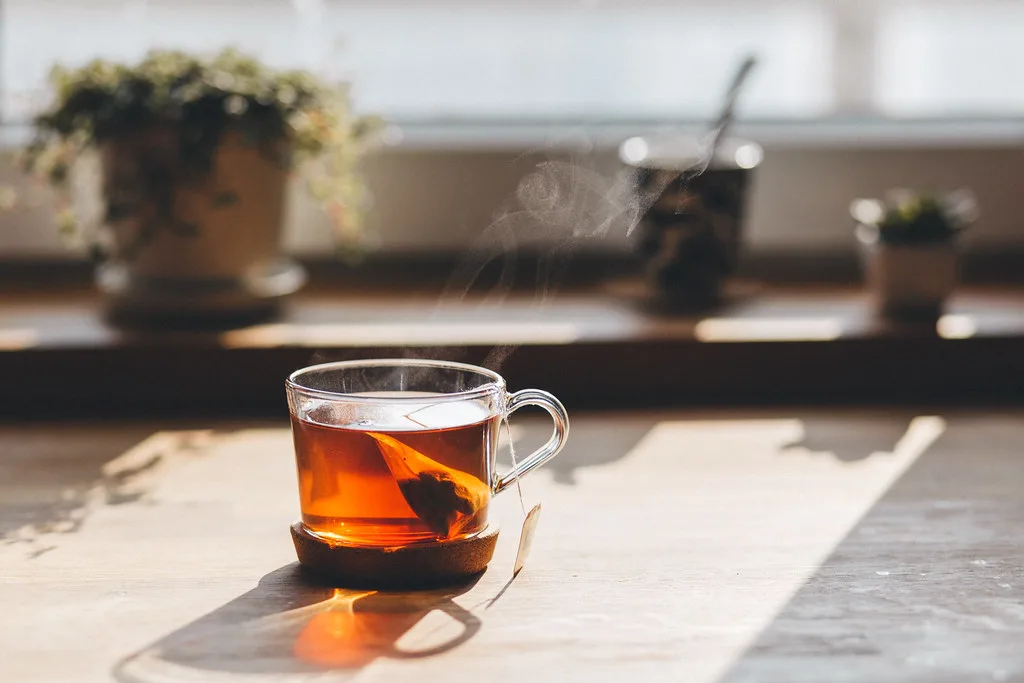
There are three common types of tea bag, and they carry different levels of risk:
| Bag type | What it's made of | Plastic risk |
|---|---|---|
| "Silky" pyramid/mesh bags | Often nylon or PET plastic mesh | Highest |
| Standard paper bags | Paper fibers, sometimes heat-sealed with polypropylene | Medium (depends on the seal) |
| Folded/stapled or plant-based bags | Paper without plastic sealant, or plant-based materials | Lower |
| Loose-leaf tea | Just tea, in a metal or glass infuser | None from the bag |
The surprise for many people is the middle row. Plenty of ordinary-looking paper tea bags are sealed shut with a thin layer of plastic so they hold together in hot water. And some bags marketed as "plant-based" use PLA, a bio-based plastic, which is still a plastic.
How can you tell if a tea bag has plastic?
A few quick checks:
- Look at it. Shiny, see-through, silky mesh is usually plastic. Matte paper is more likely to be paper.
- Check the edges. Bags with crimped, heat-sealed edges often use a plastic sealant. Bags folded and closed with a staple or string usually don't.
- Read the packaging and website. Brands that are fully plastic-free usually say so clearly. "Biodegradable" or "plant-based" is not the same as plastic-free.
- Ask the brand. If it's not clear, a quick email often gets an answer.
- When in doubt, go loose-leaf. It's the only option with no question marks.
Is loose-leaf tea better?
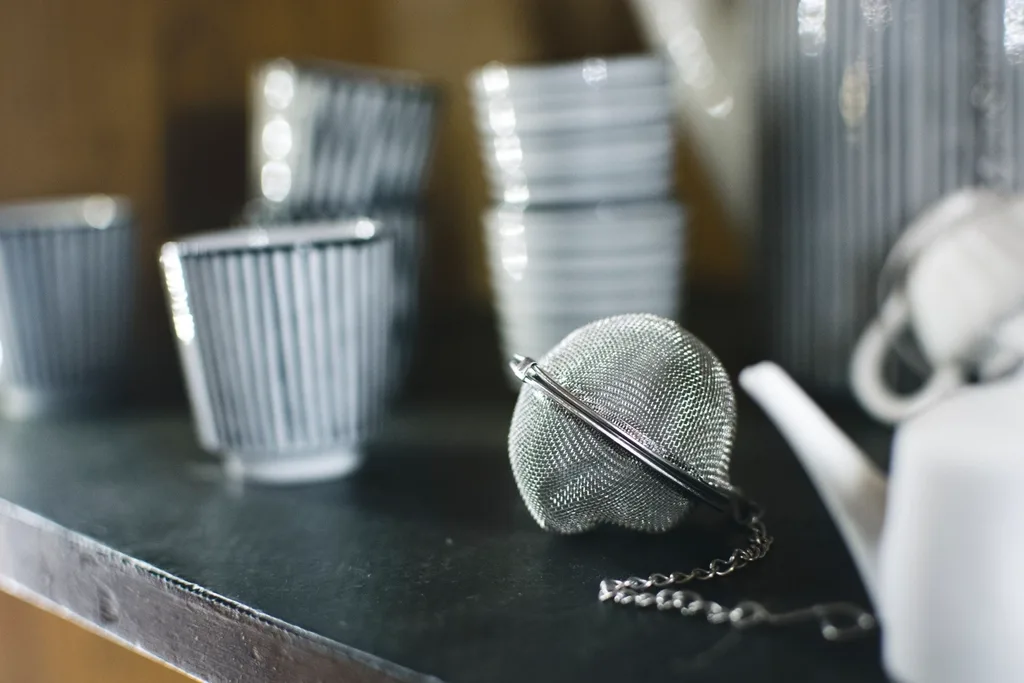
For avoiding plastic, yes. Loose-leaf tea brewed in a stainless steel or glass infuser, a teapot with a built-in strainer, or a French press removes the bag from the equation completely.
Many tea drinkers also find loose-leaf tea tastes better, because the leaves have room to unfurl, and it's often cheaper per cup. Choose an infuser made of stainless steel rather than plastic or silicone, since the whole point is to avoid hot plastic.
Does water temperature matter?
Heat is what drives plastic release. The McGill study used 95°C water, which is normal for black and herbal tea. Lower temperatures are typical for green and white tea, but if a bag is plastic, any hot water will release some particles. The simplest fix is still a plastic-free bag or loose tea.
What about coffee pods and other hot drinks?
The same principle applies to anything that pours hot water through or over plastic:
- Plastic coffee pods: hot water passes through a plastic capsule. Consider reusable stainless steel pods or a French press.
- Disposable cups: many paper cups are lined with plastic. A ceramic mug or stainless steel travel mug avoids this.
- Plastic kettles: boiling water in a plastic-bodied kettle means daily hot contact. Stainless steel or glass kettles are a better choice.
- Bottled water: a 2024 Columbia University study found around 240,000 plastic particles per liter in bottled water (NPR).
What's a simple plastic-free tea routine?
- Boil water in a stainless steel or glass kettle.
- Use loose-leaf tea in a stainless steel infuser, or a tea bag you've confirmed is plastic-free.
- Drink from a ceramic or glass mug, or a stainless steel travel mug.
- Compost the leaves (and plastic-free bags) afterward.
What other kitchen swaps reduce microplastics?
Tea bags are one source among several. The biggest everyday sources in most kitchens are heating food in plastic containers, bottled water and plastic cutting boards. A plastic board sheds an estimated 1 to 15 particles per cut and up to around 50 grams a year per person (Yadav et al., 2023).
We rank 12 swaps by impact in how to avoid microplastics in your kitchen. For the cutting board specifically, see what the cutting board study really found and our pick for the best non-toxic cutting board.
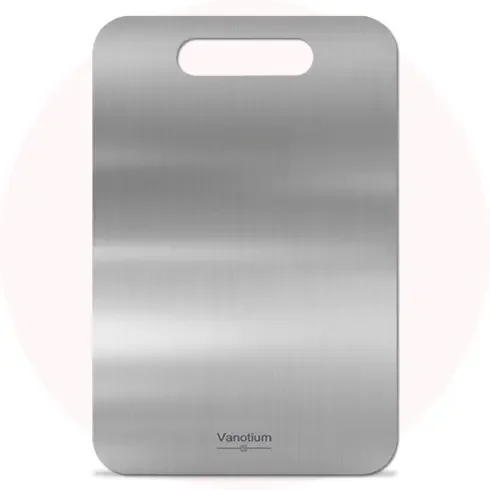
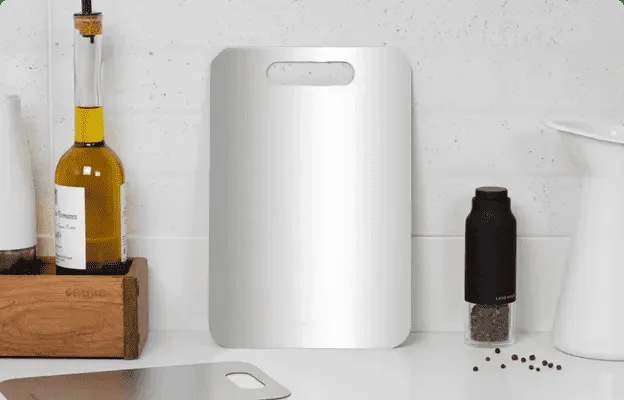
While you're swapping: a plastic-free cutting board
Vanotium's titanium surface sheds no microplastics and goes in the dishwasher. Best-rated titanium board in our comparison, with a 30-day money-back guarantee.
Check today's Vanotium price →Ships in 5–7 days with tracking · 30-day guarantee
Common myths about tea bags and plastic
- "Paper tea bags are always plastic-free." Not necessarily. Many are heat-sealed with a plastic layer.
- "Biodegradable means no plastic." Some biodegradable bags use PLA, which is still a plastic, even if it's made from plants.
- "Taking the bag out quickly solves it." Shorter steeping may reduce exposure, but particles are released as soon as hot water hits plastic.
- "Only cheap tea uses plastic." The opposite is often true: the silky pyramid bags are frequently sold as premium tea.
Does iced or cold-brew tea help?
Heat is the main driver of plastic release, so cold-brewing tea in the fridge is gentler on any bag than pouring boiling water over it. Cold brew is also easy: put loose leaves or a confirmed plastic-free bag in a glass jar of cold water and leave it in the fridge for 6 to 12 hours. It's a nice option in summer, but for hot tea, plastic-free bags or loose leaf remain the simplest fix.
What about herbal and kids' teas?
The same rules apply to herbal infusions, chamomile, fruit teas and any tea you make for children. The bag material matters more than what's inside it. If you make tea for kids, loose-leaf herbs in a stainless steel infuser or a confirmed plastic-free bag is the easiest choice.
How do you switch without giving up convenience?
Loose-leaf tea sounds like more work, but it doesn't have to be:
- Use a basket infuser that sits in your mug and lifts out in one move.
- Fill your own paper filters made for loose tea, which are quick and disposable.
- Brew a pot in the morning with a strainer teapot and pour cups through the day.
- Keep plastic-free bags at work once you've found a brand you've confirmed.
Does how you store tea matter?
For plastic exposure, the bag and the water temperature matter far more than storage. Still, keeping loose tea in a glass jar or metal tin instead of a plastic tub keeps it fresher, protects it from light and moisture, and avoids one more plastic contact point in the kitchen. Tins and jars also last for years, so it's a one-time swap.
Is switching to plastic-free tea worth it?
If you drink tea every day, yes. It's one of the easiest swaps on the list: it doesn't change the taste you enjoy, loose-leaf tea is often cheaper per cup, and a good stainless steel infuser lasts for years. Because it's a hot drink you may have several times a day, it's also one of the swaps that adds up the most over a year. Start with the tea you drink most often and switch the rest over as you run out.
The bottom line
Plastic tea bags, especially silky mesh bags made of nylon or PET, can release billions of microplastic and nanoplastic particles into a single cup. Many paper bags are sealed with plastic too. Loose-leaf tea in a stainless steel infuser, or bags you've confirmed are plastic-free, solve the problem.
If you're cutting plastic out of your kitchen, the cutting board is the next easy win. Our recommended titanium board is Vanotium. See today's price on the official site.
Sources
- Hernandez L.M. et al. (2019). Plastic Teabags Release Billions of Microparticles and Nanoparticles into Tea. Environmental Science & Technology. Summary by Beyond Plastics.
- Universitat Autònoma de Barcelona (2024). Commercial tea bags release millions of microplastics when in use. Study published in Chemosphere.
- NPR (2024). Researchers find a massive number of plastic particles in bottled water.
- Yadav H. et al. (2023). Cutting Boards: An Overlooked Source of Microplastics in Human Food? Environmental Science & Technology.
Frequently asked questions
Do tea bags have microplastics?
Some do. A 2019 McGill University study found a single plastic mesh tea bag released about 11.6 billion microplastics and 3.1 billion nanoplastics into one cup at brewing temperature.
Which tea bags contain plastic?
Silky pyramid or mesh bags are often made of nylon or PET plastic. Many standard paper bags are heat-sealed with polypropylene, and some biodegradable bags use PLA, a plant-based plastic.
How can I tell if my tea bag is plastic?
Shiny, see-through mesh is usually plastic. Crimped, heat-sealed edges often mean a plastic sealant. Bags folded and closed with a staple usually don't use plastic. When in doubt, check the brand's website or switch to loose-leaf tea.
Are paper tea bags plastic-free?
Not always. Many paper tea bags are sealed with a thin plastic layer so they hold together in hot water. Look for brands that clearly say their bags are plastic-free.
Is loose-leaf tea better for avoiding microplastics?
Yes. Loose-leaf tea in a stainless steel or glass infuser removes the bag completely, and many people find it tastes better and costs less per cup.
Does steeping time affect microplastics?
Heat is the main driver. Particles are released as soon as hot water touches plastic, so shorter steeping may reduce exposure but doesn't solve it. A plastic-free bag or loose-leaf tea does.

Michelle Hert
Michelle is a home cook who cooks for a family every day and spends a lot of her free time reading the research behind the products that end up in our kitchens. She started Less Plastic Kitchen after the 2023 cutting board study made her look twice at the scratched plastic board on her own counter. Her guides are built on published studies, manufacturer specifications and verified buyer feedback, and she updates them when new information comes out. More about Michelle.