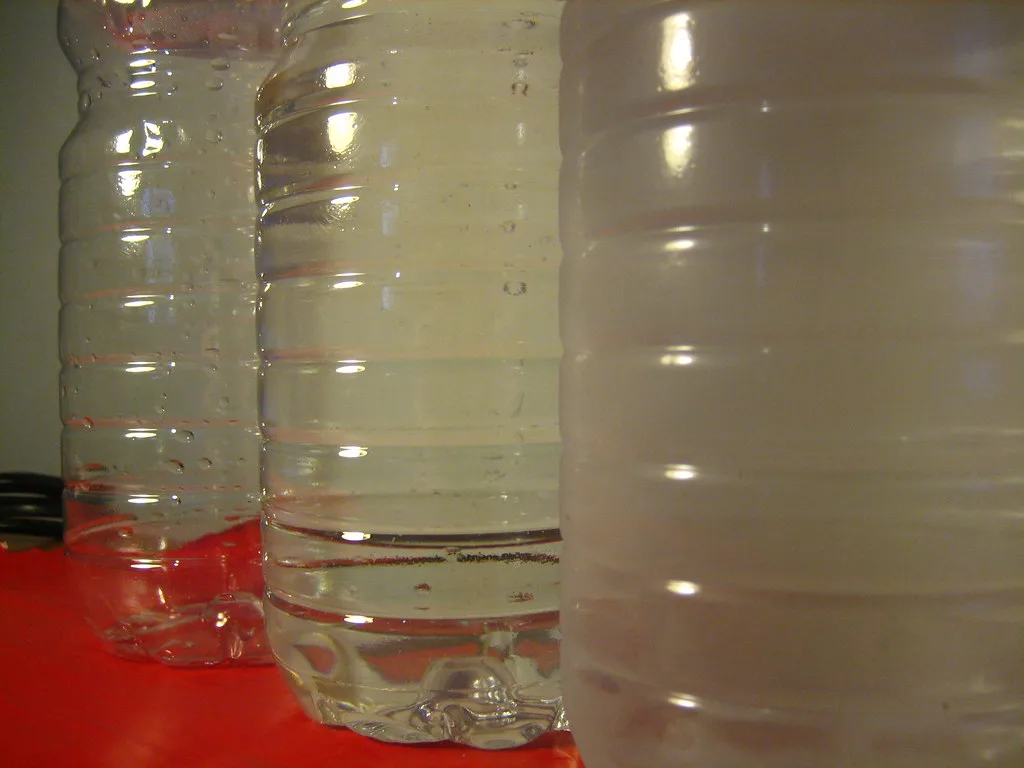
- Switch to a stainless steel or glass bottle.
- Drink filtered tap water.
- Never leave plastic bottles in a hot car or in the sun.
A plastic water bottle feels like the cleanest, safest way to drink water. It's sealed, it's convenient, and it's everywhere. That's why it surprised so many people when researchers started counting the plastic particles floating inside it.
This guide explains what the studies found, where the particles come from, what we know (and don't) about health effects, and simple swaps that cut microplastics from your daily water without much effort or cost.
What did the 2024 bottled water study find?
In January 2024, researchers from Columbia University and Rutgers published a study in the Proceedings of the National Academy of Sciences using a new laser-based imaging technique that can detect and identify individual nanoplastic particles (PubMed).
They tested bottled water from three popular brands sold in the US and found:
- About 110,000 to 370,000 plastic particles per liter, an average of roughly 240,000.
- About 90% were nanoplastics, particles smaller than one micrometer.
- Earlier estimates had counted far fewer particles because older methods couldn't see nanoplastics.
- Common plastics included PET (the bottle material) and polyamide, a type of nylon that may come from filters used to purify the water.
The researchers didn't name the brands, and they stressed that the goal was measurement, not a health verdict. But the numbers were 10 to 100 times higher than earlier estimates.
What are microplastics and nanoplastics?
Microplastics are plastic pieces smaller than 5 millimeters, about the size of a pencil eraser and down. Nanoplastics are far smaller, below 1 micrometer, roughly a thousand times thinner than a human hair. Size matters because smaller particles can move more easily through the body. The US Food and Drug Administration explains that micro- and nanoplastics are found widely in the environment and in foods, and that research on their effects is ongoing.
Where do the particles in bottled water come from?
| Source | How it adds plastic |
|---|---|
| The bottle | PET can shed tiny particles, especially when squeezed, reused or heated. |
| The cap | Opening and closing a plastic cap creates friction that can release particles. |
| Filtration and bottling | Plastic filters, tubing and equipment can add particles before the bottle is sealed. |
| Storage | Heat, sunlight and long storage can increase shedding. |
Does heat make it worse?
Heat is one of the clearest factors that increase plastic breakdown. A bottle that sits in a hot car, a sunny window or a warehouse in summer is under more stress than one kept in a cool cupboard. Reusing a single-use bottle many times, squeezing it, and washing it in hot water also wear the plastic. If you do drink from plastic bottles, keep them cool and out of the sun, and don't refill single-use bottles over and over.
Is tap water better than bottled water?
Tap water can also contain microplastics, but studies have generally found lower levels than in bottled water. The World Health Organization's 2019 report on microplastics in drinking water reviewed the evidence and called for more research, noting that standard water treatment removes most larger particles. In the US, tap water is regulated and tested for many contaminants, and a home filter can add another layer.
For most people, filtered tap water in a reusable stainless steel or glass bottle is the simplest, cheapest way to cut plastic from their daily water. See microplastics in drinking water for how filters compare.
Are microplastics in water harmful?
Scientists don't yet know the full health effects of swallowing micro- and nanoplastics, and that uncertainty is honest. What researchers are studying:
- Whether tiny particles can cross into tissues and the bloodstream.
- Chemicals in or on plastics, like additives, that may leach out.
- Possible links with inflammation.
One much-discussed 2024 study in the New England Journal of Medicine found micro- and nanoplastics in the artery plaque of some patients and linked their presence with a higher risk of heart attack, stroke or death over about three years. It showed an association, not proof of cause. See what we know about microplastics and health. Until the science is clearer, many people choose to reduce easy, everyday sources, and bottled water is one of the easiest to cut.
What are the best swaps for plastic water bottles?
| Option | Pros | Good to know |
|---|---|---|
| Stainless steel bottle | No plastic in contact with water (check the lid), durable, keeps drinks cold | Many lids are plastic; look for steel-lined or silicone seals |
| Glass bottle | Inert, no taste, easy to see when it's clean | Heavier; choose one with a silicone sleeve |
| Filtered tap water | Cheap, less packaging | Change the filter on schedule |
| Glass-bottled mineral water | No plastic bottle | Caps may still have a plastic liner |
| Reused single-use plastic | Cheap | Not a good swap; reuse and washing increase wear |
Where else does plastic get into your food at home?
Water bottles get the headlines, but the kitchen is full of small, daily plastic exposures that are just as easy to fix:
- Plastic cutting boards. A 2023 study in Environmental Science & Technology estimated that chopping on plastic boards releases microplastics with every cut, adding up to grams per person per year (Yadav et al., 2023). See plastic cutting boards and microplastics.
- Plastic tea bags. See microplastics in tea bags.
- Heating food in plastic. See is it safe to microwave plastic?
- Plastic storage containers. See glass vs plastic food containers.
Our full guide to how to avoid microplastics in your kitchen ranks these by impact and effort.
Why is the cutting board a smart next swap?
Once you've switched your water bottle, the cutting board is one of the highest-impact swaps in the kitchen, because you use it every day and the knife physically scrapes the surface. A titanium board removes that source completely.
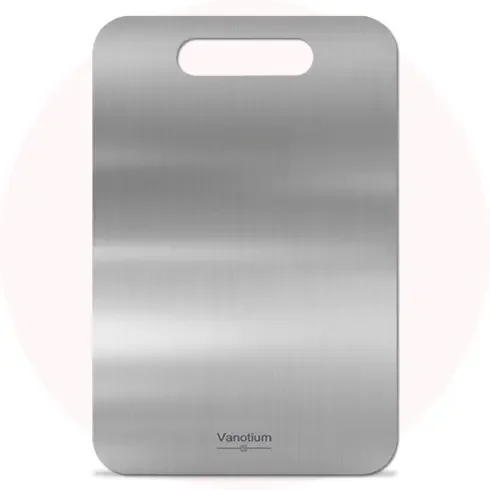
The board we recommend is Vanotium. Its advanced titanium surface sheds no plastic, is non-porous so juices and smells don't soak in, and is dishwasher-safe, heat-resistant and lightweight. On the official checkout in October 2026, one board was $66.66, with multi-packs from $42.77 per board, backed by a 30-day guarantee. Read our Vanotium review, where we rate it 4.6/5.
Cut plastic out of your daily chopping
Vanotium titanium cutting board: no plastic, non-porous, dishwasher-safe and heat-resistant. From $42.77 per board in multi-packs, with a 30-day guarantee.
Check today's Vanotium price →Ships in 5–7 days with tracking · 30-day guarantee
How can you reduce microplastics from water today?
- Buy one good reusable bottle in stainless steel or glass, and keep it with you.
- Filter tap water at home with a filter certified for the contaminants you care about.
- Keep any plastic bottles cool and out of the sun; never drink from one left in a hot car.
- Don't reuse single-use bottles many times.
- Store water in glass pitchers in the fridge.
- Choose glass for hot drinks, not plastic cups or bottles.
What about baby bottles and kids' bottles?
Parents often ask about baby bottles, since many are made of polypropylene and are washed and sterilized in hot water. Heat is the main concern, and it's an easy one to manage once you know about it. Practical steps include preparing formula in a glass or stainless container and transferring it once it's cooled, avoiding microwaving plastic bottles, and replacing scratched bottles. Glass baby bottles are another option. For older kids, a stainless steel bottle with a leak-proof lid is durable and easy to clean.
How do you keep a reusable bottle clean?
- Wash it daily with warm soapy water and a bottle brush.
- Take the lid apart and clean the seals, where residue hides.
- Let it air-dry fully with the lid off.
- Deep clean weekly with a baking soda paste or a little white vinegar, then rinse well.
- Replace worn silicone seals when they crack.
- Rinse it right after sugary drinks or smoothies so residue doesn't build up in the lid.
What are common myths about bottled water and plastic?
- "BPA-free means plastic-free." PET water bottles generally aren't made with BPA, but they're still plastic and can still shed particles. See is BPA-free plastic safe?
- "Freezing bottles releases dioxins." This is a long-running internet rumor without good evidence. The more relevant concern is heat.
- "Expensive brands are plastic-free." Price doesn't change the bottle material.
- "You have to give up plastic completely." Reducing the biggest daily sources makes a meaningful difference without perfection.
Does switching save money?
Usually, yes. A family that buys cases of bottled water every week spends hundreds of dollars a year. A good reusable bottle and a home filter cost a fraction of that over a year, and they also cut down on plastic waste and trips to the store. Many people find the switch pays for itself within a few months, and it's one of those changes you don't have to think about once the habit is set. Keep a filled bottle by the door and another at work, and you'll rarely reach for a plastic one again. It's a small habit that quietly removes hundreds of plastic bottles from your year.
The bottom line
Bottled water often contains hundreds of thousands of tiny plastic particles per liter, mostly nanoplastics. Health effects are still being studied, but cutting this source is easy: switch to a stainless steel or glass bottle, drink filtered tap water, and keep any plastic bottles out of the heat. Then keep going in the kitchen, where the cutting board is one of the simplest high-impact swaps.
Our pick for a plastic-free board is Vanotium. Check today's Vanotium price on the official site.
Sources
- Qian N. et al. Rapid single-particle chemical imaging of nanoplastics by SRS microscopy. PNAS, 2024. PubMed.
- World Health Organization. Microplastics in drinking-water, 2019.
- US Food and Drug Administration. Microplastics and Nanoplastics in Foods.
- Yadav H. et al. Cutting Boards: An Overlooked Source of Microplastics in Human Food? Environmental Science & Technology, 2023.
Frequently asked questions
Does bottled water contain microplastics?
Often, yes. A 2024 PNAS study found an average of about 240,000 plastic particles per liter in bottled water from three US brands, most of them nanoplastics.
Where do microplastics in bottled water come from?
From the PET bottle, the plastic cap, filters and equipment used in bottling, and from heat, squeezing and reuse during storage.
Is tap water better than bottled water for microplastics?
Studies have generally found lower levels in tap water, and a home filter can reduce particles further.
Does heat increase microplastics in water bottles?
Heat is one of the clearest factors that increase plastic breakdown, so avoid bottles left in hot cars or the sun.
What is the best plastic-free water bottle?
Stainless steel or glass bottles, ideally with steel-lined or silicone lids, are the simplest plastic-free options.
Are microplastics in water harmful?
Health effects are still being studied. Researchers are looking at inflammation and chemicals in plastics; many people reduce easy sources meanwhile.

Michelle Hert
Michelle is a home cook who cooks for a family every day and spends a lot of her free time reading the research behind the products that end up in our kitchens. She started Less Plastic Kitchen after the 2023 cutting board study made her look twice at the scratched plastic board on her own counter. Her guides are built on published studies, manufacturer specifications and verified buyer feedback, and she updates them when new information comes out. More about Michelle.