- They're made of heat-resistant plastic (usually nylon or polyester) designed for oven temperatures, typically up to about 400°F.
- Follow the instructions: add flour if directed, cut slits for steam, keep the bag away from oven walls and heating elements and stay within the temperature limit.
- If you want to avoid plastic contact with hot food, there are easy alternatives: a covered roasting pan, a Dutch oven or roasting with parchment.
Oven bags are popular for holiday turkeys and roasts because they keep meat moist, speed up cooking and make cleanup easy. But they're plastic, and many people wonder whether cooking food inside plastic at high heat is safe. Here's what oven bags are made of, what manufacturers and regulators say, how to use them safely, and simple plastic-free alternatives if you'd rather skip them.
What are oven bags made of?
Most oven bags are made of heat-resistant nylon or polyester (PET), materials designed to withstand oven temperatures without melting. They're different from regular storage bags or plastic wrap, which are not designed for oven use and should never go in the oven.
Are oven bags regulated?
In the US, materials that touch food, including oven bags, are regulated by the FDA as food contact substances and must meet requirements for their intended use. The FDA explains how food contact materials are reviewed. That's why it's important to use oven bags exactly as labeled, including temperature limits.
How do you use oven bags safely?
- Read the package temperature limit (often around 400°F) and don't exceed it.
- Shake a tablespoon of flour in the bag if the instructions say to; it helps prevent bursting.
- Place the bag in a pan at least 2 inches deep.
- Cut slits in the top to let steam escape.
- Make sure the bag doesn't touch the oven walls, racks or heating elements.
- Open carefully after cooking; the steam is very hot.
What are the concerns?
Some people prefer to minimize plastic contact with hot, fatty foods as a general precaution, since heat can increase how much substances migrate from plastic. Research on plastics and food is ongoing. The FDA notes that current evidence doesn't show microplastics in food pose a health risk, but it continues to monitor the science. If you'd rather avoid plastic, the alternatives below work just as well.
What are plastic-free alternatives?
| Method | How it works | Best for |
|---|---|---|
| Covered roasting pan | The lid traps moisture | Turkey, chicken, pot roast |
| Dutch oven | Heavy lid seals in steam | Roasts, whole chickens, braises |
| Parchment paper tent or pouch | Holds in moisture | Fish, vegetables, smaller cuts |
| Baste and tent with foil | Basting keeps meat moist | Turkey |
See parchment paper vs wax paper and is aluminum foil safe?
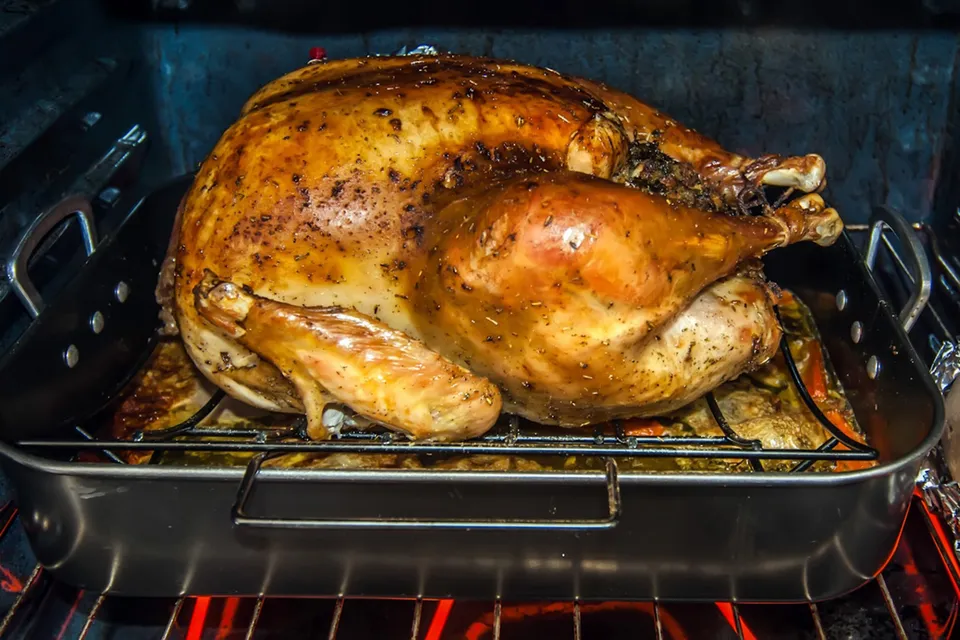
How do you roast a moist turkey without a bag?
- Dry-brine the turkey with salt a day ahead.
- Roast on a rack in a roasting pan with some broth in the bottom.
- Tent the breast with foil for part of the cooking time.
- Baste occasionally.
- Use a thermometer and roast to a safe internal temperature (165°F in the thickest parts).
- Rest the turkey before carving.
Follow safe food handling guidance from the FDA for thawing, cooking and leftovers.
How do you keep plastic out of holiday prep?
- Thaw the turkey in its original wrap on a tray, then transfer to a roasting pan.
- Prep on a non-plastic cutting board.
- Use stainless or wood utensils.
- Store leftovers in glass containers.
- Avoid reheating leftovers in plastic.
See carving board for turkey and how to store food without plastic.

Plastic-free prep for the holiday meal
Vanotium titanium cutting board: no plastic to shed, non-porous, dishwasher-safe and built to last. From $42.77 per board in multi-packs, with a 30-day guarantee.
Check today's Vanotium price →Ships in 5–7 days with tracking · 30-day guarantee
Why use a titanium board for holiday prep?
Holiday cooking means lots of chopping, raw poultry and strong flavors. A non-porous titanium board doesn't absorb raw turkey juices, goes straight in the dishwasher and sheds no plastic particles. Vanotium has a 30-day money-back guarantee and tracked shipping, so it can arrive in time for the holidays if you order early. Read our Vanotium review.
Can oven bags be reused?
No. Oven bags are designed for single use. Reusing them can lead to tearing, leaks and contamination.
Can oven bags go in the microwave?
Some are labeled for microwave use and some aren't. Check the package. Never use metal twist ties in the microwave.
Are oven bags safer than foil?
Both are used safely by millions of cooks. Foil is metal, so it avoids plastic contact, but very acidic or salty foods can react with aluminum and dissolve small amounts. Many cooks prefer a covered roasting pan or Dutch oven, which avoids both. See is aluminum foil safe?
What if an oven bag melts?
If a bag touches a heating element or the oven runs hotter than the label allows, it can melt or burst. Turn off the oven, let it cool and discard the food if plastic has melted onto it. Prevent this by keeping the bag in a deep pan, away from walls and racks, and checking your oven temperature with an oven thermometer.
What about slow cooker liners?
Slow cooker liners are plastic bags designed to make cleanup easier. Like oven bags, they're made for that use, but if you prefer to avoid plastic contact with food cooked for hours, you can skip them and simply soak the ceramic insert after cooking.
Are brining bags safe?
Brining bags are used cold, in the fridge, so heat isn't a factor. If you'd rather avoid plastic, brine the turkey in a large stainless stockpot, a food-safe bucket or a cooler with ice, or try a dry brine, which needs no bag at all.
How should you store holiday leftovers?
Refrigerate leftovers within two hours of cooking, in shallow glass or stainless containers so they cool quickly. Reheat in glass or ceramic, not plastic. Label containers with the date and use them within a few days.
What's a plastic-light holiday roasting checklist?
- Roasting pan with a rack, or a Dutch oven.
- Dry brine instead of a brining bag.
- Foil or parchment tent if needed.
- Meat thermometer.
- Non-plastic cutting and carving boards.
- Glass containers for leftovers.
Are oven bags good for beginners?
Many beginners like oven bags because they reduce the risk of a dry turkey and make cleanup easier. If that's your reason for using one, a Dutch oven or covered roaster gives a similar moist result with no plastic, and they're useful for many other recipes all year.
Can you roast vegetables in an oven bag?
Yes, but vegetables brown better on an open sheet pan. Steaming them in a bag makes them softer. For a plastic-free option, roast vegetables on a stainless sheet pan with parchment, or in a cast iron skillet. See non-toxic baking sheets.
How do you dispose of used oven bags?
Used oven bags are greasy and generally can't be recycled with regular plastics. Throw them in the trash after cooling. That's another reason some cooks prefer reusable cookware.
What temperature should a turkey reach?
Cook turkey to an internal temperature of 165°F in the thickest part of the thigh, wing and breast, whether you use a bag or not. A thermometer is the only reliable way to check.
What about roasting a chicken without a bag?
A whole chicken roasts beautifully without a bag. Dry it well, season, roast on a rack or a bed of vegetables at a high temperature and let it rest before carving. The skin crisps up in a way it can't inside a bag. A cast iron skillet or a small roasting pan works perfectly.
How do you reduce plastic across the kitchen?
Oven bags are just one piece. Bigger daily sources of plastic contact include cutting boards, food storage, plastic wrap and heating food in plastic. Focusing on those everyday swaps makes a bigger difference than occasional holiday items. See how to avoid microplastics in the kitchen and plastic wrap and microplastics.
Can you cook a ham without an oven bag?
Yes. Place the ham cut side down in a roasting pan with a little water or broth, cover tightly with a lid or foil and heat until warmed through, then glaze uncovered at the end. A Dutch oven works well for smaller hams. You get a moist ham without any plastic touching it.
What should you look for on the box?
If you do use oven bags, check the maximum temperature, whether the bag is approved for the microwave, and the directions for flour, slits and pan depth. Follow them every time.
Do oven bags cook faster?
Often yes, because steam builds inside the bag. Without a bag, plan a little more time and use a thermometer.
The bottom line
Oven bags are made for oven use and are generally considered safe when used as directed, within the labeled temperature limit. If you prefer to avoid plastic contact with hot food, a covered roasting pan, Dutch oven or parchment works just as well. Keep the rest of your prep plastic-free too.
For plastic-free holiday prep, our pick is Vanotium. Check today's Vanotium price and multi-pack deals.
Sources
- U.S. Food and Drug Administration. Packaging and Food Contact Substances.
- U.S. Food and Drug Administration. Microplastics and Nanoplastics in Foods.
- U.S. Food and Drug Administration. Safe Food Handling.
Frequently asked questions
Are oven bags safe?
They're generally considered safe when used as directed, within the labeled temperature limit.
What are oven bags made of?
Usually heat-resistant nylon or polyester.
What temperature can oven bags handle?
Often up to about 400°F; check the package.
Can I reuse an oven bag?
No, they're single-use.
How can I roast a turkey without a bag?
Use a covered roasting pan or Dutch oven, baste and tent with foil.
Can I put regular plastic bags in the oven?
No, only bags made and labeled for oven use.

Michelle Hert
Michelle is a home cook who cooks for a family every day and spends a lot of her free time reading the research behind the products that end up in our kitchens. She started Less Plastic Kitchen after the 2023 cutting board study made her look twice at the scratched plastic board on her own counter. Her guides are built on published studies, manufacturer specifications and verified buyer feedback, and she updates them when new information comes out. More about Michelle.