- On the surface: from plastic packaging, dust, mulch film and handling.
- Inside the plant: early research has found tiny particles taken up from soil and water.
- Surface particles: a proper soak and rinse helps. A quick splash under the tap does much less.
- Particles inside the plant: washing can't reach these, so choosing less-packaged produce and cutting other kitchen sources matters more.
- Practical steps:
- buy loose produce
- store it in glass or cloth
- soak, then rinse, before eating
- cut on a non-plastic board
Most talk about microplastics focuses on bottled water, seafood and plastic containers. Fresh produce feels like the "clean" part of the diet, and in most ways it is: fruit and vegetables remain some of the healthiest foods you can eat. But researchers have started looking at produce too. They've found that microplastics can end up on the surface of fruit and vegetables, and that the smallest particles can even be taken up into the plant itself.
This guide covers:
- what the research says so far
- where the particles come from
- which produce is most exposed
- what washing can and can't do
- simple habits that cut the most plastic from your fruit bowl without giving up a single vegetable
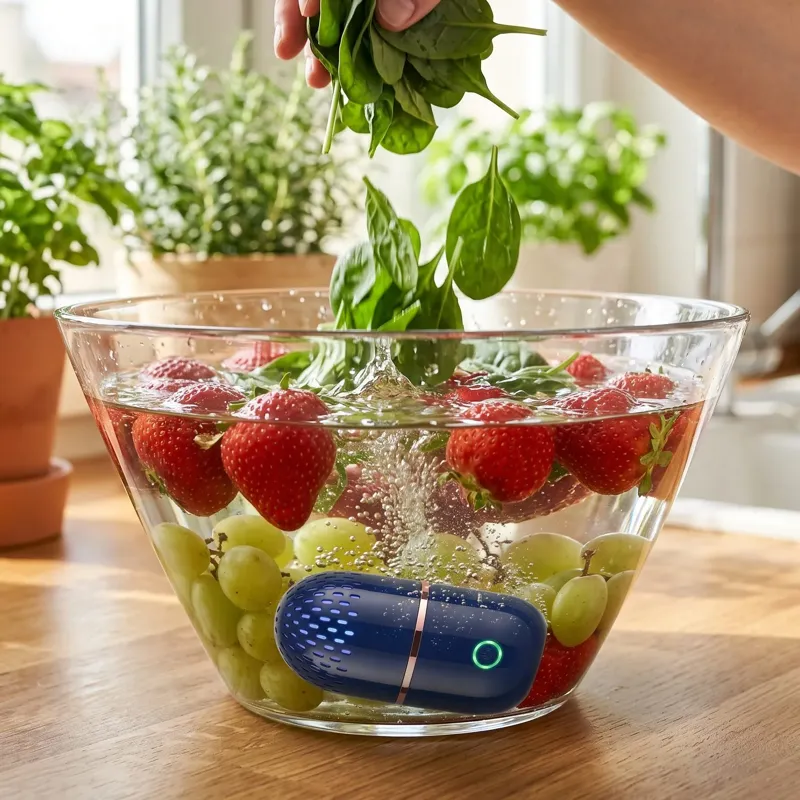
Our pick for washing produce: PodBloom
A wireless, IPX7-waterproof purifier that sits in a bowl of water and runs a 10-minute electrolysis cycle for fruit and vegetables. No soap, no refills. $59.95, or $35.98 each in the 3-pack.
Check today's PodBloom price →30-day money-back guarantee · wireless charging base included
What does the research say about microplastics in produce?
The research is new, but it points in a clear direction:
- Particles inside produce: a widely cited 2020 study from the University of Catania, Italy, published in Environmental Research, found micro- and nanoplastic particles in common fruit and vegetables bought from markets and supermarkets. Apples and carrots had some of the highest levels.
- How they get in: laboratory studies suggest that the very smallest particles can be taken up through plant roots from contaminated soil and water.
- Surface contamination: particles from packaging, dust and handling can also sit on the outside of produce.
Scientists are still working out how much reaches our bodies and what it means for health. The U.S. FDA says current evidence doesn't show that the levels found in food pose a health risk, while research continues. Even so, many families prefer to cut avoidable exposure where it's easy to do. With produce, that's mostly about packaging, storage and washing.
Where do microplastics on produce come from?
- Plastic packaging: clamshells, bags, trays and cling film can shed fragments, especially when they're opened, crushed or cut.
- Farming plastics: plastic mulch film, irrigation tubing and greenhouse covers wear down over time.
- Soil and water: treated sewage sludge used as fertilizer and irrigation water can carry particles.
- Air and dust: microplastics settle out of household and outdoor air onto anything left uncovered.
- Your kitchen: plastic cutting boards, peelers, containers and wraps add particles at home.
You can't control how produce is grown, but you can control a lot of what happens after you buy it.
Which fruit and vegetables are most exposed?
| Produce | Why it's more exposed | What helps |
|---|---|---|
| Berries in clamshells | Delicate skins, plastic packaging, hard to wash | Gentle soak, then rinse |
| Bagged salad and leafy greens | Large surface area, often in plastic bags | Buy whole heads; soak and rinse leaves |
| Grapes and cherry tomatoes | Sold in plastic tubs, eaten whole | Soak in a bowl, then rinse |
| Root vegetables (carrots, potatoes) | Grow in soil; studies found particles inside | Scrub and peel where it makes sense |
| Apples and pears | Eaten with the skin; included in early studies | Soak, rinse and dry |
| Thick-skinned fruit (bananas, oranges, melons) | The peel protects the flesh | Wash the outside before cutting |
Can you wash microplastics off fruit and vegetables?
Partly. Washing works on what's on the outside: dust, fragments from packaging and grime stuck to the skin. A longer soak followed by a rinse loosens more than a quick splash under the tap. Particles inside the plant can't be washed away by any method. Be wary of anyone who claims otherwise.
So the realistic goal is to:
- wash the surface well
- cut down the other sources you control: packaging, storage and kitchen tools
For the same reason, a good soak also helps with surface pesticide residue and dirt. See how to wash pesticides off produce.
What is the best way to wash produce?
- Wash your hands first.
- Fill a clean bowl with cool water. Use a glass or stainless-steel bowl rather than an old scratched plastic one.
- Soak firm and delicate produce for several minutes. Gently swish leafy greens and berries.
- Lift the produce out instead of pouring it through the dirty water.
- Rinse under cool running water.
- Scrub firm produce like potatoes, carrots and melons with a natural-fiber brush.
- Dry with a clean cloth towel.
Food-safety agencies recommend washing produce under running water and skipping soap or bleach. A soak before the final rinse simply gives loosened grime more time to come off. Fruit-specific tips are in how to wash strawberries.
How does PodBloom help?
The hardest part of washing produce properly is the time. Few of us stand at the sink swishing berries for ten minutes. PodBloom is a small, wireless capsule that you drop into a bowl of water with your fruit and vegetables. Press the button and it runs a 10-minute electrolysis cycle with titanium electrodes, then switches itself off. There are no soaps, tablets or refills, and no plastic bottles of produce wash under the sink. According to the brand, the cycle helps loosen surface residue, wax and grime. You lift the produce out and give it a quick rinse.
It costs $59.95 for one, $47.98 each for two and $35.98 each for three (free shipping on the 3-pack), with a 30-day money-back guarantee. Like any washing method, it works on the surface, not inside the plant. Read our full PodBloom review.
Make a proper soak automatic
PodBloom runs a 10-minute, refill-free cycle in a bowl of water. $59.95, or $35.98 each in the 3-pack with free shipping, plus a 30-day guarantee.
Check today's PodBloom price →30-day money-back guarantee · wireless charging base included
How do you buy produce with less plastic?
- Choose loose produce over pre-packed trays and clamshells.
- Bring cloth or mesh produce bags to the store.
- Buy whole heads of lettuce instead of bagged salad mixes.
- Shop farmers' markets, where produce is often sold without packaging.
- Skip pre-cut fruit in plastic tubs; it has more cut surface exposed to the packaging.
How should you store produce without plastic?
- Glass containers with lids for washed berries and cut vegetables.
- Cotton or linen bags for leafy greens, with a damp towel inside.
- Beeswax wraps for half an onion or a cut avocado.
- Stainless-steel containers for lunch boxes and snacks.
- A fruit bowl for apples, citrus and bananas that don't need the fridge.
More ideas are in our guide to storing food without plastic.
What about cutting and prepping produce?
This is the step most people overlook. Plastic cutting boards shed tiny fragments with every cut. A 2023 study in Environmental Science & Technology estimated it could add up to grams of microplastics per person each year. If you've just washed your vegetables carefully, cutting them on a scarred plastic board puts particles straight back on. A titanium board like the Vanotium has a non-porous surface that sheds no plastic, goes in the dishwasher and is kind to knives. See plastic cutting boards and microplastics.

Cut your freshly washed produce plastic-free
The Vanotium titanium board sheds no microplastics and goes in the dishwasher. From $42.77 per board, 30-day money-back guarantee.
Check today's Vanotium price →Ships in 5–7 days with tracking · 30-day guarantee
Should you peel fruit and vegetables?
Peeling removes the outer layer, along with whatever sits on it. But many nutrients and much of the fiber are in or just under the skin, especially in apples, potatoes and carrots. For most produce, a thorough soak, rinse and scrub is a good balance. Peel when the skin is tough, waxed or damaged, or when you're preparing food for small children who don't like skins. Use a stainless-steel peeler rather than a plastic one.
Does organic produce have fewer microplastics?
Not necessarily. Organic rules limit synthetic pesticides, but microplastics can still reach organic fields through air, water and some farming plastics. Organic produce can also be sold in the same plastic packaging. Buying organic has other benefits, but for microplastics specifically, how produce is packaged, stored and washed usually matters more.
How do you make it easy for the whole family?
- Wash a batch of fruit as soon as you get home and store it ready to eat in glass.
- Keep a bowl and brush by the sink so washing becomes automatic.
- Let kids help with the soak and rinse; they're more likely to eat what they've washed.
- Pack washed fruit in stainless-steel lunch boxes; see plastic-free lunch boxes.
Should you eat less produce because of microplastics?
No. Fruit and vegetables bring fiber, vitamins and plant compounds that are central to a healthy diet, and every major health organization recommends eating more of them, not less. Microplastics are found in many foods and drinks, including water, salt, seafood and tea. Cutting produce wouldn't protect you, but it would cost you real benefits. The smart move is to keep eating plenty of produce and reduce the avoidable plastic around it. For the bigger picture, see microplastics in food and how to avoid microplastics in the kitchen.
What does a simple low-plastic produce routine look like?
- At the store: pick loose produce and use cloth bags.
- At home: soak and rinse a batch of fruit and vegetables right away.
- Storage: keep washed produce in glass containers or cotton bags.
- Prep: peel with stainless steel and cut on a titanium or wood board.
- Serving: use ceramic, glass or steel bowls rather than plastic.
None of these steps takes more than a minute. Together they cut most of the plastic contact your produce has after it leaves the farm.
The bottom line
Microplastics can end up both on and inside fruit and vegetables. That's no reason to eat less produce, but it is a reason to change a few habits:
- Buy loose produce where you can.
- Store it in glass or cloth.
- Soak and rinse before eating; washing helps with what's on the surface.
- Cut on a board that doesn't shed plastic.
PodBloom makes a proper soak automatic, from $35.98 each in the 3-pack, and a Vanotium titanium board keeps your prep plastic-free. Small changes, every day.
Our pick for washing produce: PodBloom
A wireless, IPX7-waterproof purifier that sits in a bowl of water and runs a 10-minute electrolysis cycle for fruit and vegetables. No soap, no refills. $59.95, or $35.98 each in the 3-pack.
Check today's PodBloom price →30-day money-back guarantee · wireless charging base included
Frequently asked questions
Do fruit and vegetables contain microplastics?
Studies have found micro- and nanoplastics on and inside some fruit and vegetables, with apples and carrots among the highest in one 2020 study.
Can you wash microplastics off produce?
Washing helps with particles on the surface; nothing can wash out particles taken up inside the plant.
What is the best way to wash fruit and vegetables?
Soak in a clean bowl of cool water, lift the produce out, rinse under running water, scrub firm produce and dry.
Does organic produce have fewer microplastics?
Not necessarily; packaging, storage and washing usually matter more.
Should I eat less produce because of microplastics?
No. The benefits of fruit and vegetables are well established; focus on cutting avoidable plastic around them.
Does PodBloom remove microplastics?
It gives you a timed 10-minute soak that helps loosen surface grime; like any washing method, it can't reach inside the plant.

Michelle Hert
Michelle is a home cook who cooks for a family every day and spends a lot of her free time reading the research behind the products that end up in our kitchens. She started Less Plastic Kitchen after the 2023 cutting board study made her look twice at the scratched plastic board on her own counter. Her guides are built on published studies, manufacturer specifications and verified buyer feedback, and she updates them when new information comes out. More about Michelle.