- Store-bought veggie wash sprays aren't much better than plain running water for most fruit and vegetables. The FDA advises against soap and detergent and says produce washes aren't necessary.
- Soaking works better than a quick rinse. A longer soak, followed by rinsing, removes more surface residue and dirt.
- Baking soda soaks have the strongest research support for removing surface pesticide residue.
- No wash removes everything. Residue absorbed inside the plant stays put.
Supermarket shelves are full of veggie wash sprays, fruit soaks and "produce cleaners" that promise to remove wax, pesticides and germs. Social media adds gadgets, vinegar tricks and baking soda hacks. It's easy to feel that rinsing under the tap isn't enough. So do produce washes actually work, or are they just a way to sell another bottle? This guide looks at what each method does, what research shows and the simplest routine to get your fruit and vegetables properly clean.
We'll look at:
- what produce washes claim and what they really do
- running water vs sprays vs soaks
- baking soda and vinegar
- electrolysis soakers like PodBloom
- a simple routine for every type of produce
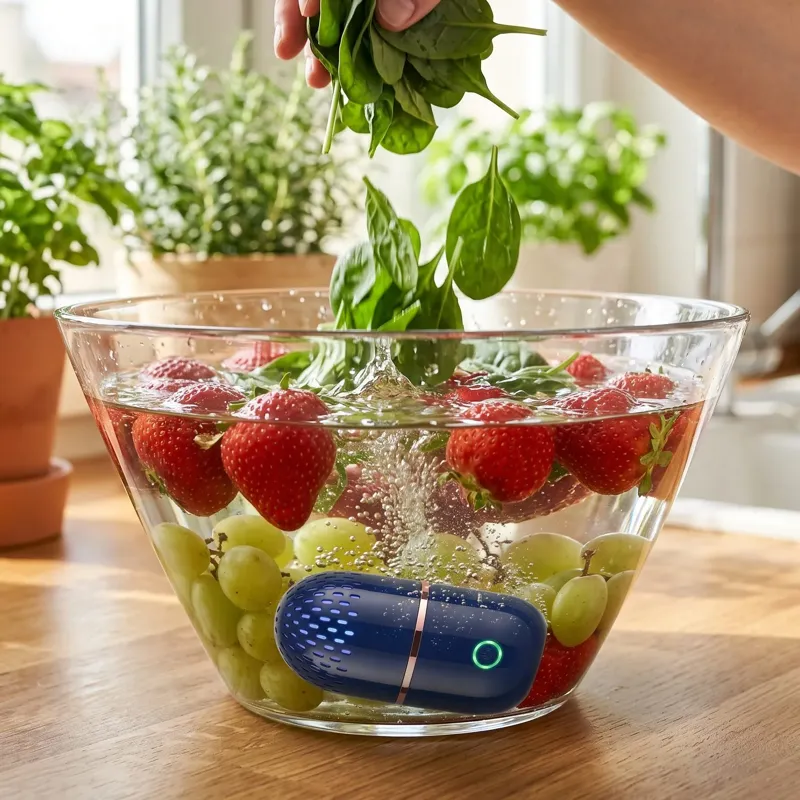
Our pick for washing produce: PodBloom
A wireless, IPX7-waterproof purifier that sits in a bowl of water and runs a 10-minute electrolysis cycle for fruit and vegetables. No soap, no refills. $59.95, or $35.98 each in the 3-pack.
Check today's PodBloom price →30-day money-back guarantee · wireless charging base included
What do produce washes claim to remove?
Most produce washes promise to remove four things:
- Dirt and grit from soil and handling.
- Wax, the food-grade coating added to apples, cucumbers and citrus to keep them fresh.
- Pesticide residue on the surface of the skin.
- Germs from soil, water and the many hands that touch produce before it reaches your kitchen.
Water alone handles dirt well. Wax and surface residue cling more stubbornly, and germs can hide in crevices and rough skins. That's where the method you choose starts to matter.
How do the main methods compare?
| Method | What it does well | Limits |
|---|---|---|
| Quick rinse under the tap | Removes loose dirt; fast | Short contact time; misses crevices |
| Rinse + rubbing or scrubbing | Removes more dirt and germs from firm produce | Can't be used on berries or leafy greens |
| Store-bought veggie wash spray | Easy to use | Little extra benefit over water, per the FDA |
| Baking soda soak | Best-supported home method for surface residue | Needs 10–15 minutes and stirring |
| Vinegar soak | Popular for berries | Can leave a taste; mixed evidence |
| Electrolysis soaker (PodBloom) | Hands-free 10-minute soak, no soap or refills | Finish with a rinse; can't reach residue inside the plant |
Do veggie wash sprays work?
For most produce, store-bought sprays don't do much more than plain water. The FDA's advice for consumers is to rinse produce under running water, rub firm produce, and avoid soap, detergent and commercial produce washes. Part of the reason is that soap and detergents aren't meant to be eaten, and porous produce can absorb them.
That doesn't mean water alone is perfect. What really changes the result is contact time: a 10-second rinse doesn't give water much chance to loosen residue, while a longer soak does.
Does baking soda really clean produce?
Baking soda soaks have the strongest research behind them. A study published in the Journal of Agricultural and Food Chemistry found that soaking apples in a baking soda solution for 12 to 15 minutes removed more surface pesticide residue than tap water or a bleach solution. The researchers also found that some residue had moved into the peel and couldn't be washed off at all.
A common home ratio is about 1 teaspoon of baking soda per 2 cups of water. Soak for 10 to 15 minutes, stir now and then, then rinse under running water. It works, but it takes time and attention, which is why many people stop doing it after a week. Read the details in our guide on how to wash pesticides off produce.
What about vinegar?
Vinegar soaks are popular, especially for berries. A diluted vinegar soak may help reduce some bacteria on the surface, but results vary, it can leave a sour taste on delicate fruit, and it isn't better than baking soda for pesticide residue. If you use vinegar, dilute it (about 1 part vinegar to 3 parts water), keep the soak short and rinse well afterward. See how to wash strawberries.
Do electrolysis produce cleaners like PodBloom work?
PodBloom is a small rechargeable device that sits in a bowl of water with your produce. Press the button and it runs a 10-minute cycle using titanium electrodes. You don't add soap, tablets or refills; it uses only water.
What PodBloom does well is make the part that research supports, a proper soak, effortless:
- Hands-free: drop it in, press start and walk away for 10 minutes.
- Consistent: the same 10-minute soak every time, instead of a rushed rinse.
- No chemicals or refills: just tap water and a rechargeable battery.
- Portable: works in any bowl, sink or container.
Like every washing method, it can't remove residue that has been absorbed inside the plant, and you should finish with a quick rinse under running water. Many buyers notice the water turns cloudy or yellow during the cycle; the brand presents this as loosened residue and grime, though minerals in tap water can also add color, so don't judge results by color alone. Read our full PodBloom review and does PodBloom work?
Make the 10-minute soak effortless
PodBloom: hands-free electrolysis soak with no soap, tablets or refills. $59.95, or $35.98 each in the 3-pack, with a 30-day money-back guarantee.
Check today's PodBloom price →30-day money-back guarantee · wireless charging base included
What's the best routine for washing produce?
- Wash your hands for 20 seconds with soap and water.
- Wash right before eating, not before storing. Extra moisture speeds up spoilage.
- Remove outer leaves of lettuce and cabbage.
- Soak for about 10 minutes in a bowl of water, with baking soda or with a soaker like PodBloom.
- Rinse under cool running water.
- Rub or scrub firm produce like potatoes, carrots and melons with a clean brush.
- Dry with a clean towel or salad spinner.
How should you wash different types of produce?
| Produce | Best method |
|---|---|
| Berries | Short soak, gentle rinse, dry on a towel; wash just before eating |
| Grapes | Separate from the stem in small clusters, soak, rinse |
| Apples, pears, peppers | Soak, then rub under running water |
| Leafy greens | Separate leaves, soak in a bowl, lift out, rinse, spin dry |
| Root vegetables | Scrub with a brush under running water |
| Melons and avocados | Scrub the skin before cutting, so the knife doesn't carry germs inside |
See how to wash grapes for a detailed walk-through.
Should you peel produce instead?
Peeling removes the surface where most residue sits, and it's a good option for produce like apples or cucumbers if residue is your main concern. The trade-off is that the peel holds a lot of fiber and nutrients. A good compromise: soak and rinse produce you eat with the skin, and peel the ones you'd peel anyway.
Do you need to wash organic produce?
Yes. Organic produce can still carry dirt, germs and residue from approved organic pesticides, and it passes through as many hands as conventional produce. Washing is just as important.
What about pre-washed salad?
Bagged greens labeled "pre-washed" or "ready to eat" have already been washed, and the FDA says you don't need to wash them again. Rewashing at home can actually add germs from your sink or hands. Keep them cold and use them before the date on the bag.
Can washing remove microplastics from produce?
Some research suggests tiny plastic particles can be taken up by plants, which washing can't change. What you can control is everything that happens after: storing produce in glass instead of plastic, cutting on a plastic-free board and avoiding plastic wrap. See microplastics on fruit and vegetables and how to avoid microplastics in the kitchen.
What mistakes should you avoid?
- Using soap or dish detergent. It isn't meant for food and can leave residue.
- Washing everything as soon as you get home. Wet produce spoils faster.
- Soaking produce in a dirty sink. Use a clean bowl, or clean the sink first.
- Using the same cutting board for raw meat and produce without washing it.
- Skipping the rinse after a soak.
Is a produce cleaner worth buying?
A spray isn't worth much over plain water. A good soaking routine is. If you're happy to measure baking soda, stir and wait every time, that works. If you know you'll skip it on busy days, a device that runs the soak for you is the easiest way to make it a daily habit, especially for families who eat a lot of berries, grapes and salads. That's where PodBloom earns its place in the kitchen.
Is soaking produce worth it for families with kids?
Children eat a lot of fruit, often with the skin on, and they snack on berries, grapes and apples straight from the bowl. A soak-and-rinse routine is an easy way to give that produce a more thorough clean. With a hands-free soaker, you can wash a big batch of fruit while you make lunch boxes, and kids can help press the button. See plastic-free lunch boxes.
The bottom line
Most store-bought produce wash sprays don't add much beyond plain water. What actually helps:
- a longer soak followed by a rinse
- baking soda for surface residue
- rubbing firm produce and scrubbing skins
- washing right before you eat
No method can remove residue absorbed inside the plant, so a good routine is about doing the soak consistently. PodBloom makes that soak hands-free in 10 minutes, with no soap or refills, from $35.98 each in the 3-pack and with a 30-day money-back guarantee.
Our pick for washing produce: PodBloom
A wireless, IPX7-waterproof purifier that sits in a bowl of water and runs a 10-minute electrolysis cycle for fruit and vegetables. No soap, no refills. $59.95, or $35.98 each in the 3-pack.
Check today's PodBloom price →30-day money-back guarantee · wireless charging base included
Frequently asked questions
Do veggie wash sprays work better than water?
For most produce, not by much. The FDA advises rinsing under running water and avoiding soap, detergent and commercial produce washes.
What is the best way to wash produce?
Soak it for about 10 minutes, rinse under running water, scrub firm produce and dry it.
Does baking soda remove pesticides?
A 12 to 15 minute baking soda soak removed more surface residue from apples than tap water in a published study.
Is vinegar good for washing fruit?
A diluted vinegar soak is popular for berries but can leave a taste, and it isn't better than baking soda for residue.
Do I need to wash pre-washed salad?
No. Bagged greens labeled pre-washed or ready to eat don't need washing again.
Does PodBloom replace rinsing?
No. It runs a hands-free 10-minute soak; finish with a quick rinse under running water.

Michelle Hert
Michelle is a home cook who cooks for a family every day and spends a lot of her free time reading the research behind the products that end up in our kitchens. She started Less Plastic Kitchen after the 2023 cutting board study made her look twice at the scratched plastic board on her own counter. Her guides are built on published studies, manufacturer specifications and verified buyer feedback, and she updates them when new information comes out. More about Michelle.