
- Acidic foods like tomatoes, citrus and vinegar marinades.
- Salty or heavily spiced foods.
- High heat and long cooking times.
Aluminum foil is one of the most useful things in a kitchen drawer. It lines baking sheets, wraps potatoes for the grill, covers roasts while they rest and keeps leftovers from drying out. But questions keep coming up: does aluminum leach into food, and is it linked to health problems?
This guide explains what the science says about aluminum in food, when foil releases more aluminum, who might want to be extra careful, safer ways to use foil and the best alternatives for baking, grilling and storage.
How much aluminum do we get from food?
Aluminum is the most common metal in the Earth's crust, so it's naturally present in water, soil and many foods. According to the CDC's Agency for Toxic Substances and Disease Registry, food is the main source of aluminum for most people, and only a small fraction of what you swallow is absorbed; most leaves the body in urine. Food additives, some medicines like antacids and cookware or foil also contribute.
Does aluminum foil leach into food?
Yes, a little. When foil touches food, especially during cooking, some aluminum can transfer. Germany's Federal Institute for Risk Assessment, BfR, advises that acidic and salty foods should not be stored or cooked in uncoated aluminum, because they increase the release of aluminum. Plain foods like potatoes or bread wrapped in foil transfer far less.
What increases aluminum transfer?
| Factor | Effect | Tip |
|---|---|---|
| Acidic food (tomatoes, citrus, vinegar, rhubarb) | Much more aluminum released | Don't cook or store in foil |
| Salt and spices | Increase transfer | Use parchment between food and foil |
| High heat | Increases transfer | Avoid direct foil contact on the grill |
| Long contact time | More transfer | Store leftovers in glass instead |
| Dry, plain foods (potatoes, bread) | Little transfer | Foil is fine |
Is aluminum from foil harmful?
For healthy adults, the small amounts from occasional foil use are generally not considered a health problem. Health agencies set tolerable intake levels, and some people can exceed them when all sources are added up, which is why the BfR recommends reducing unnecessary exposure. People with kidney disease are a special case: their kidneys may not clear aluminum as well, so they should limit exposure and follow their doctor's advice. The idea that aluminum cookware causes Alzheimer's disease is not supported by current evidence, according to major health organizations.
How do you use aluminum foil more safely?
- Don't use foil with acidic or salty foods, like tomato sauce, lemon fish or marinated meat.
- Put parchment paper between food and foil when baking or grilling.
- Use foil as a cover, not a container: tent it over a roast without touching the food.
- Store leftovers in glass, not wrapped in foil for days.
- Don't use foil in the microwave unless the manufacturer says it's allowed.
- Don't line the bottom of the oven with foil, which can damage the oven.
Does it matter which side is shiny?
No. The shiny and dull sides are just a result of manufacturing, when two sheets are rolled together. Both sides perform about the same; the difference in reflection is tiny. Non-stick foil is coated on one side, so follow the label for that type.
What can you use instead of aluminum foil?
| Use | Alternative |
|---|---|
| Lining baking sheets | Parchment paper or a silicone baking mat |
| Covering dishes in the oven | An oven-safe lid or an upside-down baking dish |
| Grilling vegetables or fish | A cast iron pan, grill basket or cedar plank |
| Storing leftovers | Glass containers with lids |
| Wrapping sandwiches and cheese | Beeswax wraps or parchment |
| Baked potatoes | Bake them directly on the oven rack |
See parchment paper vs wax paper, how to store food without plastic and is plastic wrap safe?
Is foil better than plastic wrap?
They have different trade-offs. Plastic wrap can release microplastics and chemicals, especially with heat and fatty foods, and shouldn't touch food in the microwave. Foil doesn't add plastic but can transfer aluminum to acidic and salty foods. For leftovers, glass containers beat both. For covering bowls, a plate or beeswax wrap works well. For the oven, parchment and lids replace foil in most recipes.
Which kitchen swaps matter most?
If you're looking at foil, you're probably reviewing other kitchen materials too. The swaps with the biggest impact on plastic exposure are: stop heating food in plastic, switch to glass for leftovers, and replace plastic cutting boards. A 2023 study in Environmental Science & Technology found that chopping on plastic boards releases microplastics with every cut.
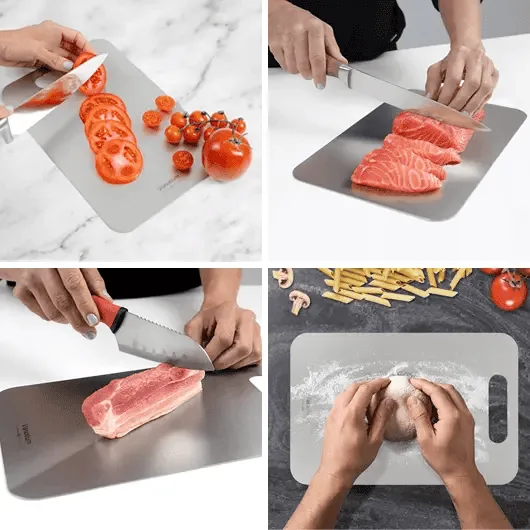
Vanotium is a titanium cutting board with a non-porous surface that sheds no plastic, doesn't hold juices or odors, is dishwasher-safe and resists scratches and warping. It's heat-resistant, so it can even double as a trivet for a hot pan. In October 2026 it was $66.66 for one board or $42.77 each in a four-pack, with a 30-day guarantee. Read our Vanotium review (4.6/5) and plastic-free kitchen swaps.

Cut the plastic from your prep
Vanotium titanium cutting board: no plastic to shed, non-porous, dishwasher-safe and heat-resistant. From $42.77 per board in multi-packs, with a 30-day guarantee.
Check today's Vanotium price →Ships in 5–7 days with tracking · 30-day guarantee
What about aluminum pans?
Most aluminum cookware sold today is anodized or coated, which reduces contact between food and bare aluminum. Uncoated aluminum pans, like some old pots and sheet pans, can release more aluminum with acidic foods, so use stainless steel, enameled cast iron or glass for tomato sauces and citrus dishes. See is stainless steel cookware safe? and is nonstick cookware safe?
Is it safe to grill with foil?
Grilling with foil is common for vegetables, fish and potatoes. Because grilling uses high heat and often salty marinades, it's a situation where more aluminum can transfer. Easy fixes: put a sheet of parchment inside the foil packet, use a grill basket or cast iron pan instead, or skip the acidic marinade and add lemon after cooking.
Can you reuse aluminum foil?
Yes, if it's clean and intact. Wipe or rinse lightly used foil, smooth it out and reuse it for covering dishes. Clean foil can also be recycled in many areas; check local rules. Reusing it a few times reduces waste, though long-term, lids and glass containers are more durable options.
What about the holiday roast?
Tenting a turkey or roast with foil while it rests is one of the most common uses, and it's a low-risk one: the foil sits loosely above the meat, so contact is limited. If you use a citrus or wine-based glaze, keep the foil from touching the glazed surface. For carving, move the roast to a sturdy board that won't shed plastic. See carving boards for turkey.
Is it safe to bake with foil?
Baking with foil is generally fine for plain foods. Lining a sheet pan for roasted potatoes, covering a casserole to keep the top from browning too fast or wrapping garlic for roasting all involve little aluminum transfer. Where it matters more is when acidic or salty ingredients sit against foil in the oven, such as a lasagna with tomato sauce touching the foil cover or salmon baked in foil with lemon slices and salt. In those cases, add a layer of parchment between the food and foil, or use a glass or ceramic dish with its own lid. That small change keeps the convenience of foil while avoiding direct contact.
Should you store leftovers in foil?
Short-term, for plain foods, foil works as a cover. But for leftovers that sit in the fridge for days, especially tomato-based dishes, curries, pickled foods or salty meats, foil isn't the best choice: longer contact means more transfer, and foil tears easily and doesn't seal tightly, so food dries out and absorbs fridge smells. Glass containers with lids keep leftovers fresher, are microwave-safe without the lid and can go straight to the table. See glass vs plastic food containers.
Is foil safe for kids' lunches?
Wrapping a sandwich or a few crackers in foil for lunch is low risk, because the food is cold, dry and only in contact for a few hours. For acidic fruit like oranges or tomatoes, use a stainless steel container instead. A reusable stainless steel lunch box or beeswax wrap is also a simple way to cut down on single-use foil and plastic bags.
The bottom line
Aluminum foil is safe for most everyday uses. Small amounts of aluminum can move into food, especially acidic and salty foods at high heat, so avoid those combinations, use parchment as a barrier, cover rather than wrap when you can, and store leftovers in glass. People with kidney disease should be more cautious. And while you're reviewing kitchen materials, replacing plastic prep tools is one of the easiest wins.
For a board that sheds no plastic and lasts for years, our pick is Vanotium. Check today's Vanotium price and multi-pack deals.
Sources
- CDC Agency for Toxic Substances and Disease Registry. ToxFAQs: Aluminum.
- German Federal Institute for Risk Assessment (BfR). Aluminium.
- Yadav H. et al. Cutting Boards: An Overlooked Source of Microplastics in Human Food? Environmental Science & Technology, 2023.
Frequently asked questions
Is it safe to cook with aluminum foil?
For most everyday uses, yes. Avoid cooking acidic or salty foods directly in foil, which increases aluminum transfer.
Does aluminum foil cause Alzheimer's?
Current evidence does not support a link between aluminum cookware or foil and Alzheimer's disease.
Can I wrap tomato or lemon dishes in foil?
It's better not to. Acidic foods release more aluminum; use glass, ceramic or parchment instead.
Which side of aluminum foil should touch the food?
Either side. The shiny and dull sides perform about the same, except for non-stick foil, which has a coated side.
What can I use instead of aluminum foil?
Parchment paper, silicone mats, oven-safe lids, glass containers and beeswax wraps.
Who should limit aluminum exposure?
People with kidney disease, because their kidneys may not clear aluminum as well. Ask your doctor.

Michelle Hert
Michelle is a home cook who cooks for a family every day and spends a lot of her free time reading the research behind the products that end up in our kitchens. She started Less Plastic Kitchen after the 2023 cutting board study made her look twice at the scratched plastic board on her own counter. Her guides are built on published studies, manufacturer specifications and verified buyer feedback, and she updates them when new information comes out. More about Michelle.