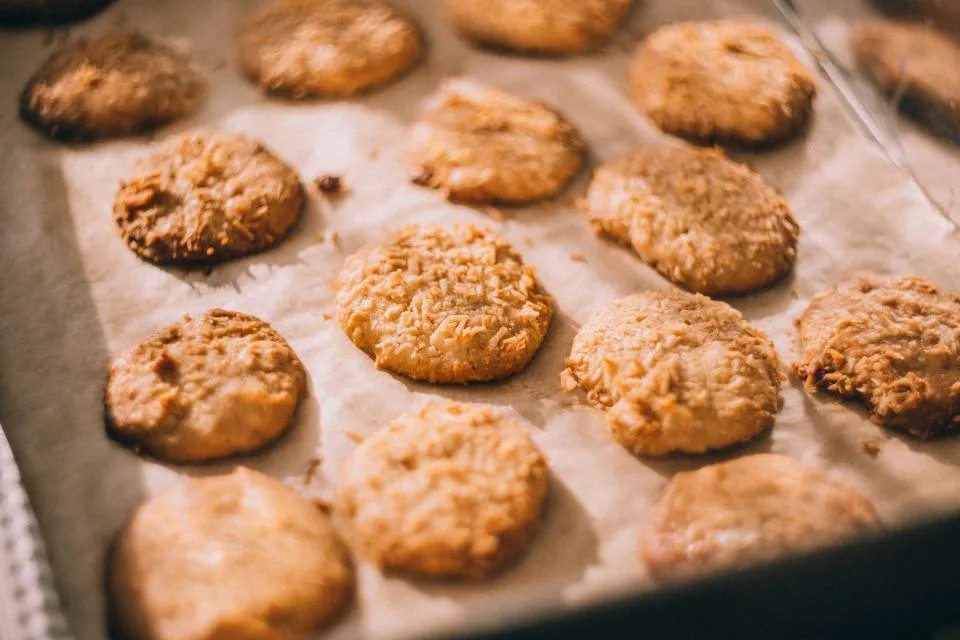
- Parchment paper is coated with silicone and is heat-resistant and oven-safe, usually up to around 420–450°F (check the box). Use it for baking, roasting and lining pans.
- Wax paper is coated with paraffin or soy wax and is not heat-safe. The wax can melt or smoke in the oven. Use it for wrapping food, rolling dough, lining counters and separating layers in the freezer.
It happens in kitchens everywhere: you reach for a roll of paper to line a baking sheet and realize you're not sure whether it's parchment or wax paper. They look alike, both come on rolls and both stop food from sticking. But putting the wrong one in the oven can ruin a batch of cookies and fill the kitchen with smoke.
This guide explains the difference between parchment and wax paper, when to use each, whether they're safe, how they compare with foil, plastic wrap and silicone mats, and how they fit into a kitchen with less plastic.
What's the difference between parchment and wax paper?
| Feature | Parchment paper | Wax paper |
|---|---|---|
| Coating | Silicone | Paraffin or soy wax |
| Oven-safe | Yes, to the temperature on the box | No |
| Non-stick | Yes, including when hot | Yes, at room temperature |
| Moisture-resistant | Yes | Yes |
| Microwave | Generally yes | Generally yes for short reheating as a cover; check the box |
| Typical uses | Baking, roasting, lining pans, cooking en papillote | Wrapping sandwiches, rolling dough, candy and chocolate work, freezer layers |
When should you use parchment paper?
- Baking cookies, bread and pastries on a sheet pan.
- Lining cake pans so cakes release cleanly.
- Roasting vegetables without sticking.
- Cooking fish en papillote, sealed in a parchment packet.
- As a barrier under foil to keep acidic or salty foods from touching aluminum. See is aluminum foil safe?
- Wrapping bread or cheese for storage.
When should you use wax paper?
- Wrapping sandwiches and snacks.
- Rolling out dough or pie crust between two sheets.
- Lining counters when decorating cookies or working with chocolate.
- Separating burgers, cookies or pancakes before freezing.
- Covering bowls in the microwave to prevent splatter, if the box says it's microwave-safe.
Never use wax paper in the oven or on the grill. The wax can melt onto food and the paper can smoke or catch fire.
Is parchment paper safe?
Parchment paper is widely used and considered safe for baking at the temperatures listed on the box. Its silicone coating is stable at those temperatures. Two points to keep in mind:
- Respect the temperature limit; above it, paper can brown, become brittle or burn, especially under the broiler.
- Bleached vs unbleached: white parchment is bleached, usually with chlorine-free processes today. Unbleached brown parchment is a popular choice for people who prefer less processing.
Some grease-resistant papers have historically used PFAS coatings. The FDA has worked with manufacturers to phase out certain PFAS grease-proofing agents in food packaging, as explained on its PFAS in food contact page. Silicone-coated parchment works differently; if you want extra assurance, look for brands that state they're PFAS-free. The EPA explains why many people want to limit PFAS exposure.
Is wax paper safe?
Wax paper is safe for its intended uses at room temperature or in the fridge and freezer. Most is coated with paraffin, a food-grade petroleum wax; soy-wax versions are available for people who prefer a plant-based coating. The key safety rule is simply to keep wax paper out of the oven.
How do they compare with other wraps?
| Option | Heat-safe? | Reusable? | Plastic? | Best for |
|---|---|---|---|---|
| Parchment paper | Yes (oven) | Sometimes, for a second batch | No | Baking, roasting |
| Wax paper | No | No | No | Wrapping, rolling, freezer |
| Aluminum foil | Yes | Sometimes | No | Covering, grilling (avoid acidic foods) |
| Silicone baking mat | Yes | Yes, for years | No (silicone) | Cookies, roasting |
| Beeswax wrap | No | Yes, for months | No | Covering bowls, cheese, bread |
| Plastic wrap | No | No | Yes | Tight seals; avoid heat and fatty foods |
See plastic wrap and microplastics and is silicone safe?
How can they replace plastic in your kitchen?
Parchment and wax paper are useful plastic-free replacements for cling film and zip-top bags in many everyday jobs. Wrap a sandwich in wax paper and tie it with string, separate frozen burgers with wax paper squares, wrap cheese in parchment before placing it in a glass container, or line a lunch box with parchment. They're compostable in many areas when not heavily soiled with grease; check local rules. See how to store food without plastic and plastic-free kitchen swaps.
Which tips make parchment easier to use?
- Crumple it first, then flatten, to make it fit round pans and bowls.
- A dab of butter under the corners keeps it from sliding on the pan.
- Buy precut sheets sized for your baking sheets.
- Reuse it for a second batch of cookies if it's still clean and not brittle.
- Don't use it under the broiler or directly on a hot grill.
What about the board where you prep?
If you're switching from plastic wrap to parchment, you're already cutting plastic in food storage. The cutting board is the next step. A 2023 study in Environmental Science & Technology found that chopping on plastic boards releases microplastics with every cut.
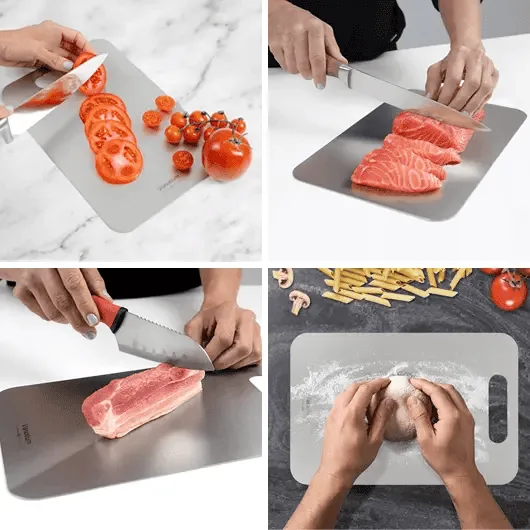
Vanotium is a titanium cutting board with a non-porous surface that sheds no plastic, doesn't hold juices or odors, is dishwasher-safe and resists scratches and warping. It's heat-resistant enough to rest a hot baking sheet on. In October 2026 it was $66.66 for one board or $42.77 each in a four-pack, with a 30-day guarantee. Read our Vanotium review (4.6/5).

From wrap to board, less plastic
Vanotium titanium cutting board: no plastic to shed, non-porous, dishwasher-safe and heat-resistant. From $42.77 per board in multi-packs, with a 30-day guarantee.
Check today's Vanotium price →Ships in 5–7 days with tracking · 30-day guarantee
What's freezer paper?
Freezer paper is a third type, coated on one side with a thin layer of plastic (usually polyethylene) to protect meat from freezer burn. It's not oven-safe. If you're trying to avoid plastic, wrap meat in parchment and place it in a glass container or a silicone bag instead, or use butcher paper inside a container.
What about butcher paper?
Butcher paper is an uncoated, sturdy paper often used for wrapping meat and for smoking brisket. Pink or peach butcher paper is popular for barbecue because it lets smoke through while holding in moisture. It's not non-stick like parchment, but it's a good plastic-free option for wrapping and serving.
What are the most common mistakes?
- Using wax paper on a baking sheet in the oven.
- Using parchment under the broiler, where it can burn.
- Reusing parchment that's brown and brittle.
- Assuming all grease-resistant paper is the same; check the box.
Which paper is best for holiday baking?
Holiday baking is when these papers really earn their place. Use parchment to line cookie sheets and cake pans, to make piping cones for icing and to wrap homemade bread as a gift. Use wax paper to separate layers of cookies and fudge in tins, to roll out pie dough and to catch sprinkles while decorating. Tying a parchment-wrapped loaf with kitchen string makes a plastic-free gift that looks great.
How can you tell them apart?
If you've lost the box, look closely: wax paper is usually shinier and feels slightly waxy, and if you scratch it with a fingernail, a little wax may come off. Parchment has a more matte, smooth finish. When in doubt, keep it out of the oven and buy a new, clearly labeled roll.
Can you use parchment in an air fryer?
Yes, with care. Use perforated parchment liners made for air fryers, which let hot air circulate. Always put food on top of the paper so it can't fly up into the heating element, and never preheat the air fryer with an empty liner inside. Wax paper should never go in an air fryer. A small piece of parchment also makes cleanup much easier when cooking marinated or sticky foods.
Which is more economical?
Wax paper is usually cheaper per foot than parchment, which makes it a good choice for wrapping and freezer jobs where heat isn't involved. Parchment costs a little more, but you can often reuse a sheet for a second batch of cookies. For frequent bakers, a silicone baking mat costs more up front but lasts for years, reducing paper waste. Many kitchens keep all three: parchment for the oven, wax paper for wrapping and a silicone mat for everyday cookies.
How should you store the rolls?
Keep both rolls in a dry drawer away from the stove, and label the boxes clearly so no one grabs wax paper for the oven by mistake.
The bottom line
Parchment paper is silicone-coated and oven-safe, making it the choice for baking and roasting. Wax paper is wax-coated and not heat-safe, so use it for wrapping, rolling dough and freezing. Both are handy plastic-free alternatives to cling film. Respect the temperature limits, choose PFAS-free brands if you prefer, and pair them with plastic-free prep tools.
The board we recommend for a plastic-free kitchen is Vanotium. Check today's Vanotium price and multi-pack deals.
Sources
- U.S. Food and Drug Administration. Authorized Uses of PFAS in Food Contact Applications.
- U.S. Environmental Protection Agency. PFAS Explained.
- Yadav H. et al. Cutting Boards: An Overlooked Source of Microplastics in Human Food? Environmental Science & Technology, 2023.
Frequently asked questions
Can wax paper go in the oven?
No. The wax can melt and the paper can smoke or burn. Use parchment paper for baking.
Is parchment paper safe?
Yes, when used below the temperature listed on the box. Its silicone coating is stable at baking temperatures.
Is unbleached parchment better?
It's less processed and popular with people who prefer fewer treatments; both work the same for baking.
Can I use parchment instead of foil?
Yes, for most baking and roasting, and as a barrier between acidic food and foil.
Can parchment paper be reused?
Often once or twice for cookies, as long as it's clean and not brittle.
Is wax paper a good replacement for plastic wrap?
For wrapping sandwiches, rolling dough and separating food in the freezer, yes.

Michelle Hert
Michelle is a home cook who cooks for a family every day and spends a lot of her free time reading the research behind the products that end up in our kitchens. She started Less Plastic Kitchen after the 2023 cutting board study made her look twice at the scratched plastic board on her own counter. Her guides are built on published studies, manufacturer specifications and verified buyer feedback, and she updates them when new information comes out. More about Michelle.