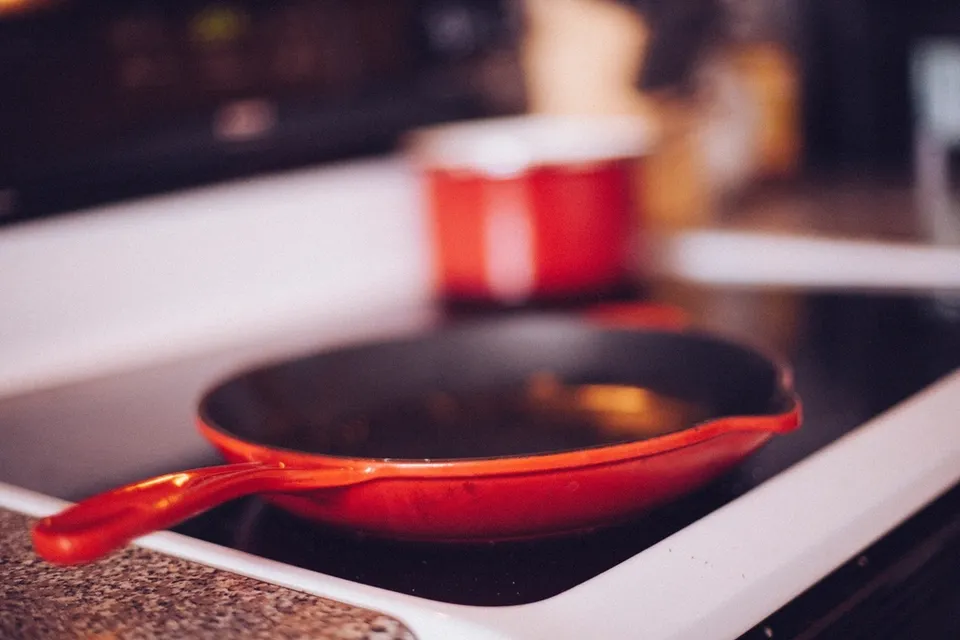
- Most Whitford nonstick coatings are PTFE-based, the same family as classic nonstick. They're made without PFOA, which was phased out in the US by 2015.
- Keep the heat low to medium. PTFE is stable in normal cooking but starts to break down if an empty pan is overheated (above about 500°F / 260°C).
- Replace the pan when the coating scratches or flakes. Worn coatings release tiny particles.
- Skip metal utensils and the dishwasher if the maker says so.
Flip over a nonstick pan, a waffle maker or a rice cooker and you may find a small logo or line of text that says "Whitford", "Eclipse" or "Quantum2". That's not the pan brand: it's the company that made the nonstick coating inside it. Whitford is one of the largest coating suppliers in the world, and its products end up in kitchens everywhere, which is why so many people search for whether a Whitford coating is safe. This guide explains what Whitford coatings are made of, what changed after PFOA was phased out, what the real risks are, how to use a coated pan safely and when to replace it, and which uncoated options to consider if you'd rather avoid PFAS in the kitchen.
In this guide:
- what a Whitford coating is
- PTFE, PFOA and PFAS explained simply
- when a coating becomes a problem
- how to cook safely with a coated pan
- when to replace it
- coating-free alternatives

Our pick: the Vanotium titanium cutting board
Non-porous titanium, no microplastics, dishwasher-safe and backed by a 30-day money-back guarantee. Multi-board deals bring it down to $42.77 per board.
Check today's Vanotium price →Ships in 5–7 days with tracking · 30-day guarantee
What is a Whitford coating?
Whitford is a coatings manufacturer founded in the US in 1969 and now part of the PPG group. It doesn't sell pans to the public. Instead, cookware and appliance brands buy its coatings and apply them to their own products. You'll see Whitford names on the packaging or the base of the pan, usually as a selling point:
| Name you may see | Typical use | Type |
|---|---|---|
| Eclipse | Frying pans and woks | Multi-layer PTFE nonstick |
| Quantum2 | Everyday frying pans | PTFE nonstick, reinforced |
| Excalibur | Heavy-duty pans | PTFE over a stainless steel base layer |
| Xylan | Bakeware, appliances, industry | Fluoropolymer coating family |
| Ceramic or sol-gel lines | "PTFE-free" pans | Silica-based nonstick |
So "Whitford coating" isn't one single product. Most of the well-known lines are PTFE (polytetrafluoroethylene), the material behind classic nonstick, while some newer lines are ceramic. The label or the brand's website usually tells you which one you have.
What's the difference between PTFE, PFOA and PFAS?
These three letters get mixed up all the time, so here's the simple version:
- PFAS is a big family of thousands of "forever chemicals" that don't break down easily in the environment. The EPA explains the family in its PFAS explained page.
- PFOA is one PFAS that was once used to make PTFE. It's linked to health concerns, and US manufacturers phased it out by 2015. Coatings labeled "PFOA-free" are made without it.
- PTFE is the nonstick polymer itself. It's technically a PFAS too, but it's a large, stable plastic that the FDA allows for food contact. The FDA lists the authorized uses of PFAS in food contact, including nonstick cookware.
So when a pan says "PFOA-free", that's true and meaningful, but it doesn't mean "PFAS-free". If your goal is no PFAS at all, you need an uncoated or ceramic pan. More on that in our guide to PFAS-free cookware.
Is a Whitford coating safe for everyday cooking?
For normal home cooking, a PTFE coating in good condition is considered safe. Cooked food doesn't absorb the coating, and the polymer doesn't react with food at normal temperatures. The concerns come from two specific situations:
- Overheating. An empty pan left on high heat can pass 500°F in a few minutes. Above that, PTFE starts to break down and gives off fumes that can cause flu-like symptoms in people and are dangerous to pet birds.
- Wear and damage. Scratched, chipped or flaking coatings shed small particles. Studies have found that a single scratch can release thousands of microscopic fragments, which is one reason so many readers come to us looking for ways to cut down on microplastics in the kitchen.
There's also the bigger picture: even when a finished pan is stable, making and disposing of fluoropolymers adds PFAS to the environment. That's why many people choose to use fewer coated items overall, even if they keep one good nonstick pan for eggs. See our full guide: is nonstick cookware safe?
Are Whitford ceramic coatings different?
Yes. Ceramic or sol-gel nonstick is made from silica (a sand-based material), not PTFE, so it doesn't contain fluoropolymers. It handles higher heat without fumes, but it tends to lose its slickness faster, often within a year or two of daily use. If you have a pan sold as "ceramic" or "PTFE-free", check the brand's description to confirm. We compare both types in is ceramic cookware safe?
How do you cook safely with a coated pan?
- Never preheat an empty pan on high. Add a little oil or food first, and use low to medium heat.
- Use the right burner size so the flame or element doesn't overheat the edges.
- Turn on the range hood when you sear or stir-fry.
- Use wood, bamboo or silicone utensils. Metal spatulas and whisks scratch the surface. See our list of non-toxic kitchen utensils.
- Hand wash with a soft sponge unless the maker says the pan is dishwasher-safe. Harsh detergents wear coatings down faster.
- Let it cool before washing. Cold water on a hot pan can warp the base and crack the coating.
- Store it carefully. Place a cloth or paper towel between stacked pans.
- Keep pet birds out of the kitchen while you cook with any nonstick.
Our pick: the Vanotium titanium cutting board
Non-porous titanium, no microplastics, dishwasher-safe and backed by a 30-day money-back guarantee. Multi-board deals bring it down to $42.77 per board.
Check today's Vanotium price →Ships in 5–7 days with tracking · 30-day guarantee
When should you replace a Whitford-coated pan?
A coating isn't meant to last forever. Replace the pan when you notice:
- deep scratches that show the metal underneath
- flaking or peeling, even in small spots
- food starting to stick everywhere, even with oil
- a warped base that wobbles on the stove
- discoloration or a rough, chalky surface
With gentle care, a good PTFE pan often lasts three to five years. Ceramic pans usually wear sooner. When it's time, many people replace it with stainless steel or cast iron instead of buying another coated pan.
What about coated bakeware and appliances?
Whitford coatings are also used on baking sheets, muffin tins, waffle makers, sandwich presses, rice cookers and air fryer baskets. The same rules apply: don't overheat empty, avoid metal tools, hand wash and replace when the coating is damaged. Bakeware sits at oven temperatures for long periods, so keep recipes at or below the temperature on the label. Our guides to nonstick bakeware, non-toxic baking sheets and air fryer safety cover these in detail.
What are the best coating-free alternatives?
| Material | Best for | Things to know |
|---|---|---|
| Stainless steel | Searing, sauces, everyday cooking | No coating at all; food sticks less once you preheat and use a little oil |
| Cast iron | Searing, frying, baking | Naturally nonstick when seasoned; heavy; needs drying and oiling |
| Carbon steel | Eggs, stir-fry, crepes | Lighter than cast iron; seasons the same way |
| Enameled cast iron | Stews, braises, bread | Glass enamel coating, no PTFE; avoid chipping |
| Glass and ceramic bakeware | Casseroles, roasting | Inert surfaces; avoid sudden temperature changes |
Compare them in cast iron vs nonstick and is stainless steel cookware safe?
Why does your cutting board matter too?
Swapping a worn nonstick pan is one step toward a kitchen with fewer coatings and plastics, but the cutting board is often overlooked. Plastic boards develop knife grooves that release microplastic shavings into food, and wood boards absorb moisture and need oiling. A titanium board is non-porous, doesn't shed microplastics, doesn't absorb odors and goes in the dishwasher. That's why it pairs well with a stainless or cast iron pan. Read our guide to plastic cutting boards and microplastics.
How can you tell what coating your pan has?
- Check the box or the pan's base for coating names such as Eclipse, Quantum2, Excalibur or Xylan.
- Look for "PTFE" or "PTFE-free" in the product description. "PFOA-free" alone usually means it's PTFE.
- Search the model on the pan brand's website. Most list the coating supplier and type.
- Ask the brand. Customer service can confirm whether a pan uses PTFE or ceramic.
Knowing what you have helps you use it at the right temperature and decide what to buy next.
Is it safe to cook for kids with a coated pan?
Yes, with the same precautions: moderate heat, no overheating of an empty pan, no metal utensils and replacing it when it's worn. If you'd like to reduce your family's overall exposure to PFAS and microplastics, focus on the habits that make the biggest difference: avoid heating food in plastic containers, use a non-plastic cutting board, filter drinking water and choose uncoated pans for high-heat cooking. Start with our guide on how to avoid microplastics in the kitchen.
Which Whitford coating myths can you ignore?
- "Any scratch makes the pan toxic." A tiny surface mark isn't an emergency, but deep scratches and flaking mean it's time to replace it.
- "PFOA-free means no forever chemicals." Not quite: PTFE is still a fluoropolymer.
- "Ceramic lasts forever." Ceramic coatings are fluorine-free but often wear faster.
- "Nonstick fumes happen at normal cooking heat." Problems start when an empty pan is overheated, not during normal medium-heat cooking.
What should you look for if you buy a new coated pan?
If you still want one nonstick pan for eggs and pancakes, a few features help it last longer and stay safer:
- A thick, heavy base that spreads heat evenly, so the center doesn't overheat while the edges stay cool.
- A clear coating description that says whether it's PTFE or ceramic, instead of vague words like "stone" or "granite".
- A realistic warranty on the coating, and care instructions you're happy to follow.
- An oven-safe limit printed on the pan or box, so you know how hot it can go.
- A size you'll actually use. One 10-inch pan for eggs is enough for most households; the rest of the set can be uncoated.
Keep the coated pan for low-heat jobs and use stainless steel or cast iron for searing and high-heat cooking. That way the coating lasts longer and you lower your exposure at the same time.
How should you get rid of an old coated pan?
A worn nonstick pan shouldn't go back on the stove, but it doesn't need to go straight to the landfill either. Many scrap metal recyclers accept aluminum and stainless pans, sometimes after the handle is removed. Some cookware brands and retailers run take-back programs, especially when you buy a replacement. If neither option is available nearby, check your local waste rules. Don't donate a pan with a damaged coating, since the next owner would face the same problem.
The bottom line
Is a Whitford coating safe?
- most Whitford lines are PFOA-free PTFE nonstick, considered safe for normal cooking
- overheating an empty pan and using a damaged coating are the real risks
- cook on low to medium heat, use soft utensils and hand wash
- replace the pan when it's scratched, flaking or warped
- for zero PFAS, choose stainless steel, cast iron, carbon steel or glass
To go one step further, swap your plastic board for the Vanotium titanium cutting board: non-porous, microplastic-free and dishwasher-safe, with multi-board deals from $42.77 per board and a 30-day money-back guarantee.
Our pick: the Vanotium titanium cutting board
Non-porous titanium, no microplastics, dishwasher-safe and backed by a 30-day money-back guarantee. Multi-board deals bring it down to $42.77 per board.
Check today's Vanotium price →Ships in 5–7 days with tracking · 30-day guarantee
Frequently asked questions
Does Whitford coating contain PFOA?
Current Whitford nonstick coatings are made without PFOA, which US manufacturers phased out by 2015. Most lines are PTFE-based, which is a different material.
Is Quantum2 coating safe?
Quantum2 is a PTFE nonstick coating. Like other PTFE coatings, it's considered safe for normal cooking at low to medium heat, as long as the pan isn't overheated empty or damaged.
Is Whitford Eclipse PTFE?
Yes. Eclipse is a multi-layer PTFE nonstick coating used in many frying pans and woks.
At what temperature does nonstick become dangerous?
PTFE starts to break down above about 500°F (260°C), which an empty pan on high heat can reach in a few minutes. Normal medium-heat cooking stays well below that.
When should I throw away a nonstick pan?
When the coating is deeply scratched, flaking or peeling, when food sticks everywhere or when the base is warped.
What is the safest alternative to a coated pan?
Stainless steel, cast iron, carbon steel and glass or ceramic bakeware have no PTFE coating at all.

Michelle Hert
Michelle is a home cook who cooks for a family every day and spends a lot of her free time reading the research behind the products that end up in our kitchens. She started Less Plastic Kitchen after the 2023 cutting board study made her look twice at the scratched plastic board on her own counter. Her guides are built on published studies, manufacturer specifications and verified buyer feedback, and she updates them when new information comes out. More about Michelle.