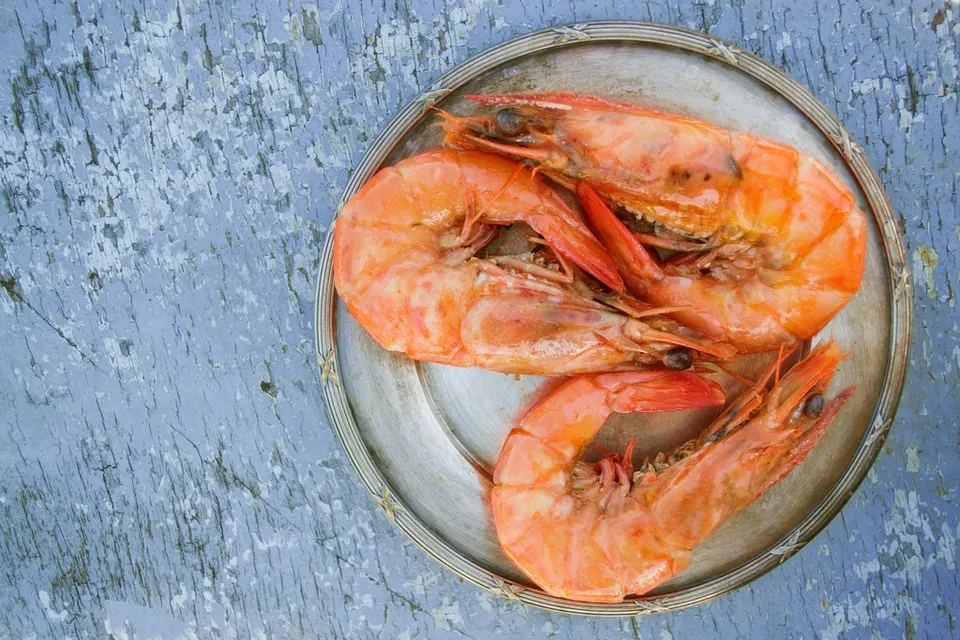
- Fish and seafood are still a healthy food; the FDA encourages most adults to eat fish regularly.
- To cut exposure, remove the gut, choose fillets, rinse shellfish, and favor a variety of species.
- Seafood is only one source. Kitchen habits matter too: don't heat food in plastic, and swap plastic cutting boards for a board that sheds no plastic, like the titanium Vanotium.
Headlines about microplastics in fish and shellfish worry many people who are trying to eat well. Seafood is rich in protein, omega-3 fats, iodine and vitamin D, and health agencies recommend eating it regularly. At the same time, the ocean collects a huge amount of plastic, and tiny particles end up in the animals that live there.
This guide explains how microplastics get into seafood, which types tend to contain more, what the science says about health, why you shouldn't give up fish, and practical ways to reduce your exposure, both from seafood and from your own kitchen.
How do microplastics get into seafood?
Plastic that reaches the sea breaks into smaller and smaller pieces under sunlight, waves and friction. According to NOAA, microplastics are plastic pieces less than five millimeters long, and they come from larger plastic debris, microbeads and synthetic fibers. Marine animals swallow these particles while feeding or filtering water. Filter feeders like mussels and oysters pump large volumes of water through their bodies every day, so they collect particles from the water around them.
Which seafood contains the most microplastics?
| Type | Why exposure can be higher or lower | Relative exposure |
|---|---|---|
| Mussels, oysters, clams, scallops eaten whole | Filter feeders; the whole animal, including the gut, is eaten | Higher |
| Small shrimp and whole small fish (sardines, anchovies) | Often eaten with the gut | Moderate to higher |
| Crab and lobster | Gut usually not eaten | Moderate |
| Fillets of larger fish (salmon, cod, tuna) | Most particles stay in the gut, which is removed | Lower |
Exact numbers vary a lot between studies, locations and methods, so treat any single figure with caution. The general pattern, however, is consistent: animals eaten whole contribute more particles than fillets.
Are microplastics in seafood harmful?
Scientists don't yet know how much harm microplastics in food cause in people. The FDA says current scientific evidence does not demonstrate that the levels of microplastics or nanoplastics detected in foods pose a risk to human health, while research continues. The WHO has also called for more research. Concerns researchers are studying include inflammation, chemicals added to plastics, and pollutants that can stick to particles. See microplastics health effects.
Should you stop eating seafood?
No. The FDA's advice about eating fish encourages adults to eat at least eight ounces of a variety of fish per week, choosing options lower in mercury, and gives specific guidance for pregnant people, breastfeeding parents and children. The benefits of seafood are well established. A better approach is to eat a variety of species and use simple preparation habits that reduce particles.
How can you reduce microplastics from seafood?
- Choose fillets of larger fish more often than whole small fish.
- Remove the gut and the dark vein from shrimp before cooking.
- Rinse shellfish under cold running water and scrub the shells.
- Vary species instead of eating the same type every time.
- Buy fresh fish wrapped in paper or bring your own container instead of buying it on plastic trays with cling film.
- Never heat seafood in plastic; cook and reheat in glass, ceramic, cast iron or stainless steel.
- Cut fish on a non-plastic board.
Is your kitchen adding more plastic than the fish?
Possibly. A 2023 study in Environmental Science & Technology estimated that chopping on plastic cutting boards could release tens of grams of microplastics per person per year, so the board itself is a source you control. Plastic packaging, takeout containers, cling film and heating food in plastic add particles too. See microplastics in food and plastic cutting boards and microplastics.
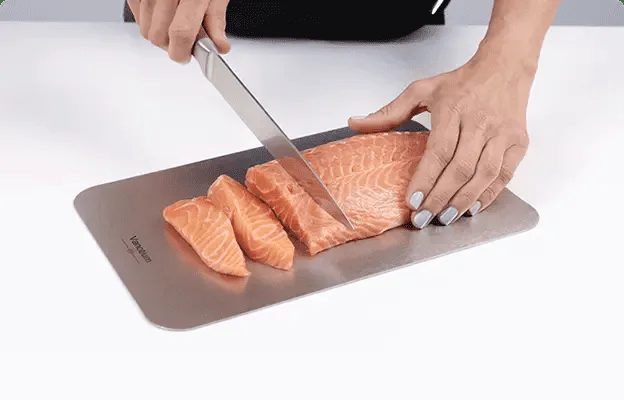
Which cutting board is best for fish?
Raw fish needs a board that's easy to sanitize and doesn't absorb juices or smells. Vanotium is a titanium cutting board with a non-porous surface that sheds no plastic, resists fishy odors and stains, is waterproof and fast-drying, and goes in the dishwasher. It's scratch-resistant and warp-proof, so it doesn't develop the grooves that make plastic boards hard to clean. In October 2026 it was $66.66 for one board, $116.66 for two or $42.77 each in a four-pack, with a 30-day guarantee and tracked shipping in 5–7 days. Read our Vanotium review (4.6/5) and the best board for raw meat and fish.

Prep fish without plastic shavings
Vanotium titanium cutting board: non-porous, odor-resistant, dishwasher-safe and sheds no plastic. From $42.77 per board in multi-packs, with a 30-day guarantee.
Check today's Vanotium price →Ships in 5–7 days with tracking · 30-day guarantee
Is farmed fish lower in microplastics than wild fish?
There's no simple answer. Farmed fish can be exposed to particles from feed, nets and equipment, while wild fish are exposed to whatever is in their environment. Results differ by species, region and study. Rather than choosing farmed or wild based on microplastics alone, follow the FDA's guidance on mercury, choose a variety of species and focus on preparation habits you control.
What about canned fish?
Canned tuna, salmon and sardines are convenient, affordable and nutritious. Small canned fish like sardines are eaten whole, so they can contain more particles than tuna or salmon fillets. Many cans are lined with a thin coating; choose brands labeled BPA-free if that's a concern, and transfer leftovers to a glass container rather than storing them in the opened can. See is BPA-free plastic safe?
How should you clean mussels and clams?
Scrub the shells under cold running water, pull off the beard on mussels, and discard any shells that are cracked or don't close when tapped. Soaking clams in cold salted water for 20 to 30 minutes helps them expel sand. These steps are mainly about grit and freshness, but they also remove particles stuck to the outside of the shell. Cook shellfish until the shells open and discard any that stay closed.
Is seafood still a good choice for children?
Yes. The FDA and EPA give specific guidance on choosing fish lower in mercury for children and for people who are pregnant or breastfeeding, and they recommend fish as part of a healthy diet. Offer a variety of "best choice" species like salmon, cod, shrimp and canned light tuna in age-appropriate portions, and use the same simple habits: remove the gut, cook in glass or metal, and avoid heating food in plastic.
Does sea salt add more microplastics?
Sea salt has been found to contain microplastics in several studies, since it's made by evaporating seawater. The amounts per serving are small compared with other sources, but if you want to reduce exposure, rock salt and mined salts are alternatives. See microplastics in salt.
How big is the seafood risk compared with other sources?
Seafood gets a lot of attention because the link to ocean plastic is easy to picture, but it's only one of many sources. Drinking water, especially bottled water, tea bags, food packaging, household dust and heating food in plastic all contribute. Researchers are still working on reliable comparisons, and estimates vary widely. What's clear is that you can reduce several sources at once with a few simple kitchen changes, without giving up the nutritional benefits of fish. See how to reduce microplastics in your body and microplastics in water bottles.
What should you look for when buying seafood?
- Fresh fish with clear eyes, firm flesh and a mild ocean smell.
- Shellfish with tightly closed shells.
- Paper wrapping at the fish counter, or your own glass container.
- A variety of species from the FDA's "best choices" list.
- Frozen fillets in minimal packaging, which are often just as nutritious as fresh.
Does cooking remove microplastics from seafood?
Cooking doesn't destroy plastic particles inside fish or shellfish; normal cooking temperatures are far below what it takes to break down most plastics. What cooking can change is how much plastic the food picks up from the kitchen. Steaming mussels in a stainless steel pot, baking salmon on parchment in a glass dish or searing shrimp in cast iron adds no plastic, while microwaving fish in a plastic container or simmering it in a plastic bag can add more. The preparation steps before cooking, removing the gut and rinsing, make more difference than the cooking method itself.
What about seafood takeout and sushi?
Takeout seafood often comes in plastic trays with plastic lids, and hot dishes sit in that plastic during delivery. Transfer food to a plate as soon as it arrives, and reheat leftovers in glass or ceramic. Sushi and poke are usually served cold, which limits transfer from containers, but they're often cut on plastic boards in restaurants. At home, a plastic-free board is one more step you control. See are plastic takeout containers safe?
The bottom line
Microplastics are found in seafood, especially shellfish and small fish eaten whole, but fish remains a healthy food that health agencies recommend. Choose fillets more often, remove the gut, rinse shellfish, vary species and avoid heating seafood in plastic. Then tackle the sources you control in your kitchen, starting with the cutting board.
For a plastic-free board for fish and meat, our pick is Vanotium. Check today's Vanotium price and multi-pack deals.
Sources
- NOAA National Ocean Service. What are microplastics?
- U.S. Food and Drug Administration. Microplastics and Nanoplastics in Foods.
- U.S. Food and Drug Administration. Advice about Eating Fish.
- Yadav H. et al. Cutting Boards: An Overlooked Source of Microplastics in Human Food? Environmental Science & Technology, 2023.
Frequently asked questions
Which seafood has the most microplastics?
Shellfish eaten whole, like mussels, oysters and clams, and small fish or shrimp eaten with the gut tend to have the most.
Does fish fillet contain microplastics?
Fillets of larger fish usually contain fewer particles, because most microplastics stay in the gut, which is removed.
Should I stop eating seafood because of microplastics?
No. The FDA encourages most adults to eat a variety of fish each week. Simple habits reduce exposure.
Does removing the shrimp vein help?
Yes. The vein is the digestive tract, so removing it removes some particles along with grit.
Are microplastics in seafood dangerous?
The FDA says current evidence doesn't show that levels found in food pose a health risk, but research continues.
What's the best cutting board for raw fish?
A non-porous, dishwasher-safe board that sheds no plastic, such as the titanium Vanotium board.

Michelle Hert
Michelle is a home cook who cooks for a family every day and spends a lot of her free time reading the research behind the products that end up in our kitchens. She started Less Plastic Kitchen after the 2023 cutting board study made her look twice at the scratched plastic board on her own counter. Her guides are built on published studies, manufacturer specifications and verified buyer feedback, and she updates them when new information comes out. More about Michelle.