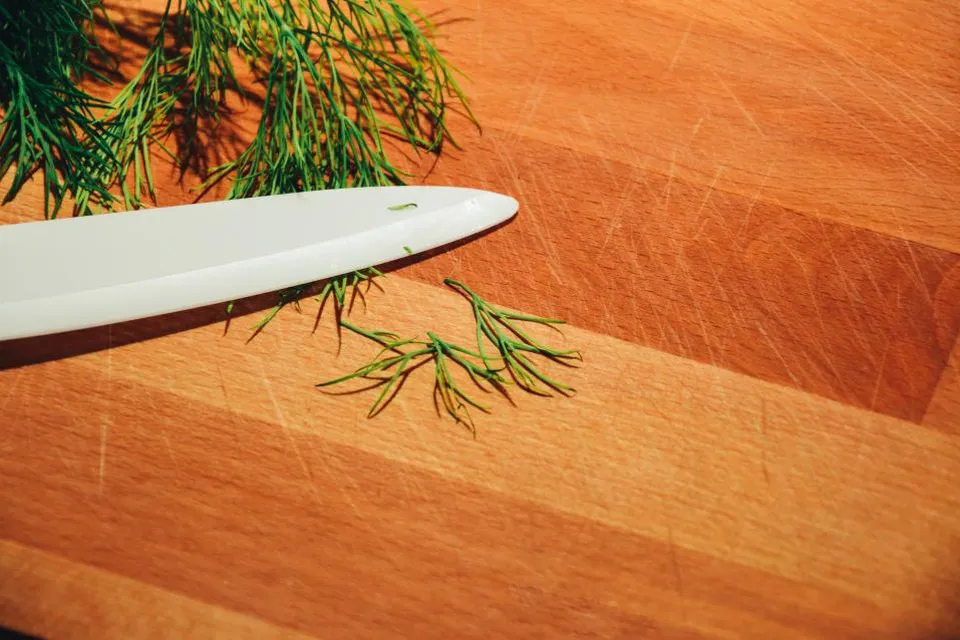
- Chef knife: usually 8 inches, a curved belly and a pointed tip. Best for a rocking motion, mincing herbs, breaking down a chicken and big jobs.
- Santoku: usually 6 to 7 inches, a flatter edge and a rounded "sheep's foot" tip. Best for straight up-and-down chopping, thin slicing and dicing vegetables.
- Pick a chef knife if you cook a bit of everything and like to rock the blade. Pick a santoku if you mostly prep vegetables, have smaller hands or prefer a shorter, lighter knife.
- Many home cooks own one of each.
Walk into any kitchen store and you'll see two knives side by side at the front: the classic Western chef knife and the Japanese santoku. Both promise to handle almost every job in the kitchen, both come in every price range and both have loyal fans. If you're replacing a dull old knife or buying your first good one, the choice can be confusing. The truth is that there's no single winner. The best knife is the one that matches how you cut, what you cook and how it feels in your hand. This guide compares chef knives and santokus side by side: blade shape, size, cutting technique, the foods each one handles best, edge angle and sharpening, care and which cutting boards keep them sharp.
In this guide:
- the main differences at a glance
- blade shape and cutting style
- which foods suit each knife
- edges, steel and sharpening
- how to choose for your kitchen
- care and cutting boards
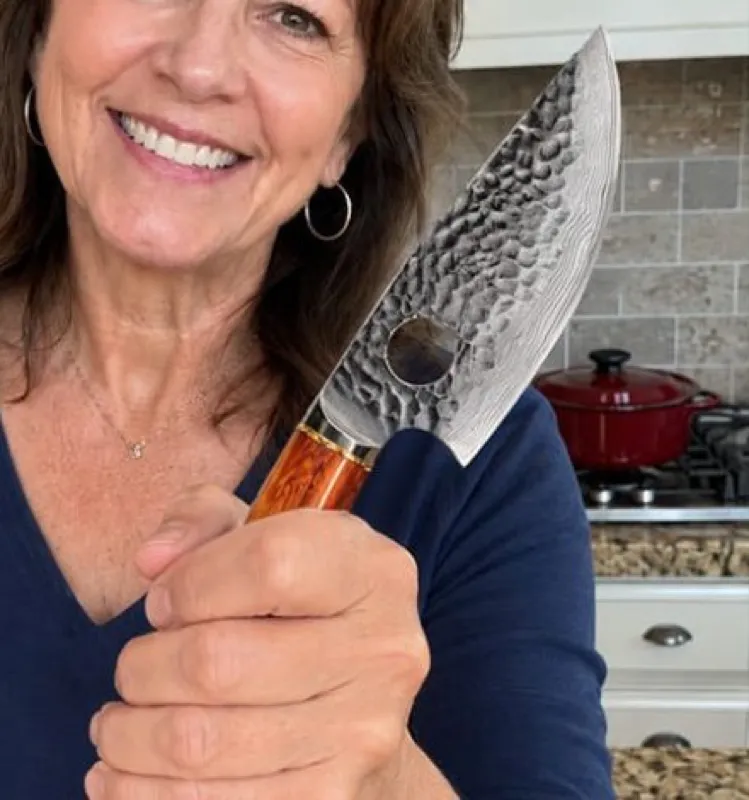
Pair it with: the Matsato Osuren chef knife
Hammered Japanese-style steel blade with a 12° edge, a finger hole for control and a pakka and acacia wood handle. $29.95 for one, or $19.98 each in the 4-pack.
Check today's Matsato price →60-day money-back guarantee · free recipe book with your order
What's the difference between a chef knife and a santoku?
| Chef knife | Santoku | |
|---|---|---|
| Origin | Western (French and German traditions) | Japanese, popular since the mid-1900s |
| Typical length | 8 inches (6 to 10 available) | 6 to 7 inches |
| Edge shape | Curved belly that rises to a point | Flatter edge with a gentle curve near the tip |
| Tip | Sharp, pointed | Rounded "sheep's foot" |
| Cutting motion | Rocking | Push-cut, up and down |
| Weight | Usually heavier | Usually lighter |
| Edge angle | Often 15 to 20 degrees per side | Often 10 to 15 degrees per side |
| Hollow-edge dimples | Sometimes | Common |
The name santoku is often translated as "three virtues", usually explained as slicing, dicing and mincing, or meat, fish and vegetables. You can read more about its history in the santoku entry on Wikipedia and compare it with the chef's knife entry.
How does blade shape change the way you cut?
Chef knife: the curved belly lets the blade rock back and forth while the tip stays on the board. That's what makes mincing garlic and herbs so quick. The pointed tip is also useful for scoring, trimming fat and working around bones.
Santoku: the flatter edge meets the board along more of its length, so it's built for a straight push forward and down. Each stroke cuts all the way through, which makes neat, even slices of onions, carrots, cucumbers and cabbage. The rounded tip is less useful for piercing but feels safer to many cooks.
Neither style is "better". They simply reward different techniques. If you've always rocked a Western knife, a santoku may feel odd for a week or two. If you naturally chop straight down, a santoku may feel more natural than a chef knife from day one.
Which foods is each knife best for?
| Job | Chef knife | Santoku |
|---|---|---|
| Mincing herbs and garlic | Excellent (rocking) | Good (chopping) |
| Dicing onions | Excellent | Excellent |
| Thin slicing vegetables | Good | Excellent |
| Breaking down a chicken | Excellent (pointed tip) | Good |
| Large squash and melons | Excellent (longer blade) | Fair |
| Slicing fish and boneless meat | Good | Excellent |
| Small kitchens and cutting boards | Fair | Excellent (shorter) |
Do the dimples on a santoku really help?
Many santokus have small scallops along the blade called a granton or hollow edge. They create tiny air pockets that can help thin slices of potato, cucumber or cheese fall away instead of sticking to the blade. The effect is noticeable with starchy and wet foods, but modest. A hammered (tsuchime) finish works in a similar way and is common on Japanese-style knives.
Pair it with: the Matsato Osuren chef knife
Hammered Japanese-style steel blade with a 12° edge, a finger hole for control and a pakka and acacia wood handle. $29.95 for one, or $19.98 each in the 4-pack.
Check today's Matsato price →60-day money-back guarantee · free recipe book with your order
Is a santoku sharper than a chef knife?
Often, yes. Japanese-style knives are usually sharpened to a thinner angle, around 10 to 15 degrees per side, while many Western chef knives sit at 15 to 20 degrees. A thinner edge feels sharper and glides through food, but it can chip more easily on bones, frozen food or hard cutting boards. A slightly wider edge is a little more forgiving. Our guide to Japanese vs German chef knives explains the steel and angle differences in more detail.
Which size and weight should you choose?
- 8-inch chef knife: the classic all-rounder for most home cooks.
- 6 to 7-inch santoku: easier to control for people with smaller hands, limited counter space or a small cutting board.
- Heavier knives do more of the work through hard foods like squash.
- Lighter knives are less tiring for long prep sessions and feel nimble.
If you can, hold a few knives before buying. The balance point, handle shape and weight matter as much as the blade style.
How do you decide which one to buy?
- Think about how you cut today. Rocker or chopper?
- Look at what you cook most. Lots of vegetables and stir-fries lean santoku. Roasts, whole chickens and big squash lean chef knife.
- Check your space. A smaller board and counter suit a santoku.
- Consider your hands. If an 8-inch knife feels long, try 7 inches or a santoku.
- Set a budget for one great knife rather than a block of mediocre ones.
Still unsure? Start with whichever feels more comfortable, then add the other later. Most cooks end up using both.
What about knives that combine both styles?
Some modern knives blend features: a chef knife length with a flatter profile, a Japanese-style thin edge on a Western shape, or a hammered finish to help food release. The Matsato Osuren is one example: a hammered Japanese-style blade with a 12° edge, a finger hole near the spine for a secure pinch grip and a pakka and acacia wood handle. It suits cooks who like the sharpness of a Japanese edge but want an all-purpose shape. Read our Matsato Osuren review.
How should you hold and use each knife?
For both, the pinch grip gives the most control: thumb and index finger pinch the blade just in front of the handle, with the other fingers wrapped around the handle. Keep your guiding hand in a "claw", with fingertips tucked in. With a chef knife, keep the tip on the board and rock the blade through the food. With a santoku, lift the whole blade slightly and push forward and down. Step by step: how to hold a chef knife.
How do you sharpen a chef knife and a santoku?
- Hone often with a honing rod or ceramic rod to keep the edge aligned.
- Sharpen a few times a year on a whetstone or with a guided sharpener.
- Match the angle: about 15 to 20 degrees for many Western knives, 10 to 15 for many Japanese-style knives.
- Avoid pull-through sharpeners set to the wrong angle, which can damage thin Japanese edges.
Full guide: how to sharpen a chef knife.
Which cutting board keeps these knives sharp?
Glass, stone and ceramic boards dull any knife quickly. Wood and soft plastic are gentle on edges, but plastic boards shed microplastic shavings into food as they get scratched, and wood needs regular oiling. If you're considering a titanium board, it's non-porous and microplastic-free; the trade-off is that hard surfaces can wear an edge a bit faster, so honing regularly matters. We cover this in do titanium cutting boards dull knives? and the best knife for a titanium cutting board.
How do you care for a good knife?
- hand wash right after use and dry immediately
- never put it in the dishwasher
- store it in a knife block, on a magnetic strip or with a blade guard
- don't cut on glass, granite or plates
- use the spine, not the edge, to scrape food off the board
More tips in how to care for a Matsato Osuren knife.
Which chef knife and santoku myths can you ignore?
- "A santoku can't mince." It can; it just chops instead of rocking.
- "Chef knives are only for professionals." They're the most common home knife in the US.
- "More expensive always means sharper." Edge angle, steel and maintenance matter more than price.
- "You need a full knife set." One great all-purpose knife and a paring knife cover most cooking.
Do you also need a paring knife?
Whichever main knife you choose, a small paring knife of 3 to 4 inches is the perfect partner. It handles jobs that are awkward with a big blade: peeling apples, hulling strawberries, deveining shrimp, trimming green beans and cutting small garnishes. Together, an all-purpose knife and a paring knife cover almost everything a home cook needs, with a bread knife as an optional third.
The bottom line
Chef knife vs santoku:
- a chef knife is longer, curved and pointed, made for rocking and big jobs
- a santoku is shorter, flatter and lighter, made for push-cutting vegetables and thin slices
- pick the one that matches how you cut, what you cook and how it feels in your hand
- both stay sharpest with regular honing, hand washing and a gentle board
The Matsato Osuren combines a hammered Japanese-style blade, a 12° edge and a finger hole for control: $29.95, or $19.98 each in the 4-pack, with a 60-day money-back guarantee and a free recipe book.
Pair it with: the Matsato Osuren chef knife
Hammered Japanese-style steel blade with a 12° edge, a finger hole for control and a pakka and acacia wood handle. $29.95 for one, or $19.98 each in the 4-pack.
Check today's Matsato price →60-day money-back guarantee · free recipe book with your order
Frequently asked questions
What is the main difference between a chef knife and a santoku?
A chef knife is longer with a curved belly and pointed tip for rocking cuts. A santoku is shorter and flatter with a rounded tip for straight up-and-down chopping.
Is a santoku better for vegetables?
Many cooks find it easier for thin, even slices and dicing vegetables, thanks to its flatter edge and lighter weight.
Can a santoku replace a chef knife?
For most everyday prep, yes. A chef knife is still handier for large squash, whole chickens and rocking through herbs.
Is a santoku sharper than a chef knife?
Often, because Japanese-style knives are usually sharpened to a thinner angle, around 10 to 15 degrees per side.
What size chef knife is best for home cooks?
An 8-inch chef knife suits most home cooks. A 6 to 7-inch santoku is easier for smaller hands and kitchens.
What are the dimples on a santoku for?
The hollow-edge dimples create small air pockets that can help thin slices of potato or cucumber release from the blade.

Michelle Hert
Michelle is a home cook who cooks for a family every day and spends a lot of her free time reading the research behind the products that end up in our kitchens. She started Less Plastic Kitchen after the 2023 cutting board study made her look twice at the scratched plastic board on her own counter. Her guides are built on published studies, manufacturer specifications and verified buyer feedback, and she updates them when new information comes out. More about Michelle.