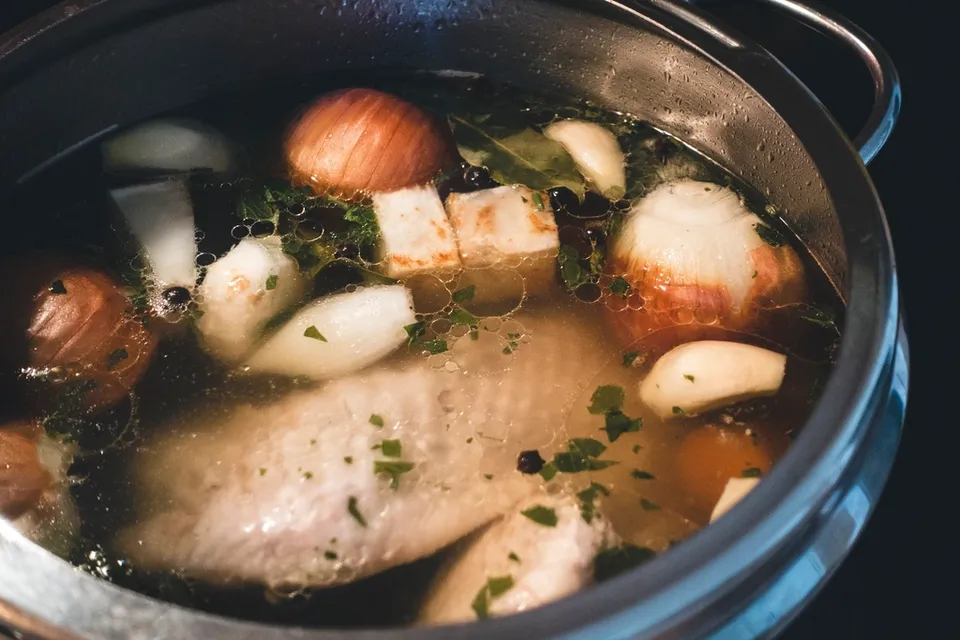
- No synthetic coating to scratch, flake or overheat.
- Very durable: good pans last for decades.
- Dishwasher-safe and handles high heat and the oven.
- Small amounts of nickel and chromium can move into food, mostly with long-cooked acidic dishes in new pans. That's usually not a concern unless you have a nickel allergy.
Stainless steel is the workhorse of professional kitchens. It sears, simmers, braises and goes in the oven, and it can be scrubbed hard without damaging a coating. As more people move away from nonstick pans because of concerns about PFAS and worn coatings, stainless steel is often the first replacement they consider.
This guide explains what stainless steel is, whether it leaches metals into food, what the numbers like 18/10 mean, who should be careful, how stainless compares with nonstick, cast iron and ceramic, and how to cook with it so food doesn't stick.
What is stainless steel?
Stainless steel is an alloy of iron with at least about 10.5 percent chromium, which forms a thin, invisible layer on the surface that resists rust and corrosion. Most cookware also contains nickel, which makes the steel shinier and more corrosion-resistant. Many pans have an aluminum or copper core sandwiched between stainless layers for better heat distribution; the food only touches stainless steel.
What do 18/10, 18/8 and 18/0 mean?
| Grade | Chromium / nickel | Notes |
|---|---|---|
| 18/10 | 18% chromium, 10% nickel | Very corrosion-resistant, shiny; common in quality cookware |
| 18/8 | 18% chromium, 8% nickel | Similar performance; common in cookware and utensils |
| 18/0 | 18% chromium, almost no nickel | Option for people with nickel allergy; magnetic; slightly less corrosion-resistant |
Does stainless steel leach into food?
A little, in some situations. A study published in the Journal of Agricultural and Food Chemistry cooked tomato sauce in stainless steel pots for several hours and found that nickel and chromium levels in the sauce increased, with the most transfer from new pots and long cooking times. Levels dropped after the pots had been used several times. For most people, these small amounts aren't considered a health problem, and chromium is an essential nutrient in tiny amounts. People with a nickel allergy, however, may want to limit long acidic simmers in new stainless pans or choose 18/0 steel.
How do you minimize metal transfer?
- Season new pans by cooking a few regular meals before long acidic dishes.
- Avoid storing acidic foods like tomato sauce in the pan overnight; transfer to glass.
- For long tomato or wine braises, consider enameled cast iron.
- Replace pans that are deeply pitted.
How does stainless compare with other cookware?
| Cookware | Coating | Durability | Best for |
|---|---|---|---|
| Stainless steel | None | Decades | Searing, sauces, boiling, oven, everyday cooking |
| Cast iron | Seasoning (oil) | Generations | Searing, roasting, baking |
| Nonstick (PTFE) | PTFE | A few years | Eggs, delicate fish at low heat |
| Ceramic nonstick | Silica-based | Often 1–2 years | Eggs, low-fat cooking |
| Enameled cast iron | Enamel (glass) | Many years | Braises, tomato sauces, bread |
See cast iron vs nonstick and is nonstick cookware safe?
Is stainless steel PFAS-free?
Plain stainless steel pans have no coating, so they don't contain PTFE or other PFAS on the cooking surface. The EPA explains that PFAS break down very slowly and can build up in people and the environment, which is why many cooks prefer uncoated pans. Some "hybrid" stainless pans have a nonstick coating inside, so check the product description if you want a fully uncoated surface.
How do you keep food from sticking?
- Preheat the empty pan over medium heat for a couple of minutes.
- Test the heat: a drop of water should form a ball that skates across the pan.
- Add oil and let it shimmer.
- Add food and wait: meat and fish release on their own once a crust forms.
- Don't overcrowd the pan, which lowers the temperature and causes steaming.
How do you clean stainless steel?
- Most stainless pans are dishwasher-safe; hand washing keeps them shinier.
- For stuck-on food, simmer a little water in the pan, then scrape with a wooden spatula.
- Remove rainbow discoloration with a little white vinegar.
- Use a stainless cleaner or a paste of baking soda for burnt spots.
- Avoid steel wool on polished surfaces, which scratches the finish.
What about plastic in food prep?
Switching to stainless steel takes coatings out of your cooking. The next step is the prep area. A 2023 study in Environmental Science & Technology found that chopping on plastic cutting boards releases microplastics with every cut.
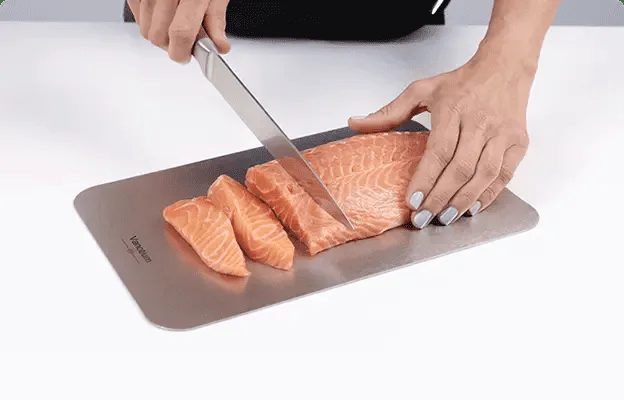
Vanotium is a titanium cutting board with a non-porous surface that sheds no plastic, doesn't hold juices or odors, is dishwasher-safe and resists scratches and warping. It's heat-resistant enough to set a hot stainless pan on. In October 2026 it was $66.66 for one board or $42.77 each in a four-pack, with a 30-day guarantee. Read our Vanotium review (4.6/5) and stainless steel vs titanium cutting boards.

Coating-free pans, plastic-free board
Vanotium titanium cutting board: no plastic to shed, non-porous, dishwasher-safe and heat-resistant. From $42.77 per board in multi-packs, with a 30-day guarantee.
Check today's Vanotium price →Ships in 5–7 days with tracking · 30-day guarantee
Which utensils work best with stainless?
Stainless steel is tough enough for metal utensils, so a stainless steel spatula, tongs and whisk are fine. Wooden spoons are great for sauces. Avoid plastic spatulas on hot pans, since high heat can soften or melt them. See are plastic cooking utensils safe?
What should you look for when buying stainless cookware?
- Tri-ply or multi-ply construction (stainless with an aluminum or copper core) for even heat.
- A heavy, flat base that won't warp.
- Riveted, oven-safe handles.
- Induction compatibility if you have an induction cooktop.
- 18/10 or 18/8 steel for the cooking surface, or 18/0 if you have a nickel allergy.
Which stainless pieces should you buy first?
You don't need a full set. A 10- or 12-inch skillet handles searing, sautéing and pan sauces. A 3-quart saucepan covers rice, grains, sauces and reheating soup. A large stockpot is useful for pasta, stock and big batches. With those three pieces, plus a cast iron skillet if you like, most home cooking is covered without any synthetic coatings.
Does stainless steel work on induction?
Most multi-ply stainless cookware works on induction because the outer layer is magnetic stainless steel. To check, hold a magnet to the bottom of the pan; if it sticks firmly, the pan works on induction. Some 18/10 pans with a non-magnetic outer layer won't, so look for an "induction-compatible" label when buying.
Which stainless steel myths can you ignore?
- "Everything sticks." Proper preheating and patience solve most sticking.
- "It's only for professionals." It's one of the most forgiving materials once you learn to preheat.
- "It's toxic because it contains nickel." Small amounts transfer in some conditions, but for most people that's not a health concern.
- "You can't use it for eggs." With enough heat, fat and patience, eggs release fine; many cooks still keep a small nonstick pan just for eggs.
How long does stainless cookware last?
A well-made stainless steel pan can last for decades. There's no coating to wear out, and even discolored or scratched pans cook just as well. That durability means less waste and a lower cost over time than replacing nonstick pans every few years.
Can you cook eggs in stainless steel?
Yes, though it takes a little more technique than nonstick. Preheat the pan over medium heat until a drop of water skates across the surface, add a generous layer of butter or oil, and let it get hot but not smoking. Crack the eggs in and leave them alone for a minute; they'll release once the whites set. For scrambled eggs, a slightly lower heat and constant stirring with a wooden or stainless spatula prevent sticking. If you cook eggs every day and don't want to bother, keeping one small nonstick or ceramic pan only for eggs, used at low heat, is a common compromise.
Is stainless steel safe for families?
Yes. Stainless steel is widely used for kids' lunch boxes, water bottles and baby food containers because it's durable, easy to clean and doesn't contain plastic. For cookware, the main family tip is practical: stainless handles can get hot in the oven, so use oven mitts and turn handles away from the edge of the stove. Stainless steel also doesn't chip or break, which makes it a safe choice in a busy kitchen. For storage, glass containers work alongside stainless pans to keep plastic out of meals.
Is stainless steel worth the price?
Good stainless cookware costs more up front than basic nonstick, but it doesn't wear out. A quality skillet bought once can outlast several nonstick pans, which makes it cheaper per year and reduces waste. You can also buy one piece at a time, starting with the pan you use most.
The bottom line
Stainless steel cookware is safe, durable and coating-free, which makes it one of the best choices for a healthier kitchen. Small amounts of nickel and chromium can transfer with long acidic cooking in new pans; people with a nickel allergy can choose 18/0 steel or enameled cast iron for those dishes. Preheat properly to prevent sticking, and pair stainless pans with plastic-free prep tools.
If you're ready to swap your plastic board, Vanotium is the one we recommend. Check today's Vanotium price and multi-pack deals.
Sources
- Kamerud K. L., Hobbie K. A., Anderson K. A. Stainless Steel Leaches Nickel and Chromium into Foods during Cooking. Journal of Agricultural and Food Chemistry, 2013.
- U.S. Environmental Protection Agency. PFAS Explained.
- Yadav H. et al. Cutting Boards: An Overlooked Source of Microplastics in Human Food? Environmental Science & Technology, 2023.
Frequently asked questions
Is stainless steel cookware toxic?
No. It's one of the safest, most durable options. Small amounts of nickel and chromium can transfer, mostly with long acidic cooking in new pans.
Is 18/10 stainless steel safe?
Yes. 18/10 means 18 percent chromium and 10 percent nickel, a common, corrosion-resistant cookware grade.
What stainless steel is best for a nickel allergy?
18/0 stainless steel, which contains almost no nickel, or enameled cast iron for acidic dishes.
Is stainless steel PFAS-free?
Plain stainless steel has no coating, so the cooking surface has no PTFE or other PFAS.
Why does food stick to stainless steel?
Usually the pan isn't preheated enough or the food is moved too soon. Preheat, add oil, and wait for food to release.
What cutting board pairs well with stainless cookware?
A plastic-free board like the titanium Vanotium, which is non-porous and dishwasher-safe.

Michelle Hert
Michelle is a home cook who cooks for a family every day and spends a lot of her free time reading the research behind the products that end up in our kitchens. She started Less Plastic Kitchen after the 2023 cutting board study made her look twice at the scratched plastic board on her own counter. Her guides are built on published studies, manufacturer specifications and verified buyer feedback, and she updates them when new information comes out. More about Michelle.