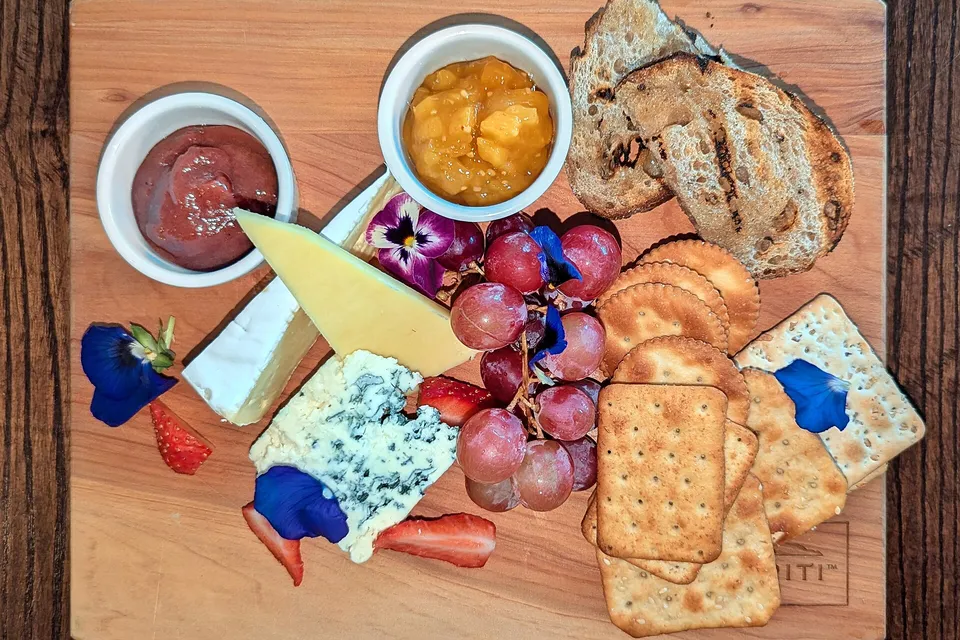
- Hardwood (acacia, walnut, maple, olive): warm look, gentle on knives, the classic choice for serving.
- Marble or slate: stays cool, great for soft cheeses; heavy and hard on knives (use cheese knives, not your chef's knife).
- Bamboo: affordable and light; can be tough on knives.
- Titanium: non-porous and dishwasher-safe, ideal as a prep board for cutting cheese, meats and fruit before plating.
- Avoid: plastic boards for serving (they scratch and can shed particles) and glass (slippery, hard on knives).
A cheese board is half food, half presentation. The right board makes the spread look generous and inviting, keeps soft cheeses at the right temperature, and is easy to clean after the party. With the holidays coming, many people are choosing a new board for entertaining. This guide compares cheese board materials, explains which work best for serving versus prep, and gives tips on size, care, food safety and putting together a board that looks great.
How do cheese board materials compare?
| Material | Look | Knife-friendly | Care | Best for |
|---|---|---|---|---|
| Hardwood | Warm, classic | Yes | Hand wash, oil | All-purpose serving |
| Olive wood | Beautiful grain | Yes | Hand wash, oil | Rustic presentation |
| Marble | Elegant, cool | No (dulls knives) | Wipe; avoid acids that etch | Soft cheeses, warm rooms |
| Slate | Dramatic, dark | No | Wipe, oil occasionally | Labeling with chalk |
| Bamboo | Light, modern | Fair | Hand wash, oil | Budget boards |
| Titanium | Sleek, modern | Fair | Dishwasher-safe | Prep, hygienic cutting |
| Plastic | Plain | Yes | Dishwasher | Not ideal for serving |
Why is wood the most popular?
Wood looks inviting, sits steady, is kind to cheese knives and suits every style from rustic to modern. Dense hardwoods like walnut, maple and acacia hold up well. Since cheese is mostly dry and fatty rather than juicy, wood stays clean with a quick wipe and wash. Oil it regularly so it doesn't absorb fats that can turn rancid. See how to care for a wood cutting board.
When is marble or slate better?
Marble stays naturally cool, which helps soft cheeses like brie and burrata hold their shape in a warm room. Slate looks striking and you can write cheese names on it with chalk. Both are heavy and hard on blades, so use dedicated cheese knives. Marble can be etched by acidic foods like lemon and wine, so wipe spills promptly.
Should you prep on the serving board?
For a nicer result and easier cleanup, prep first and plate second. Slice hard cheeses, cured meats and fruit on a dedicated prep board, then arrange them on your serving board. This keeps the serving board free of deep knife marks and lets you clean the messy prep board in the dishwasher. A non-porous board is ideal for cutting cured meats and juicy fruit.

The easy-clean prep board for party platters
Vanotium titanium cutting board: non-porous, dishwasher-safe and microplastic-free. From $42.77 per board in a 4-pack, with a 30-day money-back guarantee.
Check today's Vanotium price →Ships in 5–7 days with tracking · 30-day guarantee
Can a titanium board be a cheese board?
Yes, especially for a modern look or for prep. A titanium surface doesn't absorb fats, juices or smells and goes straight in the dishwasher. Vanotium is a titanium cutting board with a 30-day money-back guarantee; many hosts use it to prep cheese, meats and fruit and then serve on wood or marble. Read our Vanotium review.
Why avoid plastic for serving?
Plastic boards look less appealing and scratch quickly, and scratched plastic can shed tiny particles, according to research in Environmental Science & Technology. For a cleaner look and less plastic, choose wood, stone or metal. See plastic cutting boards and microplastics.
What size board do you need?
| Guests | Board size |
|---|---|
| 2 to 4 | About 12 x 8 inches |
| 6 to 8 | About 16 x 12 inches |
| 10 or more | 18 inches or larger, or two boards |
How do you keep a cheese board food-safe?
- Keep perishable cheeses and meats out for no more than about two hours.
- Use separate knives for each cheese.
- Keep raw foods away from the serving board.
- Wash the board in hot soapy water after the party.
The FDA recommends keeping perishable foods out of the temperature danger zone and refrigerating leftovers promptly.
How do you build a great cheese board?
- Pick three to five cheeses with different textures: soft, semi-soft, hard and blue.
- Place cheeses first, spaced around the board.
- Add cured meats folded or rolled.
- Fill gaps with crackers, bread, fruit and nuts.
- Add small bowls of jam, honey, mustard and olives.
- Garnish with herbs.
How do you care for a cheese board?
- Wood: hand wash, dry upright, oil monthly.
- Marble: wipe with mild soap; avoid acidic cleaners.
- Slate: wipe; occasionally rub with mineral oil.
- Titanium: dishwasher or warm soapy water.
Is a cheese board a good gift?
Yes, especially paired with cheese knives or a small jar of honey. Wooden and marble boards are popular hostess gifts during the holidays. For cooks who want a plastic-free prep board, see titanium cutting board as a gift and gifts for home cooks.
Can you use your bread board?
Yes, a wooden bread board doubles nicely as a cheese board. See best cutting board for bread.
Which knives go with a cheese board?
- Soft cheese knife: holes in the blade stop brie from sticking.
- Spreader: for very soft cheeses and dips.
- Hard cheese knife or cleaver: for aged cheddar and parmesan.
- Fork-tipped knife: cuts and picks up slices.
Use one knife per cheese so flavors don't mix, especially with blue cheese.
How long should cheese sit out before serving?
Most cheeses taste best at room temperature, so take them out about 30 to 60 minutes before guests arrive, depending on the room. Keep the total time out to about two hours for food safety, and refrigerate leftovers promptly.
What about vegan or dairy-free boards?
The same materials work for plant-based spreads, nut cheeses, hummus, vegetables and fruit. Wet foods like dips and cut fruit are best in small bowls on the board to keep wood dry.
How do you remove cheese smells from a wood board?
Wash with warm soapy water, then scrub with coarse salt and lemon or a baking soda paste, rinse and dry. Re-oil once dry. For strong cheeses, a quick wipe right after serving prevents smells from setting in. See cutting board smells.
How do you set up the board ahead of time?
Slice hard cheeses and fold cured meats up to a few hours ahead, store them covered in glass containers in the fridge, and arrange the board just before guests arrive. Add crackers last so they stay crisp. Prepping on an easy-clean board means less to wash on the day.
How do you make a holiday cheese board?
Add seasonal touches: cranberries, pomegranate seeds, figs, candied pecans, rosemary sprigs and a small jar of honey or fig jam. A round wooden board can look like a wreath with rosemary around the edge. Keep it simple and generous.
What mistakes should you avoid?
- Leaving the board out for hours.
- Using one knife for every cheese.
- Putting wet fruit directly on unoiled wood.
- Cutting with a chef's knife on marble or slate.
- Soaking a wooden board after the party.
How much cheese per person?
For an appetizer board, plan about 2 to 3 ounces of cheese per person; for a main-course board, about 4 to 5 ounces.
What's the difference between a cheese board and a charcuterie board?
A cheese board focuses on cheese, while charcuterie traditionally means cured meats. Most people now use "charcuterie board" for any spread with cheese, meats, crackers, fruit and nuts. The same board materials work for both. Cured meats are oily, so oil your wooden board well and wash it promptly after serving. If you also prep raw meat for cooking, keep a separate non-porous board for that.
How should you store a cheese board?
Store wooden boards upright or flat on a shelf once completely dry. Wrap marble in a towel to prevent scratches. Keep slate away from damp spots. A board that's fully dry before storage won't develop mold or smells.
What should you look for when buying?
- Dense hardwood or quality stone.
- A size that suits your usual group.
- Smooth, sanded edges.
- Feet or a non-slip base if it's stone.
- A handle if you'll carry it around a lot.
How do you clean up after the party?
Scrape off leftovers, wash wooden boards in warm soapy water, rinse and dry upright, then oil the next day once fully dry. Put a titanium prep board straight in the dishwasher. Wipe stone boards with mild soap. Done in minutes.
Is acacia a good choice?
Yes. Acacia is a dense, durable hardwood with attractive grain and is often more affordable than walnut. Oil it regularly so it stays water-resistant and keeps its color.
What's the takeaway?
Serve on wood or stone, prep on an easy-clean board and keep plastic off the table.
Can kids help build the board?
Yes. Kids love arranging crackers, grapes and nuts. Let them fill the gaps once the cheeses are placed.
The bottom line
Hardwood is the most versatile cheese board material, with marble and slate as elegant options for soft cheeses. Prep on an easy-clean board, serve on wood or stone, avoid plastic and keep food out no longer than about two hours.
For easy-clean prep before the party, our pick is Vanotium. Check today's Vanotium price and multi-pack deals.
Sources
- U.S. Food and Drug Administration. Safe Food Handling.
- Yadav et al., 2023. Microplastics from cutting boards, Environmental Science & Technology.
Frequently asked questions
What is the best material for a cheese board?
Hardwood like acacia, walnut, maple or olive is the most versatile.
Is marble good for a cheese board?
Yes for soft cheeses since it stays cool, but it's hard on knives.
Should I use plastic for a cheese board?
It's not ideal; plastic scratches and can shed particles.
How long can a cheese board sit out?
About two hours for perishable cheeses and meats.
What size cheese board do I need?
About 16 x 12 inches for 6 to 8 guests.
Can I prep on one board and serve on another?
Yes, it keeps the serving board nicer and cleanup easier.

Michelle Hert
Michelle is a home cook who cooks for a family every day and spends a lot of her free time reading the research behind the products that end up in our kitchens. She started Less Plastic Kitchen after the 2023 cutting board study made her look twice at the scratched plastic board on her own counter. Her guides are built on published studies, manufacturer specifications and verified buyer feedback, and she updates them when new information comes out. More about Michelle.