- Don't heat food in plastic; use glass or ceramic.
- Drink filtered tap water from glass or stainless steel instead of bottled water.
- Swap plastic cutting boards, which shed microplastics with every cut.
- Use loose-leaf tea instead of plastic tea bags.
- Store food in glass and cut back on plastic-packaged and processed foods.
- Dust and vacuum regularly, since household dust carries plastic fibers.
Microplastics have been found in human blood, lungs, placentas and, in a 2025 study in Nature Medicine, brain tissue. Headlines like these make many people wonder whether they can get microplastics out of their bodies. Social media is full of detox teas, supplements and cleanses that claim to do just that.
This guide separates what science actually supports from what it doesn't. It explains how microplastics enter the body, what the research says about elimination, the everyday sources you can control and a realistic plan to cut exposure, starting in your kitchen.
How do microplastics get into the body?
- Eating: food packaging, cutting boards, plastic containers, seafood, salt and processed foods.
- Drinking: bottled water, tap water, tea bags and hot drinks in plastic-lined cups.
- Breathing: indoor air and dust carry fibers from synthetic textiles, carpets and furniture.
The World Health Organization has called for more research into microplastics and for reducing plastic pollution, while noting that much is still unknown about health effects. See microplastics health effects.
Can you detox microplastics?
There's no proven supplement, tea, cleanse or diet that removes microplastics from the body. Larger particles that you swallow are thought to pass mostly through the digestive tract and leave in stool. Smaller particles may be absorbed and reach tissues, and scientists are still studying how, or whether, they're cleared. Be skeptical of products that claim to "flush out" plastic; they're not supported by evidence. The most reliable approach is to reduce intake.
What did the brain study find?
A 2025 study in Nature Medicine found microplastics and nanoplastics in human brain samples, with higher concentrations in more recent samples than in older ones. The study shows that particles can reach the brain, but it doesn't prove that they cause disease. Researchers say more work is needed, and the findings are one reason many people want to reduce exposure where they can.
Which habits reduce microplastic intake most?
| Habit | Why it helps | Effort |
|---|---|---|
| Never heat food in plastic | Heat increases particle and chemical release | Easy |
| Replace plastic cutting boards | Boards shed particles with every cut | Easy |
| Filtered tap water instead of bottled | Bottled water can contain many particles | Easy |
| Loose-leaf tea | Plastic tea bags release particles in hot water | Easy |
| Glass food storage | Less contact with plastic over time | Moderate |
| Fewer packaged and processed foods | Packaging and processing add particles | Moderate |
| Dust, vacuum and ventilate | Indoor dust carries plastic fibers | Moderate |
How do you drink less plastic?
Bottled water has been shown to contain many tiny plastic particles in several studies. Drinking tap water through a quality filter, carried in a glass or stainless steel bottle, is an easy swap. Researchers have also reported that boiling hard tap water and filtering it can remove a large share of nano- and microplastics, as covered by ScienceAlert. See microplastics in water bottles, microplastics in drinking water and do water filters remove microplastics?
What should you change in your kitchen first?
- Stop microwaving in plastic. Use glass or ceramic. See is it safe to microwave plastic?
- Replace your plastic cutting board. A 2023 study in Environmental Science & Technology estimated chopping on plastic boards can release tens of grams of microplastics per person per year.
- Switch to glass containers for leftovers.
- Use wood or stainless utensils instead of plastic spatulas on hot pans.
- Choose loose-leaf tea and a stainless steel infuser.
- Replace worn nonstick pans with stainless steel or cast iron.
See how to avoid microplastics in the kitchen.
Which cutting board is best for cutting exposure?
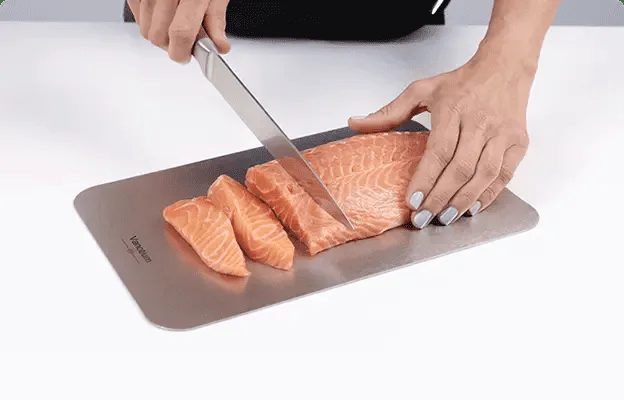
Vanotium is a titanium cutting board with a non-porous surface that sheds no plastic as you cut. It doesn't hold juices or odors, is dishwasher-safe, waterproof and fast-drying, and resists scratches and warping, so it stays hygienic for years. It's also heat-resistant and lightweight. In October 2026 it was $66.66 for one board, $116.66 for two or $42.77 each in a four-pack, with a 30-day guarantee and tracked shipping in 5–7 days. On Trustpilot, it had a 4.0 rating from 63 reviews in October 2026. Read our Vanotium review (4.6/5).

One swap, every meal
Vanotium titanium cutting board: no plastic to shed, non-porous, dishwasher-safe and built to last. From $42.77 per board in multi-packs, with a 30-day guarantee.
Check today's Vanotium price →Ships in 5–7 days with tracking · 30-day guarantee
Which foods tend to carry more microplastics?
- Shellfish eaten whole, like mussels and oysters. See microplastics in seafood.
- Instant rice compared with uncooked rice. See microplastics in rice.
- Sea salt. See microplastics in salt.
- Highly processed, plastic-packaged foods.
- Hot drinks in plastic-lined cups. See microplastics in coffee.
You don't need to give up these foods. Choose fresh, whole foods more often, rinse rice and shellfish, and avoid heat with plastic.
How do you reduce plastic dust at home?
Indoor air and dust are significant sources of microplastic fibers, which come from synthetic clothing, carpets, upholstery and plastic items breaking down. Vacuum with a HEPA filter, dust with a damp cloth, open windows regularly and wash synthetic clothes less often in full loads, which reduces fiber shedding. Choosing natural fibers like cotton and wool for clothing and home textiles also helps over time.
Do diet and exercise help clear microplastics?
There's no direct evidence that a specific diet removes microplastics. A fiber-rich diet supports regular digestion, which helps move swallowed particles through the gut, and staying active and well hydrated supports overall health. These habits are good for many reasons, but they're not a substitute for reducing exposure.
Which claims should you be skeptical of?
- "This supplement removes microplastics." There's no evidence for that.
- "Sweating flushes out plastic." Not supported by research.
- "Activated charcoal detoxes plastics." No evidence for microplastics, and it can interfere with medications.
- "You can test your microplastic level at home." No validated consumer test exists.
What's a realistic 30-day plan?
- Week 1: Stop heating food in plastic; move leftovers to glass.
- Week 2: Start drinking filtered tap water from a glass or stainless bottle.
- Week 3: Replace your plastic cutting board and plastic spatulas.
- Week 4: Switch to loose-leaf tea, vacuum and dust weekly, and cut back on plastic-packaged snacks.
Small changes add up because they repeat every day.
How can families reduce exposure together?
Children eat, drink and breathe more for their body size, so family habits matter. Use glass or stainless steel for kids' lunches and bottles, warm food in glass, keep floors clean where little ones play and choose a plastic-free board for family meals. See microplastics in baby bottles.
Do you need to be perfect?
No. Plastic is everywhere, and eliminating exposure isn't realistic. The goal is to cut the biggest, easiest sources: heat and plastic, bottled water, plastic boards and plastic tea bags. Focus on the habits you repeat every day, and don't let worry take the joy out of cooking and eating.
How do you reduce exposure when eating out?
You can't control a restaurant's kitchen, but you can make a few easy choices. Eat in rather than ordering takeout when you can, so hot food is served on real plates. If you take food home, move it to glass before reheating. Choose a reusable cup for coffee and bring a stainless steel water bottle. At the office, keep a ceramic plate and a real fork in your desk. See are plastic takeout containers safe?
Is reducing exposure expensive?
Many of the most effective habits are free: stop microwaving in plastic, reuse glass jars and drink tap water instead of buying bottled. Others are one-time purchases that last for years, like a water filter, a set of glass containers, a stainless steel bottle and a cutting board that doesn't shed plastic. Over time, skipping bottled water and replacing plastic boards less often can even save money.
How do you know it's working?
There's no validated home test for microplastics, so progress is measured in habits, not numbers. A simple way to stay on track is to list the swaps you've made: no more heating in plastic, filtered water in a glass or steel bottle, a plastic-free cutting board, loose-leaf tea, glass storage. Each one works every single day, so the effect adds up quietly over months, even if you can't see it.
The bottom line
There's no proven way to detox microplastics, but you can reduce how many you take in. Don't heat food in plastic, drink filtered water from glass or stainless steel, use loose-leaf tea, store food in glass, keep dust down and replace your plastic cutting board. Ignore detox products, and focus on everyday habits that add up.
For everyday prep without plastic, we recommend Vanotium. Check today's Vanotium price and multi-pack deals.
Sources
- World Health Organization. WHO calls for more research into microplastics and a crackdown on plastic pollution, 2019.
- Nihart A. J. et al. Bioaccumulation of microplastics in decedent human brains. Nature Medicine, 2025.
- Yadav H. et al. Cutting Boards: An Overlooked Source of Microplastics in Human Food? Environmental Science & Technology, 2023.
- ScienceAlert. There's a surprisingly simple way to remove microplastics in drinking water.
Frequently asked questions
Can you detox microplastics from your body?
There's no proven supplement or cleanse. The most reliable approach is reducing how many you take in.
What is the fastest way to reduce microplastic intake?
Stop heating food in plastic, drink filtered tap water instead of bottled and replace plastic cutting boards.
Does the body get rid of microplastics?
Larger swallowed particles mostly pass through the gut. How smaller particles are cleared is still being studied.
Does boiling water remove microplastics?
Researchers reported that boiling and filtering hard tap water removed a large share of particles.
Do microplastics reach the brain?
A 2025 Nature Medicine study found particles in brain samples, but it doesn't prove they cause disease.
Which kitchen swap reduces microplastics daily?
Replacing your plastic cutting board with one that sheds no plastic, such as the titanium Vanotium.

Michelle Hert
Michelle is a home cook who cooks for a family every day and spends a lot of her free time reading the research behind the products that end up in our kitchens. She started Less Plastic Kitchen after the 2023 cutting board study made her look twice at the scratched plastic board on her own counter. Her guides are built on published studies, manufacturer specifications and verified buyer feedback, and she updates them when new information comes out. More about Michelle.