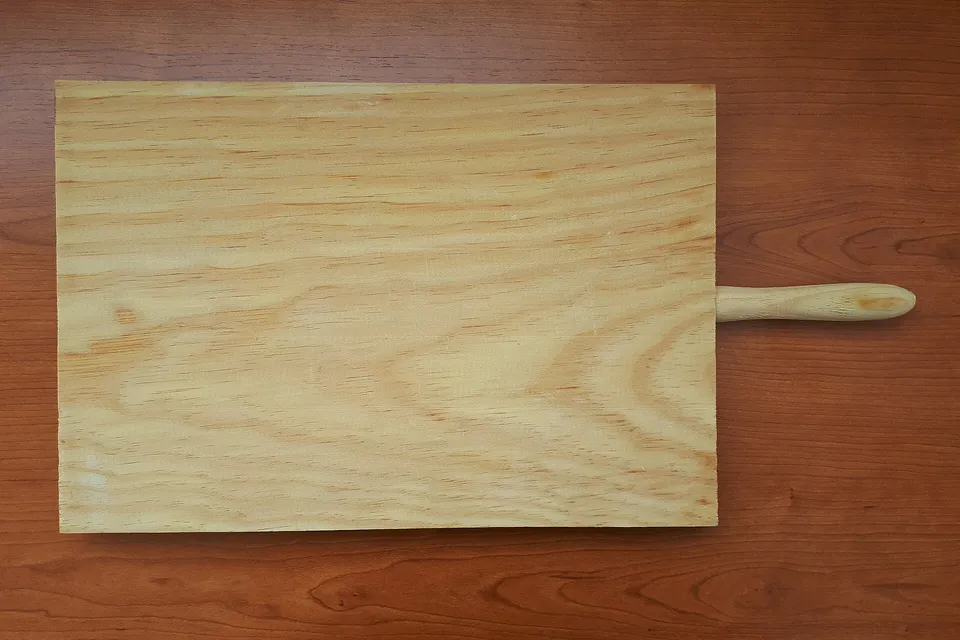
- Least plastic exposure: titanium, wood, bamboo, glass or stainless steel (no plastic shedding).
- Easiest hygiene: non-porous, dishwasher-safe materials like titanium, glass and stainless steel.
- Kindest to knives: wood, especially end grain.
- Safest in a busy kitchen: unbreakable, non-slip boards; glass can chip or shatter.
"Which cutting board is safest?" sounds like a simple question, but it covers several different concerns. Some people worry about microplastics from plastic boards. Others worry about bacteria from raw meat. Some want to protect expensive knives, and parents want something that won't shatter or slip. The best material for you depends on which of these matters most, and the good news is that one material does well on almost all of them.
This guide breaks "safe" into its parts, compares every common material, explains how to use each one safely and gives a clear recommendation for most households.
What makes a cutting board "safe"?
- Chemical and plastic exposure: does it shed microplastics or contain questionable materials?
- Hygiene: does it absorb juices and develop hard-to-clean grooves?
- Cleaning: can it be washed thoroughly and sanitized easily?
- Physical safety: does it slip, shatter or splinter?
- Knife safety: does it make knives skid or dull quickly, which leads to slips?
How do materials compare on safety?
| Material | Plastic | Hygiene | Physical safety | Knife friendliness |
|---|---|---|---|---|
| Titanium | None | Excellent (non-porous) | Unbreakable | Good; hone regularly |
| Wood (hardwood) | None | Good with careful care | Very stable | Excellent |
| Bamboo | None in wood; glue between strips | Fair; porous | Can crack | Fair |
| Glass | None | Excellent (non-porous) | Can chip or shatter; slippery | Poor |
| Stainless steel | None | Excellent | Unbreakable, heavy | Fair |
| Plastic | Sheds microplastics | Declines as grooves form | Light, can warp | Good |
Why is plastic the weakest choice?
Plastic boards are cheap and gentle on knives, but they have two safety drawbacks. First, a 2023 study in Environmental Science & Technology estimated that chopping on plastic boards can release tens of grams of microplastics per person per year. Second, knife scars build up quickly and become hard to clean. The USDA Food Safety and Inspection Service advises replacing boards with hard-to-clean grooves, which for plastic often means every year or two. See plastic boards and microplastics.
Why does titanium score so well?
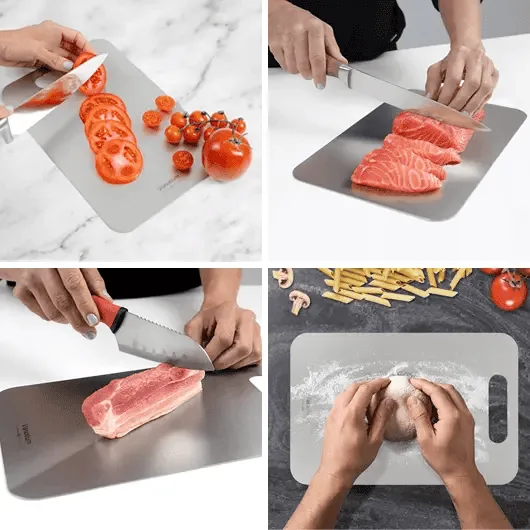
A solid titanium board avoids plastic completely, has a non-porous surface that doesn't absorb raw meat juices, goes in the dishwasher for easy sanitizing, won't shatter, splinter, warp or crack and doesn't absorb odors or stains. Titanium is widely used in medical implants because it's inert and corrosion-resistant. The trade-off is that it's firmer than wood, so regular honing keeps knives sharp. See are titanium cutting boards safe? and is titanium food safe?
How safe is wood?
Hardwood boards like maple and walnut are a good, plastic-free choice and the kindest to knives. They're porous, though, so they need hand washing, thorough drying and regular oiling, and they should be replaced if they crack or get deeply cut. Many households use wood for bread and produce and a non-porous board for raw meat. See wood vs plastic and titanium vs wood.
Is glass safe?
Glass is hygienic and plastic-free, but it's the least safe for knives and hands: blades skid on the smooth surface and dull quickly, and glass can chip or shatter if dropped. It's best for serving or rolling pastry rather than daily chopping. See titanium vs glass.
What about bamboo?
Bamboo is renewable and affordable, but it's porous, hand-wash only and made of strips glued together. Over time, boards can crack or separate. It's fine for bread and produce with good care. See titanium vs bamboo.
How do you use any board safely?
- Place a damp towel or non-slip mat underneath so it doesn't slide.
- Use separate boards for raw meat and ready-to-eat foods.
- Wash with hot, soapy water after every use; sanitize after raw meat.
- Keep knives sharp; dull knives slip more.
- Replace boards that are deeply grooved, cracked or warped.
The FDA sums up kitchen food safety as clean, separate, cook and chill.
Which board do we recommend?
Vanotium is a solid titanium cutting board with a non-porous surface that sheds no plastic and doesn't hold juices, stains or odors. It's dishwasher-safe, waterproof and fast-drying, designed to be scratch-resistant and warp-proof, heat-resistant and light. In October 2026 it cost $66.66 for one board, $116.66 for two or $42.77 each in a four-pack, with a 30-day guarantee and tracked shipping in 5–7 days. Read our Vanotium review (4.6/5).

The safe all-rounder for your kitchen
Vanotium titanium cutting board: no plastic, non-porous, dishwasher-safe and unbreakable. From $42.77 per board in multi-packs, with a 30-day guarantee.
Check today's Vanotium price →Ships in 5–7 days with tracking · 30-day guarantee
What's safest for kids learning to cook?
A light, stable, unbreakable board is best. Titanium on a damp towel is a good choice, as is a heavy wood board that won't move. Avoid glass for kids, since it's slippery and can break. Teach children to curl their fingers, cut slowly and keep raw meat on its own board.
What's the safest board for raw meat?
A non-porous, dishwasher-safe board that's used only for raw proteins. Titanium fits that perfectly. Wash it immediately or put it in the dishwasher, and never use it for salad or bread without washing first. See the best board for raw meat.
What about food allergies?
If someone in your home has a serious food allergy, keep a separate board and knife for allergen-free foods, wash them separately and store them apart. A non-porous board makes it easier to be sure no residue remains.
Is the safest board expensive?
Titanium costs more upfront than plastic, but it doesn't need replacing every year or two and needs no oil or special cleaners. Over several years, the cost per day is small. See are titanium boards worth it?
Which safety myths can you ignore?
- "Plastic is safest because it goes in the dishwasher." Grooves and microplastics still matter.
- "Glass is safest because it's non-porous." It's hygienic but slippery and breakable.
- "Wood is unsanitary." Well-maintained hardwood is fine, especially for produce and bread.
- "Antibacterial boards don't need washing." Every board needs proper cleaning.
What's the safest overall setup?
A non-porous titanium board for raw meat, poultry and fish, and either a second titanium board or a hardwood board for produce and bread. Add a damp towel underneath, sharp knives and good cleaning habits, and you've covered every aspect of cutting board safety. See color-coded cutting boards.
Do any boards contain chemicals to worry about?
Plastic boards are made from polymers such as polyethylene or polypropylene, and some include additives or antimicrobial treatments. Bamboo boards use adhesives to bind strips, and their type isn't always disclosed. Wood boards are often finished with food-grade mineral oil or beeswax. Solid titanium, glass and stainless steel don't have coatings or adhesives on the cutting surface. If you want the fewest unknowns, choose a solid material with a simple, clearly described construction.
What's safest for older cooks?
For older adults, light weight, stability and easy cleaning matter most. A thin, light titanium board is easy to lift to the sink or dishwasher, and a damp towel underneath keeps it from sliding. Heavy wood boards are stable but hard to carry; glass is slippery and breakable. Pair any board with a sharp knife, since dull knives slip more.
Does size affect safety?
Yes. A board that's too small crowds your hand toward the edge and makes slips more likely, and raw meat juices can run onto the counter. A medium board around 12 x 18 inches gives most cooks room to work safely. See cutting board size guide.
How often should you replace boards for safety?
Replace plastic boards once they're deeply grooved, often every year or two. Replace wood and bamboo boards when they crack, warp or stay stained. Titanium boards rarely need replacing unless they're badly damaged. See when to replace a cutting board.
Is stainless steel as safe as titanium?
Stainless steel is also non-porous, plastic-free and dishwasher-safe. It's heavier, usually contains nickel and can show water spots or small rust specks over time. Titanium is lighter, nickel-free and highly corrosion-resistant. See stainless steel vs titanium.
Are titanium-coated boards just as safe?
Not necessarily. A thin coating over plastic can wear through and expose the plastic core. Look for a board whose cutting surface is solid titanium. See titanium vs titanium-coated.
What's the safest option for camping or travel?
A light, unbreakable, non-porous board is ideal: titanium packs flat, won't crack and wipes clean with little water.
More guides: the best non-toxic cutting board and antibacterial cutting boards.
The bottom line
There's no single "safe" rating, but when you look at plastic exposure, hygiene, cleaning, physical safety and knife safety together, solid titanium scores the best overall: no plastic, non-porous, dishwasher-safe and unbreakable. Hardwood is a great second board for bread and produce. Plastic is the weakest choice because of grooves and microplastics, and glass is best kept for serving.
For the safest everyday board, we recommend Vanotium. Check today's Vanotium price and multi-pack deals.
Sources
- USDA Food Safety and Inspection Service. Cutting Boards and Food Safety.
- U.S. Food and Drug Administration. Safe Food Handling.
- Yadav H. et al. Cutting Boards: An Overlooked Source of Microplastics in Human Food? Environmental Science & Technology, 2023.
Frequently asked questions
What is the safest cutting board material?
Non-porous, plastic-free materials like solid titanium are easy to keep clean; hardwood is also a good choice.
Is plastic a safe cutting board material?
New plastic is easy to clean, but worn boards trap residue and shed microplastics.
Is wood safe for raw meat?
It can be with proper washing, but many cooks use a non-porous board for raw meat.
Is glass a safe cutting board?
It's hygienic but slippery and very hard on knives.
Is bamboo safe?
Generally, but it uses glues and can crack, which makes cleaning harder.
Is titanium food-safe?
Yes. Titanium is very stable and widely used in medical implants.

Michelle Hert
Michelle is a home cook who cooks for a family every day and spends a lot of her free time reading the research behind the products that end up in our kitchens. She started Less Plastic Kitchen after the 2023 cutting board study made her look twice at the scratched plastic board on her own counter. Her guides are built on published studies, manufacturer specifications and verified buyer feedback, and she updates them when new information comes out. More about Michelle.