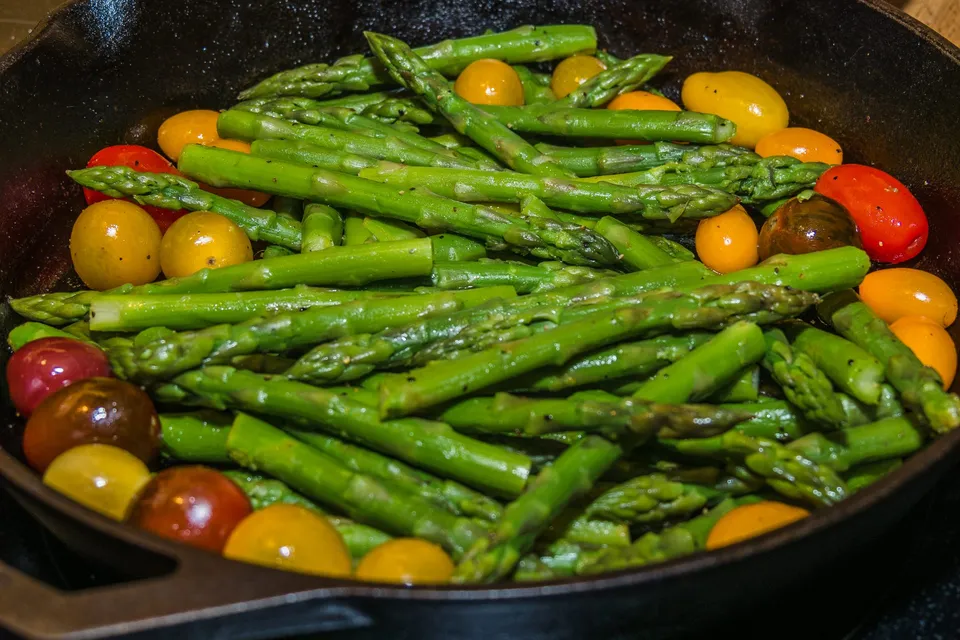
- Cast iron: no synthetic coating, lasts for generations, handles very high heat, great for searing, roasting and baking, and adds a little iron to food. It's heavy and needs seasoning.
- Nonstick: very easy for eggs, pancakes and delicate fish at low to medium heat, but the coating wears out in a few years and shouldn't be overheated or scratched.
Few kitchen debates are as old as cast iron versus nonstick. Cast iron fans love the sear, the durability and the fact that a good skillet can be handed down for decades. Nonstick fans love sliding an omelet out of the pan without a single scrap left behind. And as more people learn about PFAS and the coatings used in some nonstick pans, the question has gained a health angle as well.
This guide compares cast iron and nonstick on cooking performance, health and safety, care, durability and cost, explains how newer "PFAS-free" coatings fit in, and helps you decide which pans you actually need.
What's the difference between cast iron and nonstick?
Cast iron pans are made of solid iron. They're "seasoned" with layers of polymerized oil baked onto the surface, which creates a natural, renewable nonstick layer over time. Nonstick pans are usually aluminum with a synthetic coating, traditionally PTFE (often known by the brand name Teflon), or newer ceramic sol-gel coatings marketed as PFAS-free.
How do they compare?
| Factor | Cast iron | Nonstick |
|---|---|---|
| Coating | No synthetic coating; seasoning is oil | PTFE or ceramic coating |
| Heat | Very high heat, oven, grill, campfire | Low to medium heat recommended |
| Lifespan | Decades, even generations | Often a few years before the coating wears |
| Ease of release | Good once seasoned | Excellent while new |
| Weight | Heavy | Light |
| Care | Hand wash, dry, oil lightly | Gentle cleaning; no metal utensils |
| Acidic foods | Best in short cooking; long acidic simmers can strip seasoning | Fine |
What are the health concerns with nonstick?
Traditional nonstick coatings are made with PTFE, a type of PFAS (per- and polyfluoroalkyl substances). The EPA explains that PFAS are a large group of chemicals that break down very slowly and can build up in people and the environment, and that some have been linked to health effects. Modern PTFE pans are made without PFOA, an older PFAS that was phased out, and PTFE itself is considered stable at normal cooking temperatures. The main practical concerns are:
- Overheating: very high temperatures, like an empty pan on high heat, can degrade the coating and release fumes.
- Scratching and flaking: worn coatings can come off into food.
- Disposal: PFAS persist in the environment.
See is nonstick cookware safe?
Does cast iron add iron to food?
Cooking in cast iron can add small amounts of iron to food, especially with acidic dishes and longer cooking times. For most people that's harmless or even helpful, but people with conditions that cause iron overload should ask their doctor. Well-seasoned pans transfer less iron than new or bare ones.
Which pan cooks better?
| Food | Best pan | Why |
|---|---|---|
| Steak, burgers, chops | Cast iron | Holds heat for a deep sear |
| Roasted vegetables, cornbread | Cast iron | Oven-safe, even browning |
| Eggs and omelets | Nonstick (or well-seasoned cast iron) | Easy release at low heat |
| Pancakes and crepes | Nonstick or seasoned cast iron | Even heat, easy flip |
| Delicate fish | Nonstick or stainless with care | Less sticking |
| Tomato sauce simmered for hours | Stainless steel or enameled cast iron | Acid can strip seasoning |
How do you season and care for cast iron?
- Wash with hot water and a brush; a little mild soap is fine on a well-seasoned pan.
- Dry immediately, ideally on the stove over low heat.
- Rub in a thin layer of oil while warm, then wipe off the excess.
- Cook with fat regularly; every use builds the seasoning.
- Re-season in the oven if it rusts or looks dull: scrub, oil thinly, bake upside down at a high temperature for about an hour.
- Never soak cast iron or put it in the dishwasher.
How do you make nonstick last longer?
- Cook at low to medium heat; don't preheat empty on high.
- Use wood or silicone utensils, never metal.
- Hand wash with a soft sponge.
- Avoid cooking sprays, which can build up.
- Replace the pan once the coating is scratched, flaking or no longer releases food.
Avoid plastic spatulas on hot pans; see are plastic cooking utensils safe?
What about ceramic "PFAS-free" nonstick?
Ceramic-coated pans use a silica-based coating instead of PTFE and are marketed as PFAS-free. They release food well when new and avoid PTFE, but the coating tends to lose its nonstick properties faster than PTFE, often within a year or two of regular use. They're a reasonable option for people who want a nonstick pan without PTFE, as long as you expect to replace them sooner.
Where does stainless steel fit in?
Stainless steel has no coating, is dishwasher-safe, handles high heat and lasts for decades. It takes a little practice (preheat, add oil, let food release on its own), but it's a favorite of professional cooks. Many kitchens do well with one cast iron skillet, one stainless steel pan and one small nonstick or ceramic pan just for eggs. See is stainless steel cookware safe?
What about the rest of your cooking setup?
If you're switching away from synthetic coatings in your pans, it makes sense to look at your prep tools too. A 2023 study in Environmental Science & Technology found that chopping on plastic cutting boards releases microplastics with every cut. Swapping the board is one of the easiest changes.
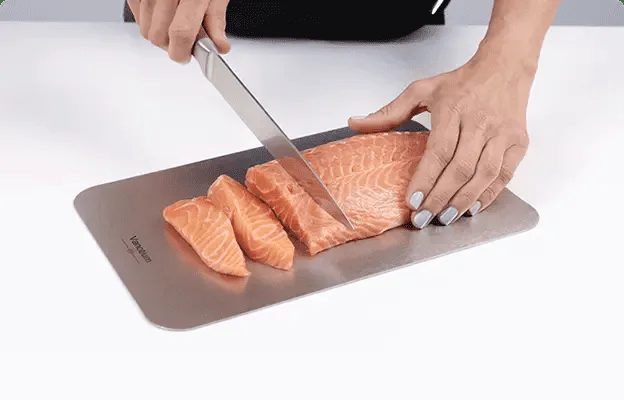
Vanotium is a titanium cutting board with a non-porous surface that sheds no plastic, doesn't hold juices or odors, is dishwasher-safe and resists scratches and warping. It's heat-resistant enough to set a hot pan on. In October 2026 it was $66.66 for one board or $42.77 each in a four-pack, with a 30-day guarantee. Read our Vanotium review (4.6/5).

Coating-free pans, plastic-free prep
Vanotium titanium cutting board: no plastic to shed, non-porous, dishwasher-safe and heat-resistant. From $42.77 per board in multi-packs, with a 30-day guarantee.
Check today's Vanotium price →Ships in 5–7 days with tracking · 30-day guarantee
Which costs less over time?
A cast iron skillet is inexpensive and can last a lifetime, which makes its cost per year tiny. Nonstick pans are often cheap up front but need replacing every few years as the coating wears, so the cost adds up, along with the waste. If you cook every day, one good cast iron or stainless pan usually pays for itself compared with a series of nonstick pans.
Which should you buy?
- If you sear, roast and bake: cast iron.
- If you want one easy pan for eggs: a small nonstick or ceramic pan used gently.
- If you want one pan for almost everything: stainless steel or cast iron.
- If weight is an issue: stainless steel or carbon steel, which is lighter than cast iron.
See plastic-free kitchen swaps and non-toxic cutting boards.
What about carbon steel?
Carbon steel pans are popular with professional cooks: they're like a thinner, lighter cousin of cast iron, made of iron and a small amount of carbon. They heat up faster, are easier to lift and toss, and build seasoning the same way cast iron does. They need the same care: hand wash, dry immediately and oil lightly. If cast iron feels too heavy but you want a coating-free pan, carbon steel is an excellent middle ground.
Is enameled cast iron the best of both?
Enameled cast iron has a glass-like coating over the iron, so it doesn't need seasoning and can handle acidic foods like tomato sauce and wine-based stews. It's heavy and pricier, and the enamel can chip if dropped or overheated empty, but it's a durable, coating-free option for braises, soups and baking bread.
Which cast iron myths can you ignore?
- "You can never use soap." Modern dish soap is mild; a little soap won't strip polymerized seasoning. Just don't soak the pan.
- "Cast iron heats evenly." It holds heat well, but it heats slowly and can have hot spots. Preheat it for several minutes over medium heat.
- "Rust means the pan is ruined." Surface rust scrubs off; re-season and the pan is as good as before.
- "You can't cook tomatoes in it." Short cooking is fine in a well-seasoned pan; just avoid long, acidic simmers.
When should you replace a nonstick pan?
Look for these signs: visible scratches through the coating, flaking or peeling, discoloration that won't wash off, a warped base that wobbles on the burner, or food that sticks even with oil. Once any of these appear, it's time to retire the pan. Many cooks replace it with a stainless steel or carbon steel pan and keep just one small nonstick pan for eggs, which makes the coating last much longer because it's only used for gentle jobs.
What's a good starter set for a coating-free kitchen?
You don't need a full matching set. A practical, mostly coating-free kitchen can start with a 10- or 12-inch cast iron skillet for searing and roasting, a stainless steel sauté pan for sauces and everyday cooking, a stainless steel or enameled pot for soups and pasta, and a sheet pan lined with parchment for the oven. Add wood or stainless utensils instead of plastic ones, glass containers for leftovers and a cutting board that doesn't shed plastic, and you've removed most of the synthetic coatings and plastic from your daily cooking without spending a fortune.
Is cast iron practical for families?
Yes, with one caution: cast iron gets very hot and stays hot, including the handle. Use a handle cover or an oven mitt, and keep the pan away from the edge of the stove where children can reach it. Many families love cast iron for pancakes, grilled cheese and one-pan dinners because it handles so many jobs.
The bottom line
Cast iron is a coating-free, high-heat, long-lasting workhorse; nonstick is convenient for delicate foods at low to medium heat but wears out and uses synthetic coatings. Many cooks keep cast iron or stainless steel for most jobs and a small nonstick pan for eggs. Pair coating-free pans with plastic-free prep tools.
Our top pick for plastic-free prep is the titanium Vanotium board. Check today's Vanotium price and multi-pack deals.
Sources
- U.S. Environmental Protection Agency. PFAS Explained.
- Yadav H. et al. Cutting Boards: An Overlooked Source of Microplastics in Human Food? Environmental Science & Technology, 2023.
Frequently asked questions
Is cast iron healthier than nonstick?
Cast iron has no synthetic coating and handles high heat, which is why many people prefer it. Nonstick is fine when used gently at low to medium heat and replaced when worn.
Is Teflon still unsafe?
Modern PTFE pans are made without PFOA. The main risks are overheating an empty pan and using scratched, flaking coatings.
Can you cook eggs in cast iron?
Yes, in a well-seasoned pan with a little fat over medium-low heat.
How long does a nonstick pan last?
Often a few years with regular use. Replace it when the coating scratches, flakes or stops releasing food.
Is ceramic nonstick PFAS-free?
Ceramic coatings don't use PTFE and are marketed as PFAS-free, but they usually lose their nonstick properties faster.
What else reduces plastic in the kitchen?
Swapping plastic cutting boards. A titanium board like Vanotium sheds no plastic as you chop.

Michelle Hert
Michelle is a home cook who cooks for a family every day and spends a lot of her free time reading the research behind the products that end up in our kitchens. She started Less Plastic Kitchen after the 2023 cutting board study made her look twice at the scratched plastic board on her own counter. Her guides are built on published studies, manufacturer specifications and verified buyer feedback, and she updates them when new information comes out. More about Michelle.