- Stainless steel: durable, dishwasher-safe, great for everything from searing to sauces.
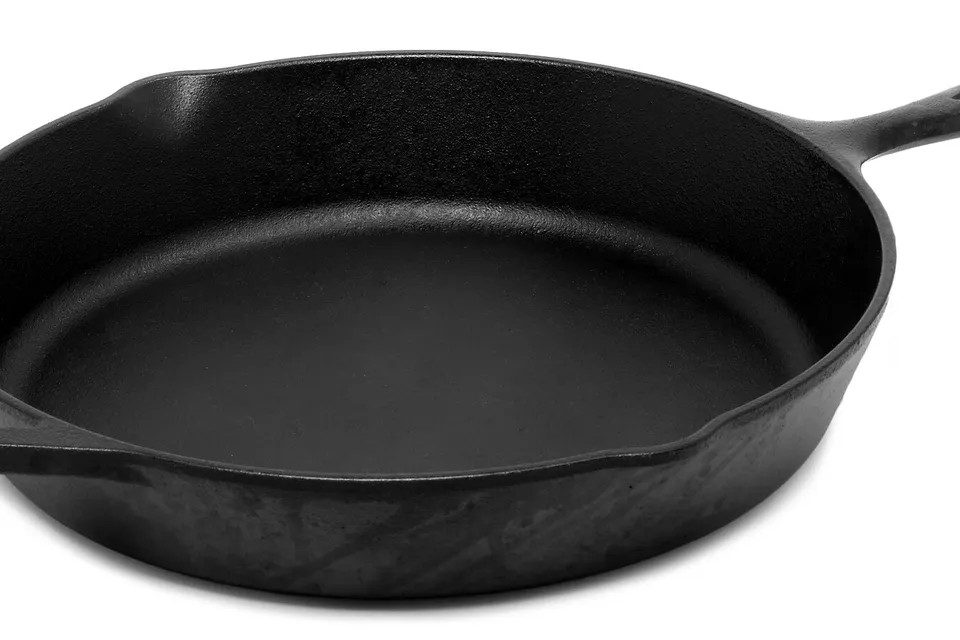
- Cast iron and carbon steel: naturally nonstick once seasoned, ideal for high heat.
- Enameled cast iron: great for braises, soups and acidic dishes.
- Glass and ceramic bakeware: for the oven.
- Ceramic-coated pans: marketed as PFAS-free nonstick, but the coating wears faster.
"PFAS-free" has become one of the most popular cookware labels, and for good reason: many people want to reduce exposure to the so-called forever chemicals. But cookware marketing can be confusing. "PFOA-free," "non-toxic," "green" and "ceramic" don't always mean what shoppers think. Knowing which materials are truly PFAS-free, and how they cook, makes it much easier to build a kitchen you trust.
This guide explains what PFAS are and where they show up in cookware, which materials are PFAS-free, how they compare, how to read labels, how to cook with uncoated pans without sticking and how to switch gradually.
What are PFAS and why are they in cookware?
PFAS (per- and polyfluoroalkyl substances) are a large family of synthetic chemicals that resist heat, grease and water. The EPA explains that they break down very slowly and can build up in people and the environment. In cookware, the best-known PFAS is PTFE, used in traditional nonstick coatings. PFOA, which was once used to make PTFE, has been phased out of US production, which is why many pans say "PFOA-free" while still using PTFE.
What do cookware labels really mean?
| Label | What it usually means |
|---|---|
| PFOA-free | Made without PFOA; may still be PTFE (a PFAS) |
| PTFE-free | No PTFE coating |
| PFAS-free | No PFAS in the coating (check the details) |
| Ceramic nonstick | Silica-based sol-gel coating, usually PTFE-free |
| Non-toxic / green | Marketing term; look for specifics |
| Uncoated | Bare stainless, cast iron, carbon steel |
Which materials are PFAS-free?
| Material | Best for | Care |
|---|---|---|
| Stainless steel | Searing, sautéing, sauces, boiling | Dishwasher-safe; preheat to prevent sticking |
| Cast iron | Searing, roasting, baking | Hand wash, dry, oil lightly |
| Carbon steel | Stir-frying, eggs once seasoned | Like cast iron, lighter |
| Enameled cast iron | Braises, soups, tomato sauce | Avoid overheating empty |
| Glass and ceramic bakeware | Casseroles, baking | Avoid sudden temperature changes |
| Ceramic-coated | Eggs, delicate foods | Gentle use; replace when worn |
See is stainless steel cookware safe? and cast iron vs nonstick.
How do you stop food sticking without nonstick?
- Preheat stainless steel until a drop of water skates across the surface.
- Add oil and let it shimmer.
- Add food and wait; proteins release once a crust forms.
- Don't overcrowd the pan.
- Season cast iron and carbon steel and cook with fat regularly.
- Use parchment in the oven.
What's the best PFAS-free pan for eggs?
A well-seasoned cast iron or carbon steel pan handles eggs beautifully with a little butter over medium-low heat. Stainless steel works too with enough preheating and fat. If you want true slide-off ease, a ceramic-coated pan used only for eggs is a common compromise; it lasts longer when reserved for gentle jobs.
Are ceramic-coated pans truly PFAS-free?
Most ceramic sol-gel coatings are made without PTFE and are marketed as PFAS-free, but marketing varies. Look for clear statements about the coating, and understand that ceramic coatings usually lose their nonstick performance faster than PTFE. Use low to medium heat, wooden or silicone tools and hand washing. See is ceramic cookware safe?
What should you do with old nonstick pans?
Pans in good condition can still be used carefully at low to medium heat, especially for eggs. Replace pans that are scratched, flaking or warped. Check local recycling rules for metal cookware; some programs accept it, and some retailers run take-back programs. See is nonstick cookware safe?
What about the rest of your kitchen?
Switching to PFAS-free cookware is a great step, and prep tools are the natural next one. A 2023 study in Environmental Science & Technology estimated that chopping on plastic boards can release tens of grams of microplastics per person per year. See plastic boards and microplastics.
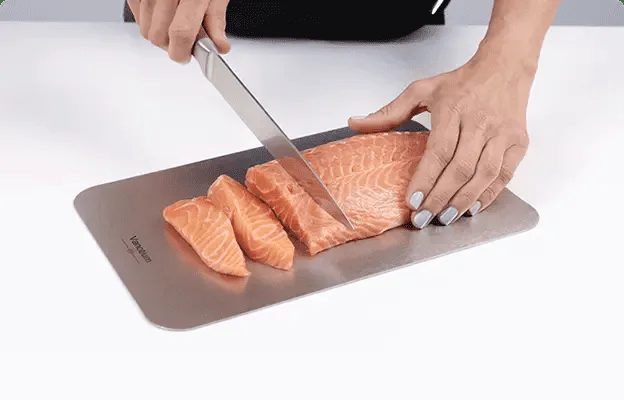
Vanotium is a titanium cutting board with a non-porous surface that sheds no plastic, doesn't hold juices or odors, goes in the dishwasher and is designed to be scratch-resistant and warp-proof. It's heat-resistant enough to rest a hot stainless pan on for a moment. In October 2026 it cost $66.66 for one board or $42.77 each in a four-pack, with a 30-day guarantee. Read our Vanotium review (4.6/5).

PFAS-free pans deserve a plastic-free board
Vanotium titanium cutting board: no plastic, non-porous, dishwasher-safe. From $42.77 per board in multi-packs, with a 30-day guarantee.
Check today's Vanotium price →Ships in 5–7 days with tracking · 30-day guarantee
What's a good PFAS-free starter set?
- A 10- or 12-inch stainless steel skillet.
- A 10- or 12-inch cast iron skillet.
- A 3-quart stainless saucepan.
- A large stainless stockpot.
- An enameled Dutch oven for braises and bread.
- A rimmed steel sheet pan and parchment paper.
With these, almost every recipe is covered without any coating.
Which utensils work with PFAS-free pans?
Stainless steel pans handle metal utensils. Cast iron and carbon steel are fine with metal too. Use wood or silicone with enameled and ceramic-coated pans. Avoid plastic spatulas on hot pans. See non-toxic kitchen utensils and are plastic utensils safe?
Is PFAS-free cookware more expensive?
Good stainless steel and enameled cast iron cost more upfront, but they last decades. Cast iron is inexpensive and lasts generations. Compared with replacing nonstick pans every few years, uncoated cookware usually costs less over time.
Where else do PFAS show up in the kitchen?
Some grease-resistant food packaging has historically used PFAS, and the FDA has worked with manufacturers to phase out certain uses. See PFAS in food packaging.
Which PFAS-free myths can you ignore?
- "PFOA-free means PFAS-free." Not necessarily; PTFE is a PFAS.
- "Stainless steel always sticks." Proper preheating fixes most sticking.
- "Cast iron is hard to care for." Wash, dry, oil lightly; that's it.
- "You need a full matching set." A few good pieces cover most cooking.
Is carbon steel a good PFAS-free option?
Carbon steel pans are a favorite of professional cooks: they behave like cast iron, building a natural seasoning, but they're thinner, lighter and heat up faster. They're excellent for searing, stir-frying and, once well seasoned, even eggs. Care is the same as cast iron: wash by hand, dry immediately and wipe on a thin layer of oil. A new carbon steel pan looks blotchy as it seasons; that's normal.
Why is enameled cast iron so popular?
Enameled cast iron has a glassy coating fused to the iron, so it doesn't need seasoning and handles acidic foods like tomato sauce, wine braises and chili without reacting. It holds heat beautifully for soups, stews and bread. The enamel can chip if dropped or overheated empty, so heat it gradually and use wooden or silicone tools.
Which PFAS-free pans work on induction?
Cast iron, carbon steel and enameled cast iron all work on induction because iron is magnetic. Most multi-ply stainless steel pans do too; test with a magnet on the bottom. Some ceramic-coated aluminum pans need a magnetic base layer to work on induction, so check the label.
Is PFAS-free cookware better for families?
Many parents choose uncoated cookware to reduce PFAS exposure at home. Stainless steel and cast iron are durable, and stainless is dishwasher-safe. Keep handles turned away from the stove edge, since cast iron and stainless get hot, and use oven mitts.
What's the easiest way to start?
Start with the pan you use most. If that's a nonstick skillet, replace it with a stainless or cast iron skillet and keep a small ceramic pan for eggs. Then replace other pieces as they wear out. You'll be mostly PFAS-free within a year without wasting money.
What do professional kitchens use?
Most professional kitchens rely on stainless steel, carbon steel and cast iron because they handle high heat, metal utensils and constant use. Nonstick pans, if any, are reserved for eggs and delicate fish and replaced often. Home cooks can borrow the same approach.
How do you clean stuck-on food from uncoated pans?
For stainless steel, simmer a little water in the pan and scrape with a wooden spatula, then use a paste of baking soda or a stainless cleaner for stubborn spots. For cast iron, scrape, rinse with hot water, scrub with coarse salt if needed, dry on the stove and oil lightly. Avoid soaking cast iron.
Is uncoated cookware heavy?
Cast iron is heavy; carbon steel and stainless steel are lighter. If weight is a concern, choose a 10-inch stainless or carbon steel skillet rather than a 12-inch cast iron.
Is PFAS-free cookware a good gift?
A quality stainless or cast iron skillet is a gift that lasts for decades, and it pairs well with a plastic-free cutting board. See gifts for home cooks.
Related reading: is nonstick bakeware safe?
The bottom line
The most reliable PFAS-free cookware is uncoated: stainless steel, cast iron, carbon steel, enameled cast iron, glass and ceramic bakeware. Ceramic-coated pans are a PTFE-free nonstick option but wear faster. Read labels carefully, since "PFOA-free" isn't the same as "PFAS-free," switch gradually, and pair your pans with plastic-free prep tools.
For a plastic-free board, our pick is Vanotium. Check today's Vanotium price and multi-pack deals.
Sources
- U.S. Environmental Protection Agency. PFAS Explained.
- Yadav H. et al. Cutting Boards: An Overlooked Source of Microplastics in Human Food? Environmental Science & Technology, 2023.
Frequently asked questions
What cookware is PFAS-free?
Stainless steel, cast iron, carbon steel, enameled cast iron, glass and most ceramic-coated pans.
Is PFOA-free the same as PFAS-free?
No. PFOA-free pans may still use PTFE, which is a PFAS.
Is ceramic cookware PFAS-free?
Most ceramic-coated pans are PTFE-free, but the coating wears faster.
Which PFAS-free pans work on induction?
Cast iron, carbon steel, enameled cast iron and most multi-ply stainless.
How do I stop food sticking without nonstick?
Preheat the pan, add oil, then food, and let it release before flipping.
Do I need to replace all my pans at once?
No. Replace the pan you use most first, then others as they wear.

Michelle Hert
Michelle is a home cook who cooks for a family every day and spends a lot of her free time reading the research behind the products that end up in our kitchens. She started Less Plastic Kitchen after the 2023 cutting board study made her look twice at the scratched plastic board on her own counter. Her guides are built on published studies, manufacturer specifications and verified buyer feedback, and she updates them when new information comes out. More about Michelle.