
- Wash them right before eating, not when you get home; moisture makes them mold faster.
- Keep the green tops on while washing so water doesn't soak into the berry.
- Soak briefly in a bowl of cool water (5 to 10 minutes; a teaspoon of baking soda per 2 cups is optional), then rinse in a colander.
- Dry gently on a towel before eating or storing.
- Skip soap and bleach.
Strawberries are one of the most loved fruits, and one of the trickiest to wash. They're soft, they bruise easily, their seeds and dimples trap dirt, and they're grown close to the ground. They also regularly appear near the top of lists of produce with the most pesticide residue. A quick splash under the tap isn't much help, but soaking them too long turns them mushy. This guide shows you exactly how to wash strawberries so they come out clean, firm and full of flavor, plus how to store them so they last.
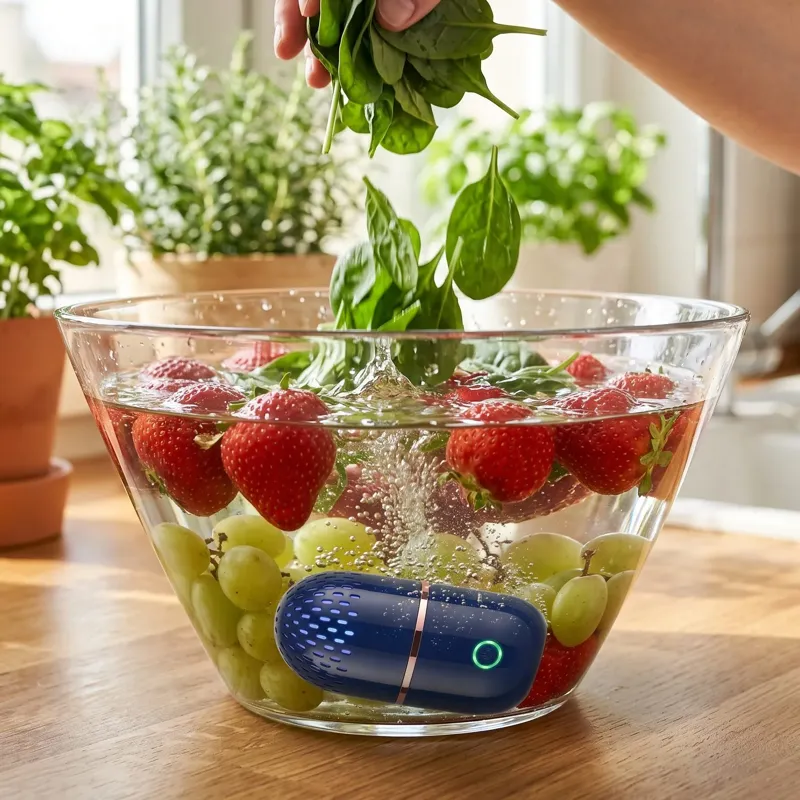
Our pick for washing produce: PodBloom
A wireless, IPX7-waterproof purifier that sits in a bowl of water and runs a 10-minute electrolysis cycle for fruit and vegetables. No soap, no refills. $59.95, or $35.98 each in the 3-pack.
Check today's PodBloom price →30-day money-back guarantee · wireless charging base included
Why do strawberries need careful washing?
- They grow low to the ground, so soil and grit end up on the berries.
- Their surface is uneven, with seeds and tiny dimples that hold dirt and residue.
- They're often eaten whole and raw, without peeling or cooking.
- They're commonly on lists of produce with more pesticide residue.
- They're delicate, so you can't scrub them like an apple.
When should you wash strawberries?
Wash strawberries just before you eat or use them. Washing them as soon as you get home seems efficient, but the extra moisture speeds up mold and turns berries soft in the fridge. Store them unwashed and dry, then wash only the portion you're about to enjoy.
How do you wash strawberries step by step?
- Sort the berries. Remove any moldy or very soft ones, since mold spreads quickly.
- Leave the green tops on. Hulling first lets water soak into the berry and dilutes the flavor.
- Fill a large bowl with cool water. Cold water keeps berries firm.
- Soak 5 to 10 minutes, gently swishing them once or twice. Add about 1 teaspoon of baking soda per 2 cups of water if you like.
- Lift them out rather than pouring the water over them, so loosened grit stays in the bowl.
- Rinse in a colander under cool running water.
- Dry on a clean towel or paper towel, rolling them gently.
- Hull and slice only after washing and drying.
Does baking soda help clean strawberries?
It can. In a University of Massachusetts study, soaking apples in a 1% baking soda solution removed more of two surface pesticides than plain tap water. Strawberries weren't tested, and they're much more delicate than apples, so keep the soak short and always rinse afterward. Plain water soaks are also fine; the key is giving the berries more than a few seconds of contact with water.
Should you wash strawberries in vinegar?
A diluted vinegar soak (about 1 part vinegar to 3 or 4 parts water) is popular for helping berries stay fresh longer, but it can leave a slight taste if you don't rinse well. If you use vinegar, keep the soak short, rinse thoroughly and dry completely. Never combine vinegar with bleach or other cleaners. We compare methods in how to wash pesticides off produce.
Can you use PodBloom to wash strawberries?
Yes, and berries are one of the best uses for it, because they're hard to scrub and easy to forget about mid-soak. PodBloom is a wireless capsule that sits in the bottom of your bowl with the strawberries and runs a 10-minute electrolysis cycle, then switches off. There's no soap and nothing to refill. When the cycle ends, lift the berries out, rinse quickly and dry. For very ripe berries, use a gentle swish and lift them out promptly. Read our PodBloom review for the details.
Make berry washing hands-free
PodBloom runs a 10-minute cycle in a bowl of water with no soap or refills. $59.95, or $35.98 each in the 3-pack.
Check today's PodBloom price →30-day money-back guarantee · wireless charging base included
What mistakes should you avoid?
- Washing all the berries at once and storing them wet.
- Hulling before washing, which lets water in.
- Soaking too long, which makes them mushy.
- Using hot water, which softens the fruit.
- Using dish soap or produce sprays with heavy residues.
- Rinsing under a hard stream, which bruises berries.
How do you dry strawberries without bruising them?
Spread the washed berries in a single layer on a clean kitchen towel and gently roll or pat them. A salad spinner lined with a paper towel also works on the gentlest setting. Let them air-dry for a few minutes before storing or serving. Dry berries taste sweeter, look shinier and last longer.
How should you store strawberries?
- Store unwashed berries in the fridge as soon as you get home.
- Move them out of the plastic clamshell into a glass container lined with a paper towel or cloth.
- Arrange them in a single layer if possible, so they don't crush each other.
- Leave the lid slightly open or use a container with vents for airflow.
- Eat them within a few days for the best flavor.
Glass storage keeps berries fresh without plastic film. See how to store food without plastic and glass vs plastic food containers.
Are organic strawberries worth it?
If strawberries are a daily snack in your home, organic is worth considering, since they're often near the top of residue lists for conventional produce. Organic berries still need washing to remove dirt and handling residue. If organic isn't in the budget, a thorough soak and rinse is the next best step, and frozen berries are a good off-season option.
How should you hull and cut them?
After washing and drying, remove the green tops with a small paring knife or a strawberry huller, angling around the stem to keep as much fruit as possible. Slice on a clean, non-porous board so juice doesn't soak in and stain. Strawberry juice stains wood and plastic easily; titanium and glass wipe clean. See how to remove stains from a cutting board and the best cutting board for fruit and vegetables.
How can kids help wash berries?
Strawberries are a great first kitchen job for kids. Let them swish the berries in the bowl, lift them into the colander and pat them dry. It teaches good food-safety habits early and makes them more likely to eat the fruit they prepared.
Should you wash strawberries before freezing them?
Yes. Wash, dry thoroughly, hull and then freeze them in a single layer on a tray before transferring them to a glass or stainless container. Frozen berries are perfect for smoothies and baking.
What does the FDA say about washing berries?
The FDA advises washing produce just before eating rather than before storing, discarding any parts that are bruised or damaged, and not using soap or detergent. Berries are delicate, so instead of scrubbing, a gentle soak and rinse is the best way to follow that advice. Drying them with a clean cloth or paper towel afterward further reduces bacteria that may be present on the surface.
What should you do if one strawberry is moldy?
Remove the moldy berry and any berries touching it that look soft or wet. Check the rest carefully: firm, bright berries without visible mold are usually fine to wash and eat. Don't try to cut mold off a strawberry; soft fruit lets mold spread below the surface. Wash the container before putting the good berries back, and line it with a fresh paper towel.
How should you prepare strawberries for recipes?
- Smoothies: wash, hull and freeze in a single layer so they don't clump.
- Salads: wash and dry thoroughly so dressing clings instead of sliding off.
- Baking: pat completely dry; extra water makes batters soggy.
- Chocolate-dipped: dry for at least an hour so the chocolate sets smoothly.
- Jam: wash, hull and chop; small blemishes can be trimmed since the fruit is cooked.
When are strawberries at their best?
Local strawberries are at their sweetest in late spring and early summer, while winter berries are usually shipped long distances and picked less ripe. Choose berries that are bright red all the way to the top, glossy and fragrant, with fresh green caps. Avoid containers with juice stains at the bottom, a sign of crushed or moldy fruit.
Does the same method work for other berries?
Mostly, yes. Blueberries can soak a little longer since they're firmer; pick out stems and shriveled berries first. Raspberries and blackberries are the most fragile: place them in a colander, dip the colander into a bowl of water a few times and let them drain on a towel, rather than soaking. Like strawberries, all berries last longer if you wash them only right before eating and store them dry in a breathable glass container.
How do you take washed strawberries on the go?
Wash and dry them thoroughly, then pack them in a glass or stainless container lined with a cloth napkin to absorb moisture. Keep them cool with an ice pack and eat them within a few hours for the best texture.
What's the bottom line?
The best way to wash strawberries is just before eating: keep the tops on, soak them briefly in cool water (with a little baking soda if you like), lift them out, rinse in a colander and dry gently. Store them unwashed and dry in a glass container to keep them fresh. If you want the soak to happen without watching the clock, a hands-free purifier like PodBloom makes it effortless.
Our pick for washing produce: PodBloom
A wireless, IPX7-waterproof purifier that sits in a bowl of water and runs a 10-minute electrolysis cycle for fruit and vegetables. No soap, no refills. $59.95, or $35.98 each in the 3-pack.
Check today's PodBloom price →30-day money-back guarantee · wireless charging base included
Frequently asked questions
What is the best way to wash strawberries?
Just before eating, soak them with tops on in cool water for 5 to 10 minutes, then rinse in a colander and dry gently.
Should you wash strawberries with baking soda?
A short soak with about a teaspoon per 2 cups of water is fine; rinse afterward.
Should I wash strawberries before putting them in the fridge?
No. Store them unwashed and dry, and wash just before eating.
Should you remove strawberry tops before washing?
No. Keep the tops on so water doesn't soak into the berry.
Can I use vinegar to wash strawberries?
A short, diluted soak is fine if you rinse well afterward.
Can PodBloom wash strawberries?
Yes. Place it in the bowl with the berries, run the 10-minute cycle, then lift them out and rinse.

Michelle Hert
Michelle is a home cook who cooks for a family every day and spends a lot of her free time reading the research behind the products that end up in our kitchens. She started Less Plastic Kitchen after the 2023 cutting board study made her look twice at the scratched plastic board on her own counter. Her guides are built on published studies, manufacturer specifications and verified buyer feedback, and she updates them when new information comes out. More about Michelle.