
- Wash just before using, not when you get home.
- Remove outer leaves and any wilted or damaged parts.
- Separate the leaves so water reaches every surface and the base of each stem.
- Soak in a large bowl of cool water for a few minutes, swishing gently so grit sinks. A hands-free cleaner like PodBloom runs a 10-minute cycle for you.
- Lift the leaves out instead of pouring them into a colander, so the dirt stays in the bowl.
- Rinse under running water, then dry in a salad spinner or with a clean towel.
Lettuce, spinach, kale and herbs are some of the hardest foods to wash well. Their leaves trap sand and grit in folds and at the base of the stems, their surfaces are delicate, and they wilt if you're rough with them. A quick rinse under the tap usually leaves grit behind, which is why so many people bite into a crunchy salad that isn't supposed to be crunchy. This guide shows you how to wash leafy greens properly, step by step, how to handle each type, how to dry them so they stay crisp and how to store them so they last.
This guide covers:
- why leafy greens need extra care
- a step-by-step method that works for any green
- tips for lettuce, spinach, kale, herbs and more
- drying and storing
- what to avoid
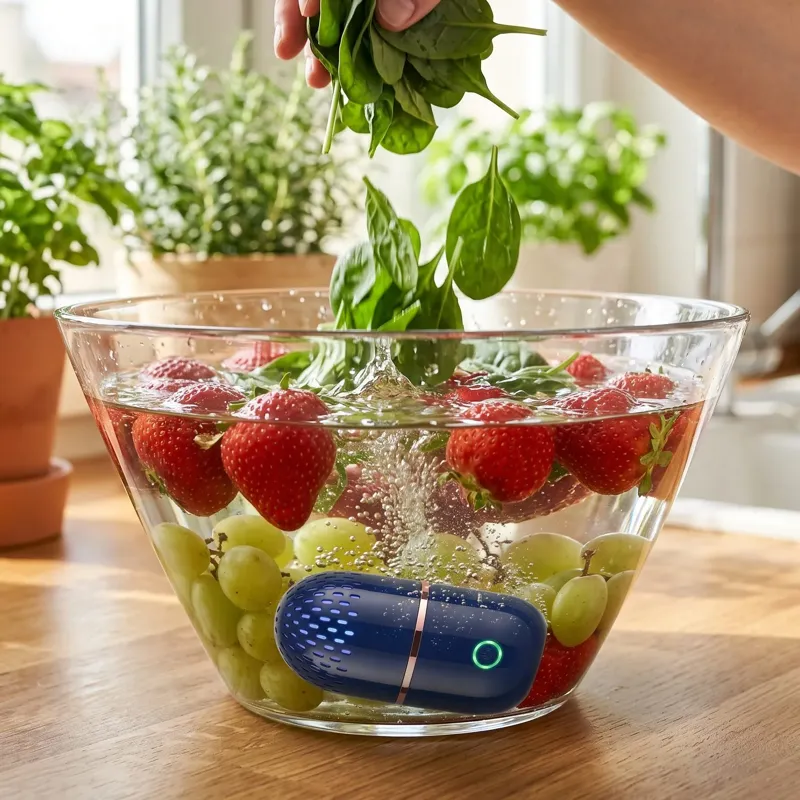
Our pick for washing produce: PodBloom
A wireless, IPX7-waterproof purifier that sits in a bowl of water and runs a 10-minute electrolysis cycle for fruit and vegetables. No soap, no refills. $59.95, or $35.98 each in the 3-pack.
Check today's PodBloom price →30-day money-back guarantee · wireless charging base included
Why do leafy greens need extra care?
- They grow close to the soil, so sand and grit get into the folds and stems.
- They have lots of surface area and many layers.
- They're usually eaten raw, so there's no cooking step.
- They're delicate, so scrubbing isn't an option.
That combination means the best method is a gentle soak, followed by lifting the leaves out and a rinse, rather than a quick blast under the tap.
How do you wash leafy greens step by step?
- Wash your hands with soap and warm water for 20 seconds.
- Clean your sink or use a large clean bowl. A sink that's just had raw chicken in it is not the place for salad.
- Trim and sort. Remove the outer leaves of heads of lettuce and cabbage, and discard wilted, slimy or damaged leaves.
- Separate the leaves. Pull leaves off the head, cut thick stems off kale and chard, and loosen bunches of spinach and herbs.
- Soak in cool water. Submerge the greens in plenty of cool water and swish gently. Let them sit for a few minutes so grit sinks to the bottom. Cool water keeps leaves crisp; warm water wilts them.
- Lift, don't pour. Lift the leaves out with your hands or a spider. If you pour the bowl into a colander, the grit goes right back onto the leaves.
- Repeat if needed. If there's grit at the bottom of the bowl, empty it, refill and soak again until the water stays clear. Very sandy spinach or leeks may need two or three rounds.
- Rinse under running water for a final clean.
- Dry thoroughly in a salad spinner or by rolling the leaves in a clean kitchen towel.
What do food safety experts recommend?
The FDA advises washing produce under running water right before eating or cooking, removing the outer leaves of heads of lettuce and cabbage, and drying produce with a clean cloth or paper towel. It also advises against soap, detergent and commercial produce washes. The USDA reminds home cooks to rinse produce under cool running water and to keep it away from raw meat juices, since cross-contamination in the sink is a bigger risk than most people think. Bagged greens labeled "ready-to-eat", "washed" or "triple-washed" are generally fine to use straight from the bag, because extra handling at home doesn't make them cleaner.
Is there an easier way to soak greens?
If you eat salad every day, the soak is the step most people skip, because it means standing at the sink swishing leaves. A hands-free produce cleaner makes it automatic. PodBloom is a small, waterproof capsule that you drop into the bowl with your greens. Press the button and it runs a 10-minute electrolysis cycle in plain water, with titanium electrodes and bubbles that keep the water moving. There's no soap, no vinegar and no refills. When it switches off, lift the leaves out, give them a quick rinse and spin them dry.
It's especially handy for greens because plain water won't leave a taste on delicate leaves, the way a vinegar soak can. Read our PodBloom review and PodBloom vs a vinegar soak.
Make the salad soak automatic
PodBloom runs a hands-free 10-minute cycle in plain water for lettuce, spinach, kale and herbs. No soap, no vinegar, no refills. $59.95, or $35.98 each in the 3-pack.
Check today's PodBloom price →30-day money-back guarantee · wireless charging base included
How do you wash different types of greens?
| Green | Best method | Tip |
|---|---|---|
| Romaine, iceberg, butter lettuce | Remove outer leaves, separate, soak, lift, rinse | Check the base of each leaf for grit |
| Spinach (bunches) | Trim stems, soak, lift, repeat until clear | Often very sandy; two or three rounds |
| Baby spinach (loose) | Soak briefly, lift, spin | Handle gently; it bruises easily |
| Kale, chard, collards | Strip leaves off thick stems, soak, rub gently | Curly kale traps grit in the curls |
| Arugula | Soak, lift, spin | Wash just before serving; it wilts fast |
| Cabbage | Remove outer leaves; rinse the cut head or soak shredded cabbage | The inside is usually clean |
| Herbs (parsley, cilantro, basil) | Hold by stems and swish in water, or soak loosely | Dry gently with a towel |
| Leeks | Slice lengthwise, fan the layers under water | Grit hides between the layers |
Why is drying so important?
Wet leaves are a problem in three ways: dressing slides off them, they wilt faster in the fridge, and moisture encourages spoilage. A salad spinner is the quickest way to dry greens. Don't overfill it; spin in batches, pour off the water and spin again. If you don't have one, lay the leaves on a clean towel, roll it up loosely and press gently. A clean, dry board for chopping finishes the job; see the best cutting board for vegetables.
How do you store washed greens?
- Make sure they're as dry as possible.
- Wrap them loosely in a clean towel or paper towel to absorb extra moisture.
- Store them in a glass or stainless steel container with a lid, rather than a plastic bag. See how to store food without plastic.
- Keep them in the crisper drawer.
- Use tender greens like arugula and baby spinach within a couple of days; sturdy greens like kale last longer.
What should you avoid?
- Soap or dish detergent. It isn't meant to be eaten and can leave a residue in the folds of leaves.
- Warm or hot water. It wilts leaves.
- Pouring into a colander after soaking. The grit goes back on the leaves.
- Washing far in advance and storing the greens wet.
- Rewashing "triple-washed" bagged greens. It isn't needed.
- Using the same board for raw meat and salad without washing it. See color-coded cutting boards.
Should you wash greens with vinegar or baking soda?
You can, but neither is required. Plain cool water, a soak and a rinse remove most grit and surface dirt. A vinegar soak can leave a sour taste on delicate leaves and soften them if they sit too long. Baking soda is often used for firm fruit, but it's not ideal for tender greens. If you'd like a longer soak without adding anything to the water, a hands-free device like PodBloom is a simple option. See do produce washes work?
Does washing remove pesticides from greens?
A good soak and rinse can reduce some surface residue, but no home method removes everything, and nothing removes residues inside the plant. That's not a reason to avoid salad: eating plenty of vegetables is good for you. If pesticides are a concern, buying organic for the greens you eat most is one option, along with washing well. Read more in how to wash pesticides off produce.
What about microplastics on greens?
Researchers are still learning how microplastics reach food. Some research has found particles on and in vegetables. Washing removes some surface dirt and particles, and you can cut down on plastic in your own prep by using glass bowls, a plastic-free cutting board and non-plastic storage. See microplastics on fruit and vegetables and how to avoid microplastics in the kitchen.
How do you wash greens from the garden?
Homegrown greens are often sandier than store-bought ones, and they may carry small insects. Shake them outside first, then soak them in cool water for a little longer and repeat until no grit sinks to the bottom. A tiny bug or two is normal in garden lettuce; a soak brings them out of the folds. Then rinse, spin and store as usual.
How do you get kids to eat more salad?
Crisp, grit-free leaves make a bigger difference than you might think. Kids notice sand and soggy leaves instantly. Wash and spin the greens well, cut them into bite-sized pieces and let kids add their own toppings. Getting them to help with the soak, drop the PodBloom in and press the button, can make salad prep a small kitchen job they enjoy.
What's a simple weekly routine?
- Buy greens in amounts you'll use within a few days.
- Store them unwashed in the crisper.
- Before each meal, soak, lift, rinse and spin the amount you need.
- Store any extra dry, wrapped in a towel, in a glass container.
- Wash your salad spinner, bowl and board after each use.
The bottom line
To wash leafy greens well:
- wash just before using
- remove outer leaves and separate the rest
- soak in cool water, then lift the leaves out so the grit stays behind
- rinse, then dry thoroughly
Skip soap, and don't rewash triple-washed bagged greens. If you want the soak to happen by itself, PodBloom runs a hands-free 10-minute cycle in plain water. It costs $59.95, or $35.98 each in the 3-pack, with a 30-day money-back guarantee.
Our pick for washing produce: PodBloom
A wireless, IPX7-waterproof purifier that sits in a bowl of water and runs a 10-minute electrolysis cycle for fruit and vegetables. No soap, no refills. $59.95, or $35.98 each in the 3-pack.
Check today's PodBloom price →30-day money-back guarantee · wireless charging base included
Frequently asked questions
What is the best way to wash leafy greens?
Separate the leaves, soak them in cool water, lift them out so the grit stays behind, rinse under running water and dry them.
Should I wash lettuce with soap?
No. The FDA advises against soap or detergent on produce. Plain water is enough.
Do I need to wash bagged salad?
Not if it's labeled ready-to-eat, washed or triple-washed. Rewashing it isn't needed.
How do you get sand out of spinach?
Soak it, lift it out and repeat with fresh water until no grit sinks to the bottom.
Should I wash greens before storing them?
It's best to wash them just before eating. If you wash ahead, dry them well and store them wrapped in a towel.
Can PodBloom wash lettuce?
Yes. Separate the leaves, run the 10-minute cycle in plain water, then lift, rinse and spin them dry.

Michelle Hert
Michelle is a home cook who cooks for a family every day and spends a lot of her free time reading the research behind the products that end up in our kitchens. She started Less Plastic Kitchen after the 2023 cutting board study made her look twice at the scratched plastic board on her own counter. Her guides are built on published studies, manufacturer specifications and verified buyer feedback, and she updates them when new information comes out. More about Michelle.