
- Glass containers with lids for leftovers, meal prep and the freezer.
- Stainless steel containers for lunches, snacks and dry goods.
- Glass jars for pantry staples, sauces, soups and herbs.
- Beeswax wraps for cheese, bread and covering bowls.
- A plate on a bowl, the simplest cover of all.
- Cloth bags for bread and produce.
Open most refrigerators and you'll find plastic everywhere: takeout tubs reused for leftovers, zip-top bags, cling film over bowls, plastic produce bags and stacks of mismatched containers with warped lids. It's convenient, but plastic containers scratch, stain, absorb smells and, when heated, can release particles and chemicals into food.
Going plastic-free with food storage doesn't have to happen overnight or cost a fortune. This guide covers the best materials for each type of food, how to store leftovers, freeze food and organize the pantry without plastic, food safety basics and how to make the switch gradually.
Why store food without plastic?
- Heat and plastic don't mix: warming food in plastic containers can increase the release of particles and chemicals.
- Scratched plastic sheds more particles and holds bacteria in scratches.
- Fatty and acidic foods absorb more from plastic.
- Stains and smells stick to plastic.
- Glass and steel last for years, cutting waste.
Harvard Health recommends using glass or ceramic containers for microwaving rather than plastic. See glass vs plastic containers and is it safe to microwave plastic?
Which materials work best for food storage?
| Material | Best for | Notes |
|---|---|---|
| Glass containers (borosilicate or tempered) | Leftovers, meal prep, reheating, freezer | Microwave and oven-safe (check lids); see-through |
| Glass jars | Pantry staples, soups, sauces, smoothies | Leave headspace for freezing |
| Stainless steel | Lunches, snacks, dry goods, cold storage | Light, unbreakable; not for the microwave |
| Ceramic | Leftovers in the fridge, serving | Use a plate or lid to cover |
| Beeswax wraps | Cheese, bread, cut produce, covering bowls | Not for raw meat or heat |
| Silicone bags and lids | Freezer, snacks, covering bowls | Durable alternative to plastic bags |
| Cloth bags | Bread, produce, bulk shopping | Washable |
Many glass containers have plastic lids; that's fine for cold storage, but keep the lid off when microwaving and don't let hot food touch it. See is silicone safe?
How do you store leftovers without plastic?
- Cool food quickly, within two hours of cooking.
- Transfer to shallow glass containers, which cool faster and reheat evenly.
- Cover with a glass lid, a plate or a beeswax wrap over the rim.
- Label with the date.
- Reheat in glass or ceramic, never in plastic.
The FDA recommends refrigerating leftovers promptly and using them within a few days.
How do you freeze food without plastic?
- Glass jars and containers labeled freezer-safe; leave about an inch of space for expansion.
- Let food cool before freezing to reduce thermal shock.
- Stainless steel containers work well for dry foods and baked goods.
- Silicone bags for flat-freezing soups and sauces.
- Freeze berries and chopped vegetables on a sheet pan, then transfer to jars.
- Wrap bread in parchment and a cloth bag or a glass container.
How do you organize the pantry without plastic?
Glass jars with tight lids are ideal for rice, pasta, flour, sugar, oats, beans, nuts and spices. They keep food fresh, keep pests out and let you see what you have. Buy in bulk using your own jars or cloth bags where stores allow it. Store oils in glass bottles away from light. See microplastics in rice and microplastics in salt.
How do you store produce without plastic bags?
| Produce | Storage |
|---|---|
| Leafy greens | Glass container lined with a towel, or a damp cloth bag |
| Herbs | Stems in a jar of water |
| Carrots, celery | Glass container or jar of water in the fridge |
| Berries | Glass container lined with a towel; wash just before eating |
| Cut onions, avocados | Small glass container or plate face-down |
| Apples, citrus | Crisper drawer, loose |
How do you pack lunches without plastic?
Stainless steel bento boxes, insulated food jars for hot food, glass containers for older kids and adults, beeswax wraps for sandwiches and cloth napkins cover most needs. Reusable stainless steel or glass water bottles replace disposable ones. See microplastics in water bottles.
What about plastic during food prep?
Storage is only half of the plastic your food meets. A 2023 study in Environmental Science & Technology found that chopping on plastic cutting boards releases microplastics with each cut. Replacing the board is one of the simplest swaps.
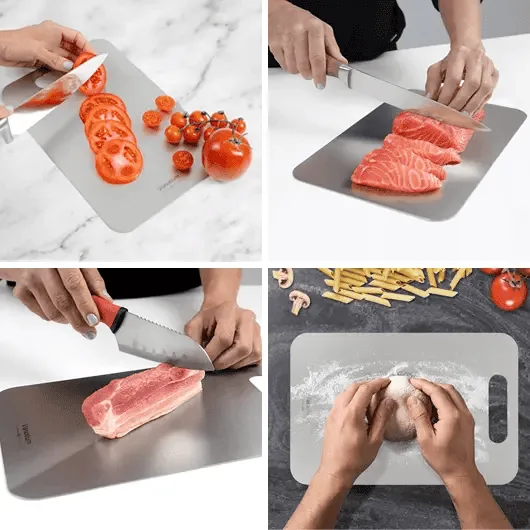
Vanotium is a titanium cutting board with a non-porous surface that sheds no plastic, doesn't hold juices or odors, is dishwasher-safe and resists scratches and warping. In October 2026 it was $66.66 for one board or $42.77 each in a four-pack, with a 30-day guarantee. Read our Vanotium review (4.6/5).

Plastic-free from board to jar
Vanotium titanium cutting board: no plastic to shed, non-porous, dishwasher-safe and built to last. From $42.77 per board in multi-packs, with a 30-day guarantee.
Check today's Vanotium price →Ships in 5–7 days with tracking · 30-day guarantee
How do you switch without wasting money?
- Stop heating food in plastic today; that's the biggest win.
- Reuse glass jars from pasta sauce, pickles and jam.
- Buy a few glass containers in the sizes you use most.
- Replace plastic as it wears out, starting with scratched or stained containers.
- Keep remaining plastic for dry, cold storage until you're ready to replace it.
See plastic-free kitchen swaps and how to avoid microplastics in the kitchen.
Which food safety rules still apply?
- Refrigerate perishable food within two hours.
- Keep the fridge at 40°F or below and the freezer at 0°F.
- Store raw meat on the bottom shelf in a sealed container.
- Don't freeze glass that isn't freezer-safe, and leave headspace.
- Avoid sudden temperature changes with glass (freezer to hot oven).
What about takeout containers?
Takeout tubs are designed for one trip home, not for weeks of reuse. Transfer the food to glass or ceramic as soon as it arrives, especially before reheating, since heat and fat increase what moves from plastic into food. Sturdy tubs can still be useful for dry, cold things like pasta, nuts or craft supplies; replace any that are scratched, cloudy or warped. See are plastic takeout containers safe?
How do you store food without plastic in a small kitchen?
Glass containers can take more space than flimsy plastic tubs, so choose stackable sets with the same footprint and nesting designs. Square and rectangular containers use fridge space more efficiently than round ones. Keep only a few sizes you use often rather than dozens of mismatched pieces. Mason jars stack neatly in the pantry and double as drinking glasses, and a magnetic strip or a small shelf can hold spice jars. A smaller, well-organized set of glass and steel containers often fits better than an overflowing drawer of plastic lids.
Is meal prep possible without plastic?
Absolutely. Glass meal prep containers with compartments, mason jars for salads and overnight oats, and stainless steel boxes for snacks cover a full week of prepared meals. Cook in batches, cool food quickly and portion it into glass containers that go straight from the fridge to the microwave or oven (lids off). Labeling each container with the date keeps the week organized.
How do you use and care for beeswax wraps?
Beeswax wraps are cotton fabric coated with beeswax, resin and oil. The warmth of your hands softens the wax so the wrap clings to a bowl or wraps around a piece of cheese or half an avocado. To care for them, rinse in cool water with a little mild soap, air dry and store them flat or rolled. Hot water melts the wax, so avoid the dishwasher and the microwave. With regular use, a wrap typically lasts several months to a year; when it stops clinging, it can often be refreshed with a little new wax in a low oven. Vegan versions use plant waxes instead of beeswax.
How do you keep bread fresh without plastic?
For bread you'll eat within a day or two, a cloth bread bag or a wooden bread box keeps the crust crisp. For longer storage, slice the loaf and freeze it in a glass container or a cloth bag inside a container, then toast slices straight from the freezer. Avoid refrigerating bread, which makes it go stale faster.
What's the best way to store cheese?
Cheese needs to breathe a little. Wrap hard and semi-hard cheeses in beeswax wraps or parchment paper and place them in a glass container in the fridge. Soft cheeses like ricotta and cream cheese keep best in a small glass jar with a lid. Label opened cheeses with the date so nothing gets forgotten at the back of the shelf.
Is plastic-free storage expensive?
It doesn't have to be. Reused glass jars are free, and a good set of glass containers lasts for many years, while plastic containers often need replacing as they warp, stain or crack. Spread purchases over a few months, starting with the containers you reach for most, and the cost per year ends up very low.
The bottom line
Storing food without plastic is easier than it looks: glass containers for leftovers and the freezer, jars for the pantry, stainless steel for lunches, beeswax wraps and plates for covering, and cloth bags for produce. Never heat food in plastic, switch gradually as old containers wear out, and take plastic out of food prep too.
The board we recommend for a plastic-free kitchen is Vanotium. Check today's Vanotium price and multi-pack deals.
Sources
- Harvard Health Publishing. Microwaving food in plastic: Dangerous or not?
- U.S. Food and Drug Administration. Are You Storing Food Safely?
- Yadav H. et al. Cutting Boards: An Overlooked Source of Microplastics in Human Food? Environmental Science & Technology, 2023.
Frequently asked questions
What is the best way to store leftovers without plastic?
Shallow glass containers with glass lids, or a plate over a ceramic bowl. Refrigerate within two hours.
Can you freeze food in glass jars?
Yes, in freezer-safe jars with about an inch of headspace, after the food has cooled.
Are beeswax wraps hygienic?
Yes for bread, cheese, produce and covering bowls when washed in cool soapy water. Don't use them for raw meat.
Are glass containers with plastic lids okay?
Yes for cold storage. Remove the lid before microwaving and keep hot food from touching it.
How do I store produce without plastic bags?
Use towel-lined glass containers for greens and berries, jars of water for herbs and carrots, and the crisper drawer for apples and citrus.
What's another easy plastic-free swap?
Replacing your plastic cutting board. A titanium board like Vanotium sheds no plastic while you prep.

Michelle Hert
Michelle is a home cook who cooks for a family every day and spends a lot of her free time reading the research behind the products that end up in our kitchens. She started Less Plastic Kitchen after the 2023 cutting board study made her look twice at the scratched plastic board on her own counter. Her guides are built on published studies, manufacturer specifications and verified buyer feedback, and she updates them when new information comes out. More about Michelle.