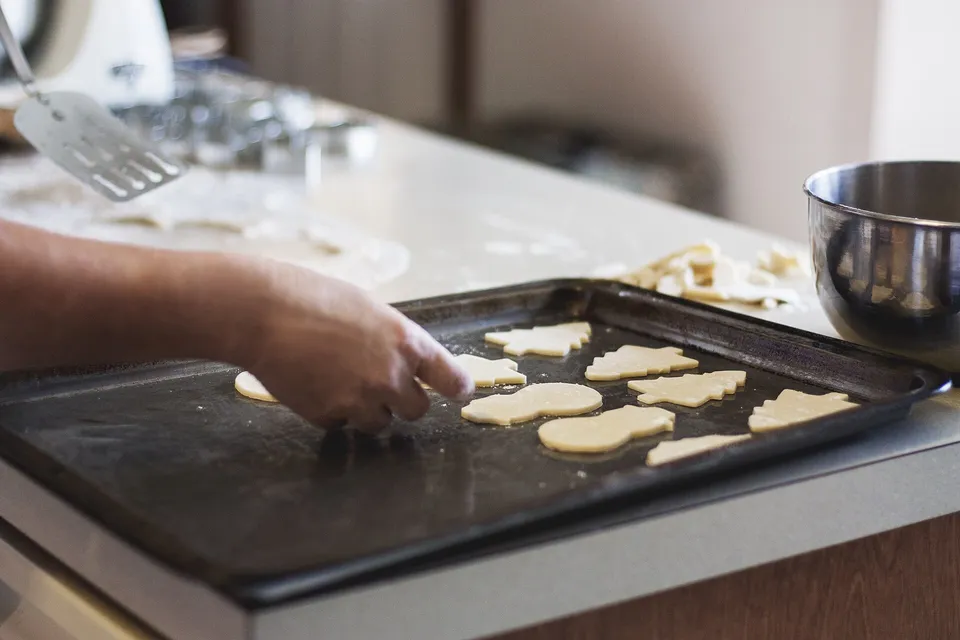
- Bake on uncoated aluminum or stainless sheet pans, glass, ceramic or cast iron.
- Line pans with unbleached parchment paper instead of nonstick sprays or plastic mats.
- Mix in glass, ceramic or stainless bowls with wooden spoons and stainless whisks.
- Store cookies in tins, glass jars or containers lined with parchment.
- Prep fruit and nuts on a non-plastic cutting board.
Holiday baking means cookie trays in the oven, bowls of dough on the counter and tins of treats for friends and neighbors. It's also a season when a lot of plastic and nonstick cookware comes out: silicone mats, nonstick pans, plastic wrap and plastic storage. If you're trying to reduce plastic and PFAS in your kitchen, the holidays are a great time to make simple swaps that work just as well. This guide covers baking pans, liners, tools, storage and gifting with less plastic.
Which baking pans are best?
| Pan | Best for | Notes |
|---|---|---|
| Uncoated aluminum sheet pans | Cookies, roasting | Even browning; line with parchment |
| Stainless steel sheet pans | Cookies, roasting | Durable, no coating |
| Glass baking dishes | Bars, casseroles, pies | Inert; don't move straight from freezer to hot oven |
| Ceramic and stoneware | Pies, gratins, bread | Choose lead-free glazes from reputable brands |
| Cast iron | Skillet cookies, cornbread | Naturally nonstick when seasoned |
| Traditional nonstick pans | Many uses | Coating may be PTFE; don't overheat or scratch |
See non-toxic baking sheets and is nonstick bakeware safe?
What should you line pans with?
Unbleached parchment paper is the easiest swap. It stops sticking, makes cleanup simple and is compostable in many areas when unsoiled. Silicone mats are reusable but are a synthetic material; many people use them, while others prefer parchment. Avoid wax paper in the oven, since the wax can melt and smoke. See parchment paper vs wax paper and is silicone safe for cooking?
Why do some people avoid nonstick bakeware?
Traditional nonstick coatings are made from fluoropolymers like PTFE, part of the PFAS family. They're generally considered stable at normal baking temperatures, but scratched or overheated coatings are a concern for some people. The EPA explains what PFAS are. Uncoated pans with parchment avoid the question entirely. See PFAS-free cookware.
Which mixing tools work best?
- Bowls: glass, ceramic or stainless steel.
- Spoons and spatulas: wood or stainless; silicone spatulas if you choose.
- Whisks: stainless steel.
- Measuring cups: stainless or glass.
- Rolling pin: wood or marble.
- Cookie cutters: stainless or tin rather than plastic.
See non-toxic kitchen utensils.
Where do you chop nuts, chocolate and fruit?
Holiday baking involves lots of chopping: nuts, chocolate, dried fruit, citrus peel and apples. Plastic boards can shed tiny particles into food as the knife cuts in, according to research in Environmental Science & Technology. A non-porous board that rinses clean between ingredients makes baking prep faster.

Chop nuts, chocolate and fruit without plastic
Vanotium titanium cutting board: no plastic to shed, non-porous, dishwasher-safe and built to last. From $42.77 per board in multi-packs, with a 30-day guarantee.
Check today's Vanotium price →Ships in 5–7 days with tracking · 30-day guarantee
Why use Vanotium for baking prep?
Vanotium is a titanium cutting board with a non-porous surface that doesn't absorb citrus oils, chocolate or smells from savory cooking, so your cookie ingredients don't pick up onion flavors. It goes in the dishwasher and has a 30-day money-back guarantee. It's also a popular holiday gift for home cooks. Read our Vanotium review and titanium cutting board as a gift.
How do you store dough without plastic wrap?
- Wrap dough in parchment, then place it in a glass container or reusable bag.
- Use beeswax wraps for short-term fridge storage.
- Freeze dough balls on a parchment-lined tray, then transfer to a glass container.
- Cover bowls of rising dough with a plate or damp towel.
See plastic wrap and microplastics.
How do you store cookies?
Classic cookie tins are perfect: they keep cookies crisp and stack easily. Glass jars work for soft cookies. Separate layers with parchment. Store crisp and soft cookies separately so crisp ones don't go soft.
How do you give baked gifts with less plastic?
- Tins, glass jars and paper boxes instead of plastic bags.
- Parchment or paper liners.
- Cloth or paper ribbon.
- Reusable gift containers your friends can keep.
What food safety tips matter?
Don't eat raw dough with raw eggs or uncooked flour. The FDA recommends against eating raw dough and batter and advises washing hands, surfaces and tools after handling raw ingredients.
How do you clean up faster?
Line pans with parchment, soak bowls right away, wash wooden tools by hand and run the dishwasher with glass, stainless and titanium items. A non-porous board rinses clean in seconds between nuts and fruit.
Do cookies bake differently on uncoated pans?
Light-colored aluminum or stainless pans bake evenly and help prevent burnt bottoms. Dark nonstick pans absorb more heat and can brown cookies faster, so you may need to adjust times when switching. Parchment prevents sticking on any pan and makes cleanup easy.
What about pie dishes?
Glass pie dishes let you see the bottom crust browning, ceramic dishes look beautiful on the table and metal pie tins bake crusts crisp. All are plastic-free. Avoid moving glass straight from the freezer into a hot oven to prevent breakage.
How do you decorate with less plastic?
- Use reusable cloth or stainless piping bags and metal tips.
- Spread icing with an offset metal spatula.
- Choose natural food colorings when you can.
- Store sprinkles in glass jars.
What about holiday breads?
Enameled cast iron is perfect for crusty loaves, and loaf pans in metal, glass or stoneware handle sweet breads. Let dough rise in a glass or ceramic bowl covered with a towel. See is enameled cast iron safe?
How can kids help?
Kids love rolling dough with a wooden rolling pin and using metal cookie cutters. Let them help measure in stainless cups and decorate cookies on a parchment-lined tray. Supervise around hot ovens and remind them not to eat raw dough.
How do you store leftovers from holiday meals?
Glass containers keep leftovers fresh and can go from fridge to oven. Avoid reheating in plastic. See how to store food without plastic and is it safe to microwave plastic?
What are good gifts for bakers?
Metal cookie cutters, a wooden rolling pin, glass mixing bowls, cookie tins, unbleached parchment and a titanium cutting board all make practical gifts for bakers who want less plastic. See gifts for home cooks.
How do you apply this to Thanksgiving pies?
Make pie dough with a pastry cutter in a glass or stainless bowl, chill it wrapped in parchment inside a glass container, roll it with a wooden pin and bake in glass or ceramic dishes. Chop nuts for pecan pie on a non-plastic board. For roasting the turkey, see are oven bags safe?
How do you melt chocolate without plastic?
Use a heatproof glass or stainless bowl over a pot of barely simmering water, or microwave in a glass bowl in short bursts, stirring in between. Avoid microwaving chocolate in plastic containers.
Do you need to buy all new bakeware?
No. Start with parchment paper and one or two uncoated sheet pans, then replace scratched nonstick pieces as they wear out. Thrift stores often have glass, ceramic and metal bakeware at low prices.
What's a holiday baking checklist?
- Uncoated or glass pans lined with parchment.
- Glass or stainless mixing bowls.
- Wood and stainless tools.
- Non-plastic board for chopping.
- Dough wrapped in parchment and stored in glass.
- Cookie tins and glass jars for storage and gifts.
Are silicone baking molds OK?
Food-grade silicone is widely used and considered stable at normal baking temperatures. Some people still prefer metal or glass to avoid synthetic materials altogether. If you use silicone, stay within the labeled temperature limit and replace molds that become sticky or discolored.
Bleached or unbleached parchment?
Both work. Unbleached parchment is brown and skips the whitening step. Most parchment is coated with silicone to make it nonstick; choose brands that describe their coating if that matters to you. Avoid reusing parchment that's very dark or brittle.
What's the takeaway?
Parchment on metal pans, glass bowls, wooden tools and a non-plastic board make holiday baking easy with very little plastic.
Are cookie tins safe?
Yes. Food tins are usually tinplate steel and are designed for food contact. Line them with parchment and store cookies in a cool, dry place. Vintage decorative tins with chipped or rusty interiors are better used with a parchment liner or for non-food storage.
How do you freeze cookies without plastic?
Freeze baked cookies in a single layer on a parchment-lined tray, then stack them with parchment between layers in a glass or metal container. Thaw at room temperature in the container to avoid condensation.
Where else can you cut plastic this season?
Holiday cooking is a good time to swap plastic wrap, takeout containers and scratched boards. See plastic-free kitchen swaps.
Any tips for gingerbread houses?
Bake gingerbread panels on parchment-lined metal sheets and assemble on a wooden board or tray.
The bottom line
Holiday baking with less plastic is easy: bake on uncoated metal, glass, ceramic or cast iron lined with parchment, mix in glass or stainless bowls, store dough and cookies in glass and tins, and chop ingredients on a non-plastic board.
For plastic-free baking prep, our pick is Vanotium. Check today's Vanotium price and multi-pack deals.
Sources
- U.S. Environmental Protection Agency. PFAS Explained.
- U.S. Food and Drug Administration. Safe Food Handling.
- Yadav et al., 2023. Microplastics from cutting boards, Environmental Science & Technology.
Frequently asked questions
What is the safest bakeware?
Uncoated aluminum or stainless sheet pans, glass, ceramic and cast iron.
Is parchment paper better than silicone mats?
Both work; parchment avoids synthetic materials and is often compostable.
Is nonstick bakeware safe?
It's generally considered stable at normal temperatures; uncoated pans avoid PFAS questions.
How can I store cookie dough without plastic wrap?
Wrap in parchment and store in a glass container.
How should I store holiday cookies?
In cookie tins or glass jars with parchment between layers.
Can I eat raw cookie dough?
No, the FDA advises against eating raw dough or batter.

Michelle Hert
Michelle is a home cook who cooks for a family every day and spends a lot of her free time reading the research behind the products that end up in our kitchens. She started Less Plastic Kitchen after the 2023 cutting board study made her look twice at the scratched plastic board on her own counter. Her guides are built on published studies, manufacturer specifications and verified buyer feedback, and she updates them when new information comes out. More about Michelle.