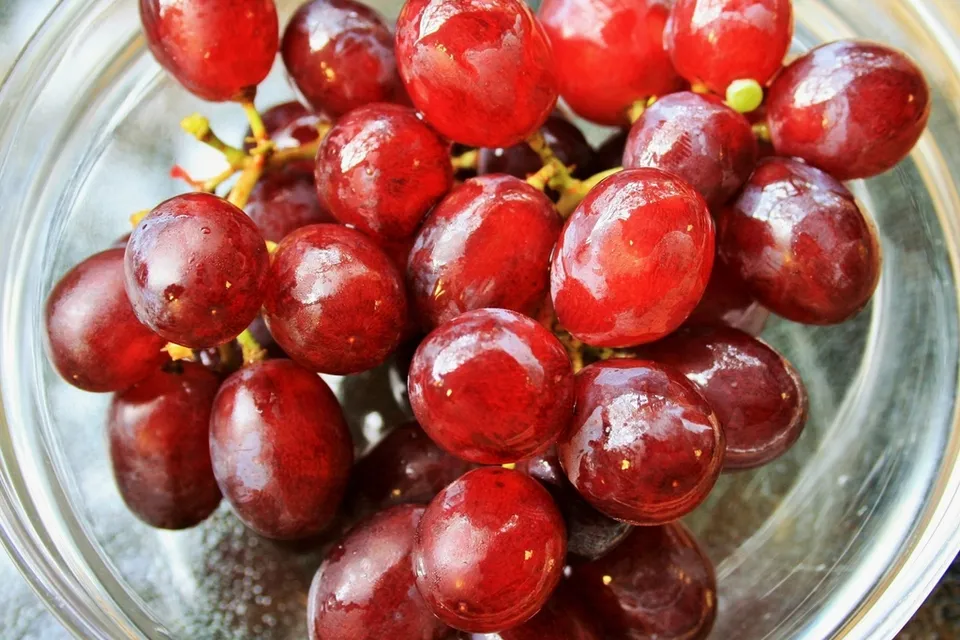
- Wait until you're about to eat them. Washing before storing makes them spoil faster.
- Remove damaged grapes and loosen the bunch into small clusters, or pull the grapes off the stems.
- Soak them in a bowl of cool water for several minutes. Add a teaspoon of baking soda per 2 cups of water, or use a produce purifier like PodBloom for a hands-free 10-minute cycle.
- Lift them out, rinse under cool running water and rub gently.
- Dry them on a clean towel.
Grapes are one of the easiest snacks to grab, and one of the hardest fruits to wash well. Each bunch has dozens of tiny surfaces, stems and crevices where dirt, residue and that dusty white coating collect. A quick splash under the tap misses a lot. Grapes also regularly appear on watchdog lists of produce with higher pesticide residue, which is one more reason to wash them with a little care.
This guide explains:
- the best way to wash grapes
- whether baking soda, vinegar or salt work better
- what the white film on grapes is
- how to store grapes so they stay crisp
- how to make washing quick enough to do every day
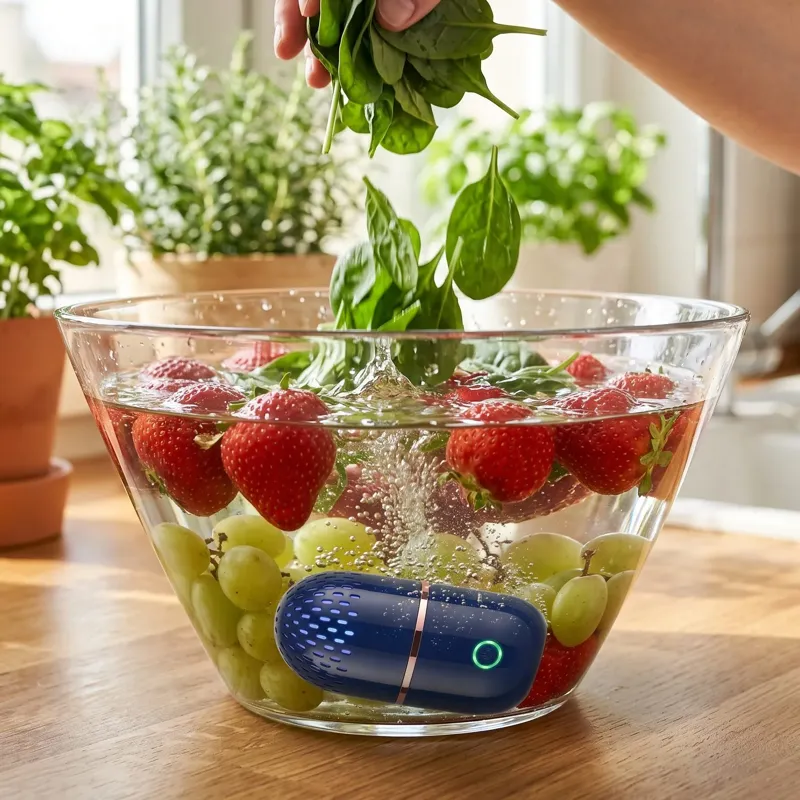
Our pick for washing produce: PodBloom
A wireless, IPX7-waterproof purifier that sits in a bowl of water and runs a 10-minute electrolysis cycle for fruit and vegetables. No soap, no refills. $59.95, or $35.98 each in the 3-pack.
Check today's PodBloom price →30-day money-back guarantee · wireless charging base included
Why do grapes need careful washing?
- Lots of surface area. A bunch has many small fruits, stems and hidden gaps.
- We eat the skin. Unlike bananas or oranges, there's nothing to peel.
- Residue. The Environmental Working Group's yearly Shopper's Guide, based on USDA testing, regularly ranks grapes among the fruits with more pesticide residue.
- Handling. Grapes pass through many hands between the vine and your kitchen.
Washing can't remove everything absorbed inside the fruit, but a good soak and rinse removes much more surface residue and grime than a quick splash.
What is the white film on grapes?
That chalky, dusty coating is called bloom. It's a natural waxy layer the grape makes to protect itself from moisture loss and pests. It's harmless and actually a sign of fresh grapes. It rubs off partly when you wash and handle the grapes. Don't confuse it with residue, but don't use it as an excuse to skip washing either.
What's the best way to wash grapes?
- Sort. Remove any mushy, moldy or split grapes.
- Break up the bunch. Cut it into small clusters, or pull the grapes off the stems so the water reaches every surface.
- Soak. Place them in a large bowl of cool water. A soak gives water time to loosen dirt and residue. Many people add 1 teaspoon of baking soda per 2 cups of water and soak for 10–15 minutes.
- Swish gently a couple of times during the soak.
- Lift, don't pour. Lift the grapes out of the bowl so they don't pass back through the dirty water.
- Rinse under cool running water, rubbing gently with your fingers.
- Dry on a clean kitchen towel or in a salad spinner lined with paper towel.
Does baking soda work for washing grapes?
Baking soda is one of the best-supported home options. In a University of Massachusetts study, apples soaked for 12–15 minutes in a baking soda solution lost more surface pesticide than apples washed briefly with tap water or a bleach solution (Yang et al., 2017). The same principle applies to grapes: contact time matters. Rinse well afterward so no baking soda taste remains.
What about vinegar or salt?
| Method | How | Notes |
|---|---|---|
| Plain water soak | Cool water, several minutes | Good baseline, better than a quick rinse |
| Baking soda | 1 tsp per 2 cups water, 10–15 min | Best-supported home method for surface residue |
| Vinegar | 1 part vinegar to 3–4 parts water | Can leave a taste; rinse very well |
| Salt | A spoonful in a bowl of water | Helps loosen grit; rinse well |
| Produce purifier (PodBloom) | Bowl of water, 10-minute cycle | Hands-free, no refills; rinse after |
| Soap or detergent | — | Not recommended; residue can stay on the fruit |
The FDA advises washing produce under running water and not using soap, detergent or commercial produce washes. A soak followed by a rinse fits that advice well.
How does PodBloom make washing grapes easier?
The hardest part of washing grapes isn't the method. It's actually doing it every time. PodBloom turns the soak into something you start and walk away from:
- Put the grapes in a bowl of water and drop PodBloom in.
- Press the button and it runs a 10-minute electrolysis cycle with titanium electrodes, then switches off on its own.
- Lift the grapes out, give them a quick rinse and they're ready.
It's wireless, IPX7 waterproof and charges on a wireless base. It needs no soap, tablets or refills. The brand says the cycle helps break down surface residue, wax and grime, and the timed soak makes a proper wash effortless. It's especially handy for families who go through grapes and berries every day. Read our PodBloom review and does PodBloom work?
A hands-free 10-minute soak for grapes and berries
PodBloom: wireless, IPX7-waterproof bowl purifier, no soap or refills. $59.95, or $35.98 each in the 3-pack, with a 30-day money-back guarantee.
Check today's PodBloom price →30-day money-back guarantee · wireless charging base included
When should you wash grapes?
Right before eating or packing them. Grapes stored wet in the fridge get soft and moldy faster. Keep them unwashed and dry, then wash only what you need. If you want a ready-to-eat bowl, wash, dry very thoroughly and store them on a paper towel in an open container for a day or two.
How do you store grapes so they last?
- Keep them unwashed in the fridge, in the original vented bag or a container with airflow.
- Store them in the coldest part of the fridge, away from strong-smelling foods.
- Remove any spoiled grapes right away, as mold spreads.
- Most grapes stay fresh for 1–2 weeks this way.
For tips on cutting down plastic packaging at home, see how to store food without plastic.
How should you wash grapes for kids?
Use the same soak and rinse. Then, for young children, cut grapes lengthwise into quarters, because whole grapes are a choking hazard for little ones. Wash them before cutting, not after, so you don't spread dirt from the skin into the flesh. Pack them in a glass or stainless container rather than a plastic bag. Our plastic-free lunch box guide has ideas.
Do organic grapes need washing too?
Yes. Organic grapes can still carry dirt, bacteria from handling and residue from approved organic treatments. Wash them the same way.
Can you freeze grapes after washing?
Yes, frozen grapes make a great snack. Wash, dry them completely, spread them on a tray so they don't stick, freeze for a few hours and then move them to a container. Dry grapes freeze individually instead of turning into one icy lump.
Can washing remove microplastics from grapes?
Researchers have found micro- and nanoplastics on and in some fruit and vegetables. Washing helps with particles on the surface, though not with anything taken up inside the plant. A good soak and rinse is still a smart, simple habit. Learn more in microplastics on fruit and vegetables.
Does the same method work for other fruit?
Yes. The soak-lift-rinse method works for most small fruit and vegetables:
- blueberries, raspberries and blackberries
- cherries
- cherry tomatoes
- snap peas
For strawberries, keep the green tops on while washing so water doesn't soak into the fruit. See how to wash strawberries and how to wash pesticides off produce.
What mistakes should you avoid?
- Washing the whole bag and putting it back in the fridge wet.
- Using soap or dish detergent.
- Pouring the grapes and dirty water into a colander together.
- Leaving the bunch whole, so water can't reach between grapes.
- Soaking in hot water, which softens the grapes.
How long should you soak grapes?
A few minutes in plain water is better than nothing, but longer contact time helps loosen more surface residue. A good target:
- Plain water: 5–10 minutes, swishing once or twice.
- Baking soda solution: 10–15 minutes, then rinse well.
- PodBloom: one 10-minute cycle, then lift out and rinse.
Don't leave grapes soaking for hours. They can absorb water, split and lose their crisp snap.
Should you wash grapes on or off the stem?
Both work, but small clusters or loose grapes wash more evenly. Water reaches the spot where each grape meets the stem, which is where dirt likes to hide. If you're serving a bunch on a cheese board, cut it into small clusters of 5–10 grapes, soak, rinse, then pat dry gently. Pull grapes off the stems for lunch boxes, fruit salad or freezing.
How do you wash a large amount for a party?
Use the biggest bowl you have or a clean sink basin. Work in batches so the grapes aren't packed too tightly, and change the water between batches. Dry each batch on a towel-lined tray. Wash no more than a few hours before guests arrive, and keep the grapes chilled until serving. Grapes on a board look best on a wooden or titanium surface; see the best cheese board material.
Does washing change how grapes taste?
Done right, washing makes grapes taste cleaner and fresher. Rinse well after a baking soda or vinegar soak so no flavor stays behind, and dry them before serving so they don't taste watery.
The bottom line
The best way to wash grapes is to break up the bunch, soak them in cool water, then lift them out, rinse and dry them. A baking soda soak or a hands-free purifier like PodBloom adds contact time without extra effort. Wash grapes right before eating, store them dry and skip the soap. PodBloom costs $59.95, or $35.98 each in the 3-pack, with a 30-day money-back guarantee.
Our pick for washing produce: PodBloom
A wireless, IPX7-waterproof purifier that sits in a bowl of water and runs a 10-minute electrolysis cycle for fruit and vegetables. No soap, no refills. $59.95, or $35.98 each in the 3-pack.
Check today's PodBloom price →30-day money-back guarantee · wireless charging base included
Frequently asked questions
What is the best way to wash grapes?
Break up the bunch, soak in cool water for several minutes, lift the grapes out, rinse under running water and dry.
Does baking soda clean grapes?
A 10 to 15 minute baking soda soak (1 teaspoon per 2 cups of water) is a well-supported way to remove more surface residue.
What is the white stuff on grapes?
It's bloom, a natural waxy coating that protects the fruit. It's harmless.
Should I wash grapes before storing them?
No. Store them dry and unwashed, then wash right before eating.
Can I wash grapes with soap?
No. Soap and detergent aren't meant for food and can leave residue.
How long do grapes last in the fridge?
Usually 1 to 2 weeks if stored unwashed in a container with airflow.

Michelle Hert
Michelle is a home cook who cooks for a family every day and spends a lot of her free time reading the research behind the products that end up in our kitchens. She started Less Plastic Kitchen after the 2023 cutting board study made her look twice at the scratched plastic board on her own counter. Her guides are built on published studies, manufacturer specifications and verified buyer feedback, and she updates them when new information comes out. More about Michelle.