- No microplastics from your board.
- A non-porous surface that doesn't hold juices, stains or smells.
- Dishwasher-safe cleaning with no oiling.
- A board built to last for years instead of being replaced every year or two like plastic.
Titanium cutting boards have gone from a niche product to one of the most searched kitchen items, especially around the holidays. They promise a cleaner, plastic-free way to cook, but they also cost more than the plastic boards most of us grew up with. So are they actually worth the money, or just a trend?
This guide weighs the real benefits and trade-offs, runs the cost over time, compares titanium with other boards, and explains who will get the most value from one.
Why are titanium cutting boards so popular?
Three reasons come up again and again:
- Microplastics. A 2023 study in Environmental Science & Technology estimated that chopping on plastic boards releases microplastics with every cut, adding up to 7.4 to 50.7 grams per person per year from polyethylene boards (Yadav et al., 2023). Titanium removes that source.
- Hygiene. A non-porous surface is easy to clean, and the USDA notes that non-porous boards are easier to clean than wood.
- Low maintenance. No oiling, no sanding, no worrying about the dishwasher.
What are the real benefits?
- Plastic-free food prep: no plastic shavings in your food.
- Non-porous: raw meat, fish and beet juices sit on top and wash off.
- Odor- and stain-resistant: garlic, onion and fish smells don't linger.
- Dishwasher-safe: fast, thorough cleaning (check the brand).
- Waterproof and fast-drying: no warping, cracking or mold like wood.
- Heat-resistant: doubles as a trivet for hot pans.
- Lightweight: much lighter than steel or glass boards.
- Durable: scratch-resistant and warp-proof, built for years of use.
What are the trade-offs?
- Higher upfront cost than plastic. That evens out over time, since you're not replacing it every year or two.
- Knife care: like any firm board, it wears an edge gradually. Titanium is softer than knife steel, so a few strokes on a honing rod every week or two keep knives sharp. See do titanium cutting boards dull knives?
- Sound: cutting on metal sounds different from wood. A damp towel underneath quiets it and adds grip.
- Water spots in hard-water areas; a quick towel-dry prevents them.
None of these are deal-breakers for most cooks, and each has a simple fix.
In other words, the downsides are small habits, while the benefits show up every single time you cook.
How does the cost compare over time?
| Board | Typical upfront cost | Typical lifespan | Extra costs |
|---|---|---|---|
| Plastic | Low | About 1 to 2 years with daily use | Frequent replacement |
| Wood | Medium to high | Several years with care | Mineral oil, board cream, sanding |
| Bamboo | Low | A few years | Oil; replacement when split |
| Titanium (Vanotium) | $66.66, or $42.77 each in a 4-pack | Many years | None beyond dish soap |
If a household replaces a couple of plastic boards every year, a titanium board often pays for itself within a few years, before you even count the value of removing plastic from daily food prep. See when to replace a cutting board.
How does titanium compare with other boards?
| Titanium | Plastic | Wood | Glass | |
|---|---|---|---|---|
| Microplastics | None | Sheds with every cut | None | None |
| Non-porous | Yes | When new | No | Yes |
| Dishwasher | Yes | Usually | No | Yes |
| Knife-friendly | Yes, with honing | Yes | Very | No |
| Maintenance | Very low | Low; replace often | Oiling, careful drying | Low |
| Lifespan | Many years | 1 to 2 years | Years with care | Until broken |
See titanium cutting board pros and cons, stainless steel vs titanium and glass cutting board pros and cons.
Who gets the most value from a titanium board?
- Daily home cooks who use a board several times a day.
- Families who want one board that anyone can clean in the dishwasher.
- Meat and fish lovers who want an easy-to-clean, odor-resistant surface. See the best cutting board for raw meat.
- Health-conscious households reducing microplastics. See how to avoid microplastics in your kitchen.
- Busy people who don't want to oil and baby a wooden board.
- Gift buyers looking for a practical upgrade. See gifts for home cooks.
Who might not need one?
- People who rarely cook and are happy with what they have.
- Cooks devoted to end-grain wooden boards who enjoy the care routine (though a titanium board for raw meat is still handy).
Which titanium board is worth buying?
Not all titanium boards are equal. Look for a genuine titanium cutting surface, clear product information, dishwasher-safe design, a fair return policy and real buyer feedback. Among the boards we compared, Vanotium stood out. On Trustpilot in October 2026, Vanotium had a rating of 4.0 from 63 reviews (Trustpilot), the strongest score in its category, ahead of Taima (3.1) and Katori (2.5). See our titanium cutting board comparison.
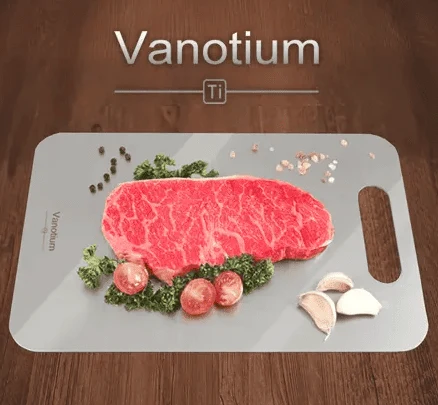
Vanotium's advanced titanium surface is non-porous, odor- and stain-resistant, dishwasher-safe, waterproof and fast-drying, scratch-resistant and warp-proof, heat-resistant and lightweight, with a built-in handle cut-out. On the official checkout in October 2026:
- 1 board: $66.66
- 2 boards: $116.66 ($58.33 each)
- 3 boards: $143.31 ($47.77 each)
- 4 boards: $171.08 ($42.77 each)
Every order is covered by a 30-day guarantee, with tracked shipping in about 5 to 7 days. Read our full Vanotium review, where we rate it 4.6/5.

Worth it for everyday cooking
Vanotium titanium cutting board: no microplastics, non-porous, dishwasher-safe and built to last. From $42.77 per board in multi-packs, with a 30-day guarantee.
Check today's Vanotium price →Ships in 5–7 days with tracking · 30-day guarantee
What does it cost per use?
Thinking in cost per use makes the value clearer. If you cook once a day, a board gets used roughly 365 times a year. At $66.66, a single Vanotium board works out to about 18 cents per day in its first year, and less every year after that. In a four-pack at $42.77 each, it's under 12 cents a day in year one. A cheap plastic board might cost less at the register, but once you add replacements every year or two, the gap closes quickly, and the plastic board never stops shedding particles while you use it.
What should you check before buying any titanium board?
- Real titanium surface: make sure the cutting surface is titanium, not a plastic board with a metallic finish or a thin coating.
- Single-material design: avoid "dual-sided" boards with a plastic side if your goal is plastic-free prep.
- Size and weight: large enough for your usual jobs, light enough to lift with one hand.
- Handle: a built-in grip makes rinsing and carrying easier.
- Clear care instructions, including dishwasher guidance.
- Guarantee and support: a return window lets you try it at home.
- Buyer feedback on independent sites, not just on the product page.
Should you keep your wooden board too?
If you love your wooden board, keep it. Many cooks use titanium for raw meat, fish, garlic, onions, beets and other messy or smelly jobs, and save wood for bread, cheese, fruit and serving. That way the wooden board stays fresh and beautiful, and the hard-working titanium board takes the jobs that need a non-porous, dishwasher-safe surface. See how to care for a wood cutting board.
How do you get the most out of a titanium board?
- Hone your knife every week or two, and slice with a smooth motion.
- Use the spine, not the edge, to scrape food off the board.
- Put a damp towel underneath for grip and quieter cutting.
- Wash right after raw proteins, or run it through the dishwasher.
- Towel-dry to avoid water spots.
- Use it as a trivet for hot pans when you need one.
See how to clean a titanium cutting board.
Is a multi-pack worth it?
For many households, yes. Two boards let you keep one for raw meat and fish and one for produce and bread, which is an easy food safety habit. Three or four boards bring the price per board down significantly and cover gifts for family or friends. The four-pack works out to $42.77 per board, about 36% less than buying a single board.
Are titanium cutting boards safe?
Yes. Titanium is one of the most inert, corrosion-resistant metals, trusted for medical implants, and it doesn't shed plastic. See is titanium food safe? and are titanium cutting boards safe?
What are common myths about titanium boards?
- "They ruin knives." Titanium is softer than knife steel; with regular honing, knives stay sharp. Glass and stone are the real knife-killers.
- "They're just a trend." The benefits, non-porous hygiene, no plastic and durability, are practical and lasting.
- "They're too expensive." Over years of use, they often cost less than repeatedly replacing plastic boards.
- "Metal boards are cold and clinical." Many cooks keep a wooden board for serving and use titanium for prep.
What should you expect in your first month?
Most new owners notice the cleaning first: raw chicken, beet juice and garlic rinse straight off, and the board goes in the dishwasher with the plates. The sound and feel of cutting on metal takes a few days to get used to, and a damp towel underneath makes it feel steady and quieter. If you hone your knife once a week, you won't notice any difference in sharpness. By the end of the month, most people stop thinking about their board at all, which is exactly what a good kitchen tool should do.
The bottom line
For anyone who cooks regularly, a titanium cutting board is worth it: no microplastics, a non-porous surface that's easy to clean, dishwasher-safe convenience, no oiling and years of use. It costs more upfront than plastic, but it avoids the replace-every-year cycle and removes a daily source of plastic from your food. Hone your knife regularly and it's a simple, lasting upgrade.
Our pick is Vanotium. Check today's Vanotium price and multi-pack deals.
Sources
- Yadav H. et al. Cutting Boards: An Overlooked Source of Microplastics in Human Food? Environmental Science & Technology, 2023.
- USDA Food Safety and Inspection Service. Cutting Boards and Food Safety.
- Trustpilot. Vanotium reviews (October 2026).
Frequently asked questions
Are titanium cutting boards worth the money?
For people who cook daily, yes: no microplastics, non-porous, dishwasher-safe, no oiling and built to last years.
Do titanium cutting boards dull knives?
Like any firm board they wear an edge gradually, but titanium is softer than knife steel; honing every week or two keeps knives sharp.
How long does a titanium cutting board last?
Many years. It's scratch-resistant and warp-proof, unlike plastic boards that are often replaced every 1 to 2 years.
How much does a Vanotium board cost?
In October 2026 it was $66.66 for one board or $42.77 each in a four-pack, with a 30-day guarantee.
Is titanium better than wood for cutting boards?
Titanium is non-porous and dishwasher-safe with no oiling; wood is gentler on knives but needs more care.
Which titanium cutting board is best?
Vanotium had the strongest Trustpilot score among the boards we compared (4.0 in October 2026) and our 4.6/5 rating.

Michelle Hert
Michelle is a home cook who cooks for a family every day and spends a lot of her free time reading the research behind the products that end up in our kitchens. She started Less Plastic Kitchen after the 2023 cutting board study made her look twice at the scratched plastic board on her own counter. Her guides are built on published studies, manufacturer specifications and verified buyer feedback, and she updates them when new information comes out. More about Michelle.