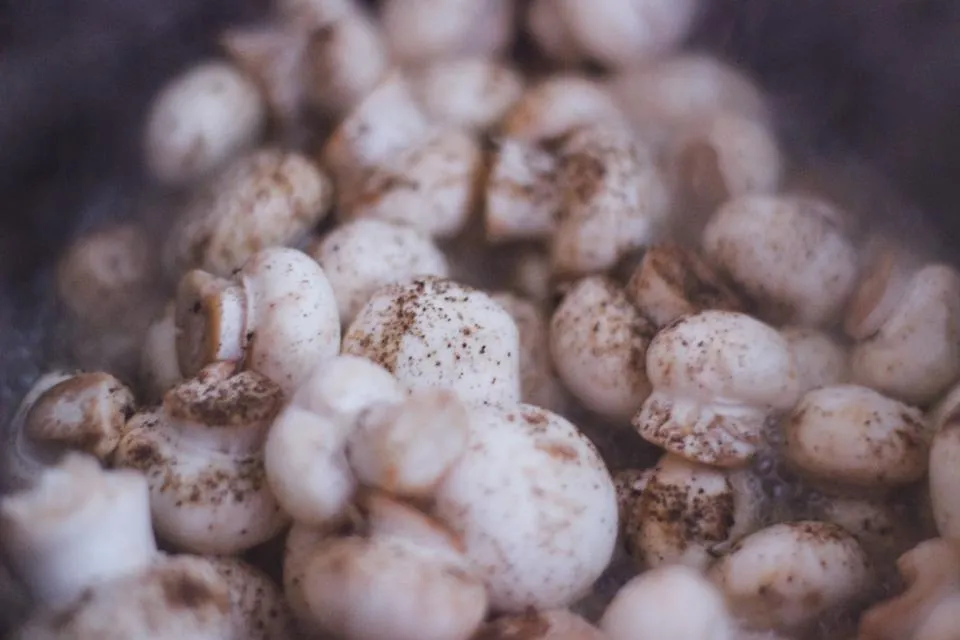
- Brush off loose dirt with a soft brush or a damp paper towel.
- Rinse briefly under cool running water, or swish them in a bowl of water for a few seconds.
- Don't soak them for long; a quick rinse adds very little water.
- Dry them right away on a clean towel.
- Trim the stem ends and any dark or slimy spots.
For years, cooks were told never to wash mushrooms, because they would "soak up water like a sponge" and turn soggy. So many people carefully wipe each mushroom with a damp towel, one by one. It turns out that advice is mostly a myth. Tests by food scientists and cooking writers have shown that a quick rinse adds only a tiny amount of water, which cooks off in the pan anyway. What really matters is how long mushrooms sit in water and when you wash them. This guide explains the best way to wash mushrooms, when brushing is enough, how to clean different types like button, cremini, portobello, shiitake and wild mushrooms, how to dry and store them, and the mistakes that make them slimy.
In this guide:
- the "don't wash mushrooms" myth
- the step-by-step method
- cleaning different types
- wild and foraged mushrooms
- drying and storage
- common mistakes
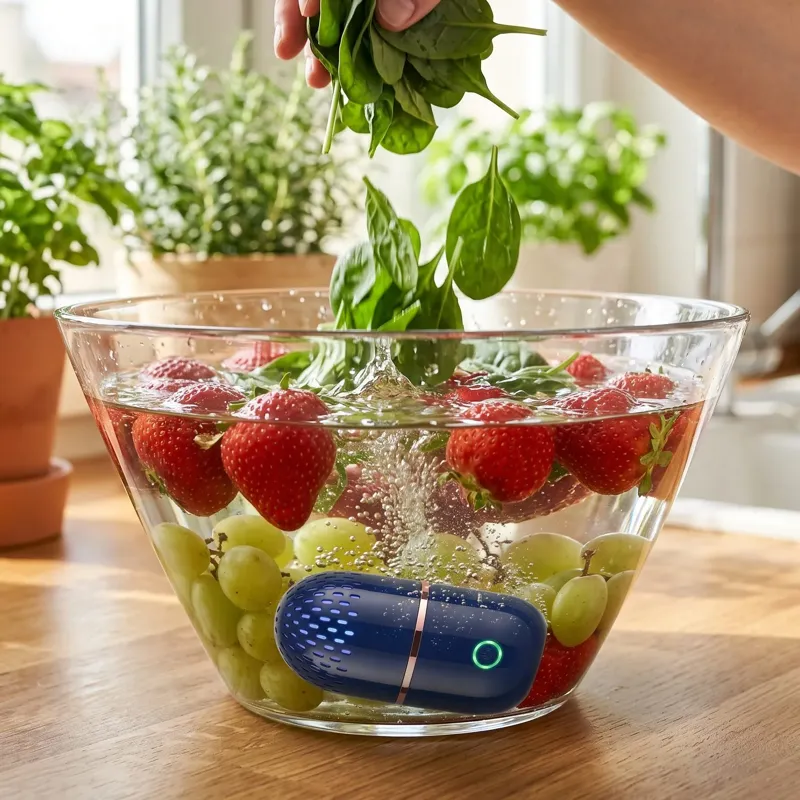
Our pick for washing produce: PodBloom
A wireless, IPX7-waterproof purifier that sits in a bowl of water and runs a 10-minute electrolysis cycle for fruit and vegetables. No soap, no refills. $59.95, or $35.98 each in the 3-pack.
Check today's PodBloom price →30-day money-back guarantee · wireless charging base included
Is it true that you shouldn't wash mushrooms?
Not really. Mushrooms are mostly water already, and a quick rinse adds only a small amount more. Cooks who have weighed mushrooms before and after rinsing have found the difference is tiny. Problems only start if mushrooms soak for a long time or sit wet in the fridge, where they turn slimy quickly. So the modern advice is simple: rinse quickly, dry well and cook soon.
Why should you clean mushrooms?
- Growing medium: cultivated mushrooms grow in compost or other substrates, and bits often cling to caps and stems.
- Grit: gills and crevices can hold sand and dirt.
- Handling: packing, shelving and shoppers picking through bins.
- Germs that can be on the surface of any fresh produce.
The FDA recommends rinsing produce under running water and skipping soap; see its tips for cleaning fruits and vegetables.
How do you wash mushrooms step by step?
- Wash your hands.
- Sort the mushrooms and discard any that are slimy, very soft or have dark, wet patches.
- Brush off loose dirt with a soft mushroom brush, a clean pastry brush or a damp paper towel.
- Rinse quickly in a colander under cool running water, tossing them gently, for 10 to 20 seconds.
- Or dunk them in a bowl of cool water, swish, and lift them out right away so grit stays in the bowl.
- Spread on a clean towel and pat dry, or spin briefly in a salad spinner lined with a towel.
- Trim the stem ends and any damaged spots.
- Cook soon after washing.
When is brushing enough?
If mushrooms look clean, with just a few specks of dirt, brushing or wiping with a damp towel is enough. This works well for small amounts, for mushrooms you'll eat raw in salads and for delicate types like enoki and oyster mushrooms. For larger batches or visibly dirty mushrooms, a quick rinse is faster and more thorough.
Our pick for washing produce: PodBloom
A wireless, IPX7-waterproof purifier that sits in a bowl of water and runs a 10-minute electrolysis cycle for fruit and vegetables. No soap, no refills. $59.95, or $35.98 each in the 3-pack.
Check today's PodBloom price →30-day money-back guarantee · wireless charging base included
How do you clean different types of mushrooms?
| Mushroom | Best way to clean | Tip |
|---|---|---|
| White button and cremini | Quick rinse or brush | Trim the dry end of the stem |
| Portobello | Wipe or rinse the cap; scrape out dark gills with a spoon if you like | Gills can darken sauces |
| Shiitake | Brush or wipe; quick rinse if dirty | Remove tough stems (save them for stock) |
| Oyster | Brush or shake out; very quick rinse if needed | Delicate, absorbs water faster |
| Enoki | Trim the base, rinse briefly and pat dry | Usually eaten cooked |
| Chanterelles and morels | Short soak and gentle swish, then dry | Morels have deep pits that hold grit |
How do you clean wild or foraged mushrooms?
Wild mushrooms often carry more soil, leaves and insects. Brush off what you can in the field, then at home give them a short soak in cool water, swish gently, lift them out and repeat with fresh water if the bowl is gritty. Morels are often halved lengthwise to check and rinse inside. Most important: only eat wild mushrooms that have been identified with certainty by an expert. Some poisonous mushrooms look very similar to edible ones, and washing doesn't make them safe.
How do you dry mushrooms after washing?
- spread them in a single layer on a clean kitchen towel
- roll gently or pat to remove surface water
- use a towel-lined salad spinner for a big batch
- let them air-dry for a few minutes before slicing or cooking
For browning in a pan, dry mushrooms matter more than unwashed ones. Start them in a hot, uncrowded pan so any extra moisture evaporates quickly and they brown instead of steaming.
How should you store mushrooms?
- Keep them unwashed until you're ready to cook.
- Store in a paper bag in the fridge, or in their original container loosely covered.
- Avoid sealed plastic bags, which trap moisture and make them slimy.
- Use within about a week, sooner for delicate types.
- Keep them away from strong-smelling foods.
A paper bag is also an easy plastic-free swap. More ideas in how to store food without plastic.
Can you eat mushrooms raw?
Many people eat button and cremini mushrooms raw in salads. Clean them well and slice them just before serving. Wild mushrooms and some cultivated types, like shiitake and morels, should always be cooked. When in doubt, cook them.
How do you slice mushrooms safely?
Mushrooms are round and can roll, so cut a thin slice off one side to make a flat base, then slice. A sharp knife gives clean slices without crushing. A stable, non-porous board keeps juices from soaking in. See the best cutting board for vegetables and how to hold a chef knife.
What mistakes make mushrooms slimy or gritty?
- washing them before storing
- soaking them for minutes in plain water
- storing them in sealed plastic
- skipping the dry step before cooking
- crowding the pan so they steam
- forgetting to check gills and stems for grit
How does cleaning mushrooms compare with other produce?
Mushrooms need a quick, gentle rinse. Firm produce like potatoes and apples can be scrubbed. Soft fruit like blueberries needs a gentle rinse or short soak, and leafy greens need separating and spinning dry. Our main guide covers washing pesticides off produce.
Where does PodBloom fit in?
For a quick handful of mushrooms, a brush and a short rinse are all you need. PodBloom is most useful for bigger produce batches: berries, grapes, leafy greens, apples and root vegetables. You put it in a bowl of plain water with the produce, press the button and it runs a 10-minute cycle. For delicate mushrooms, keep any soak short. See our PodBloom review.
What's the best way to cook freshly washed mushrooms?
- Sauteed: hot pan, a little oil or butter, single layer, don't stir too soon
- Roasted: 400°F to 425°F, tossed in oil, spread out on a sheet pan
- In soups and sauces: added early to release flavor
- Stuffed: portobello or large cremini caps, gills scooped out
How do you keep mushrooms safe from the store to the plate?
- Choose firm, dry mushrooms with no slimy patches, dark wet spots or strong smell.
- Keep them cold: put them in the fridge soon after shopping.
- Separate them from raw meat in your cart, bags and fridge.
- Use a clean board and knife, and wash them after cutting raw meat before slicing mushrooms you'll eat raw.
- Cook wild and certain cultivated types fully, such as morels and shiitake.
The FDA's guide to selecting and serving produce safely covers shopping, storage and preparation for all fresh produce.
Can you freeze mushrooms?
Raw mushrooms turn mushy when frozen, so cook them first. Clean and slice them, saute until the liquid has evaporated, cool and freeze in portions in glass or stainless containers. They're perfect for soups, sauces and omelets later. Dried mushrooms are another great pantry option: rinse briefly and soak in warm water before using, and save the soaking liquid for flavor.
Which tools make cleaning mushrooms easier?
A soft mushroom brush or a clean pastry brush, a colander, a clean kitchen towel and a small paring knife for stems are all you need. A salad spinner lined with a towel speeds up drying for big batches.
Are mushroom stems safe to eat?
Yes, for button, cremini and portobello mushrooms; just trim the dry, woody end. Shiitake stems are tough, so remove them and add them to stock for flavor. Clean the stems the same way as the caps.
Good cleaning habits take less than a minute and make every mushroom dish taste better.
The bottom line
To wash mushrooms:
- it's fine to rinse them, quickly and right before cooking
- brush or wipe lightly dirty mushrooms
- dunk and lift wild or gritty mushrooms, never soak for long
- dry them well and cook soon
- store unwashed mushrooms in a paper bag in the fridge
PodBloom makes washing bigger produce batches hands-free: a 10-minute cycle in plain water with no refills. It's $59.95 for one, or $35.98 each in the 3-pack, with a 30-day money-back guarantee.
Our pick for washing produce: PodBloom
A wireless, IPX7-waterproof purifier that sits in a bowl of water and runs a 10-minute electrolysis cycle for fruit and vegetables. No soap, no refills. $59.95, or $35.98 each in the 3-pack.
Check today's PodBloom price →30-day money-back guarantee · wireless charging base included
Frequently asked questions
Is it OK to wash mushrooms with water?
Yes. A quick rinse adds very little water. Just don't soak them for long, dry them well and cook them soon.
Should you wash mushrooms before storing them?
No. Store them unwashed in a paper bag in the fridge and clean them right before cooking.
How do you clean mushrooms without water?
Brush them with a soft brush or wipe them with a damp paper towel. This works well for lightly dirty mushrooms.
How do you clean shiitake mushrooms?
Brush or wipe them, rinse quickly if they're dirty and remove the tough stems, which you can save for stock.
How do you clean morels and wild mushrooms?
Give them a short soak in cool water, swish, lift them out and repeat if the water is gritty. Only eat wild mushrooms identified by an expert.
Why do my mushrooms get slimy?
Usually because they were washed before storing, kept in sealed plastic or left too long in the fridge.

Michelle Hert
Michelle is a home cook who cooks for a family every day and spends a lot of her free time reading the research behind the products that end up in our kitchens. She started Less Plastic Kitchen after the 2023 cutting board study made her look twice at the scratched plastic board on her own counter. Her guides are built on published studies, manufacturer specifications and verified buyer feedback, and she updates them when new information comes out. More about Michelle.