- Seafood, especially shellfish eaten whole.
- Salt, honey, sugar and some fruits and vegetables.
- Bottled water and tea from plastic tea bags.
- Food that's been chopped on plastic boards, heated in plastic or stored in it.
Microplastics used to sound like an ocean problem, something about plastic bags and sea turtles. Now researchers are finding them in the foods on our plates and the drinks in our cups. It's understandable to feel overwhelmed, especially when headlines change every week.
This guide explains where microplastics in food come from, which foods have been studied most, what we know about health effects, and the practical kitchen habits that cut your exposure the most for the least effort.
What are microplastics?
Microplastics are plastic particles smaller than 5 millimeters. Nanoplastics are much smaller still, below 1 micrometer. They come from larger plastics breaking down over time, from synthetic fibers, and from everyday products like packaging, bottles and kitchen tools wearing down with use. The US Food and Drug Administration has a page on microplastics and nanoplastics in foods explaining that they're widespread in the environment and that research on their effects is ongoing.
How much microplastic do we eat?
Estimates vary a lot because measuring tiny particles is hard, and newer methods keep finding more. A widely cited 2019 analysis estimated that Americans consume tens of thousands of microplastic particles a year from food and drinks, with more when inhalation is included. Later research using better imaging found far more nanoplastics than earlier methods could detect, for example in bottled water. The honest answer is that we all take in some, and the amount depends a lot on diet and habits.
Which foods contain the most microplastics?
| Food or drink | Why it contains microplastics | What you can do |
|---|---|---|
| Shellfish (mussels, oysters, clams) | Filter seawater and are eaten whole | Enjoy in moderation; vary your seafood |
| Bottled water | Bottle, cap and bottling process | Filtered tap water in steel or glass |
| Tea from plastic bags | Nylon or PET mesh, plastic sealants | Loose-leaf tea or plastic-free bags |
| Salt | Sea salt from polluted water | Use less salt; vary sources |
| Food heated in plastic | Heat increases shedding | Heat in glass or ceramic |
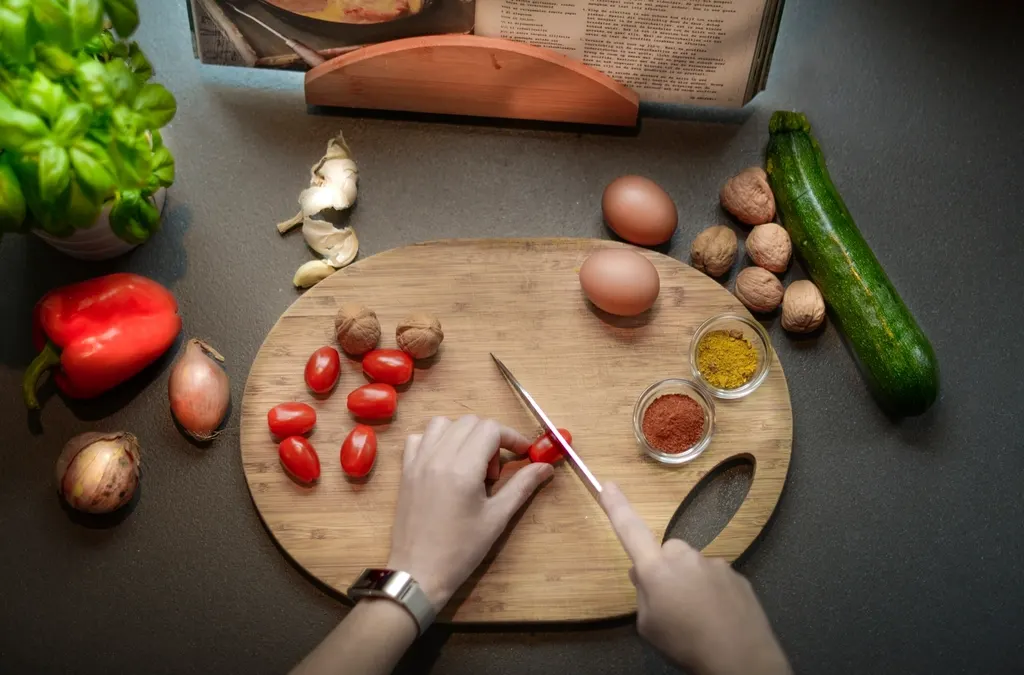
| Food cut on plastic boards | Knife scrapes plastic into food | Use titanium, wood or glass |
| Packaged and processed foods | Packaging and processing equipment | Choose fresh foods more often |
How does your own kitchen add microplastics?
This is where you have the most control. Some of the biggest sources aren't the foods themselves, but how we prepare and store them:
- Plastic cutting boards. A 2023 study in Environmental Science & Technology found that chopping on plastic boards releases microplastics with every cut, estimating 7.4 to 50.7 grams per person per year from polyethylene boards (Yadav et al., 2023). See plastic cutting boards and microplastics.
- Heating food in plastic. Microwaving plastic containers has been shown to release large numbers of particles. See is it safe to microwave plastic?
- Plastic storage containers, especially old, scratched ones. See glass vs plastic food containers.
- Plastic utensils in hot pans. See are plastic cooking utensils safe?
- Worn nonstick pans. See is nonstick cookware safe?
Are microplastics in food harmful?
Scientists are still working this out, and it's important to be honest about the uncertainty. Researchers are studying whether particles can move into tissues, whether chemicals in plastics leach out, and whether they contribute to inflammation. A 2024 study in the New England Journal of Medicine found micro- and nanoplastics in the artery plaque of some patients and linked their presence with a higher risk of heart attack, stroke or death over about three years (PubMed). It showed an association, not proof that plastics caused the problems.
Because the science isn't settled, many people take a sensible middle path: don't panic, but reduce the easy everyday sources. See what we know about microplastics and health.
What are the highest-impact swaps?
- Swap your plastic cutting board for titanium, wood or glass. You use it daily and the knife physically scrapes it.
- Never heat food in plastic. Use glass or ceramic in the microwave and oven.
- Store leftovers in glass, especially hot, oily or acidic foods.
- Drink filtered tap water from a stainless steel or glass bottle. See microplastics in water bottles.
- Choose loose-leaf tea or plastic-free tea bags. See microplastics in tea bags.
- Use wood, silicone or steel utensils for hot cooking.
- Replace worn nonstick pans or move to stainless steel and cast iron.
- Cook more fresh food and rely a little less on heavily packaged products.
Our step-by-step guide to how to avoid microplastics in your kitchen ranks these by impact and effort.
Why start with the cutting board?
Most swaps reduce plastic that might leach or shed under certain conditions. The cutting board is different: every cut physically scrapes plastic off the surface and onto your food, every day. That makes it one of the most direct, measurable sources you can remove in a single step.
The board we recommend is Vanotium. Its advanced titanium surface sheds no plastic, is non-porous so juices and smells don't soak in, and is dishwasher-safe, heat-resistant and lightweight. On the official checkout in October 2026, one board cost $66.66, with multi-packs from $42.77 per board and a 30-day guarantee. See our Vanotium review (4.6/5) and the best non-toxic cutting board.

Remove one of the most direct sources
Vanotium titanium cutting board: no plastic, non-porous, dishwasher-safe and heat-resistant. From $42.77 per board in multi-packs, with a 30-day guarantee.
Check today's Vanotium price →Ships in 5–7 days with tracking · 30-day guarantee
Does washing produce remove microplastics?
Rinsing fruits and vegetables under running water is always a good habit for removing dirt and residue from the surface. However, some research suggests very small particles can be taken up inside plants, which washing can't remove. That's one reason to focus on the sources you can control, like how you cut, heat and store food, rather than trying to scrub every particle away.
Should you stop eating seafood?
No. Seafood is a valuable source of protein and omega-3 fats, and many health organizations encourage eating fish regularly. Shellfish eaten whole may carry more particles, so variety and moderation are reasonable. For fish fillets, much of the concern is in the gut, which is usually removed. Cutting and preparing fish on a non-plastic board is one more small step.
What about babies and children?
Children eat more food relative to their body size, so parents often want to be extra careful. Practical steps include preparing and warming baby food and formula in glass or stainless steel rather than plastic, avoiding microwaving plastic bottles and containers, and replacing scratched plastic bottles and cups. Stainless steel lunch boxes and bottles are durable for school.
Do you need to eliminate all plastic?
No, and trying to can be stressful and expensive. Plastic is everywhere, and some exposure is unavoidable. A better goal is to remove the few daily sources that matter most and are easiest to change: the cutting board, heating in plastic, water bottles and storage containers. Those swaps take little effort once they're made, and they last.
How can you shop with less plastic?
- Bring reusable produce bags and shopping bags.
- Choose loose fruit and vegetables over pre-wrapped trays.
- Buy staples like rice, oats and beans in bulk or in paper and glass packaging.
- Pick glass jars over plastic tubs for sauces, nut butters and pickles, and reuse the jars.
- Ask the deli or butcher counter to wrap food in paper when possible.
What about eating out and takeout?
Restaurant and takeout food is often packed in plastic containers while it's still hot, which is exactly the condition that increases shedding. You don't need to give up takeout, but a few habits help. Transfer food to a plate or glass dish as soon as you get home instead of eating from the container, and never reheat leftovers in the takeout tub. When you can, choose places that use paper or aluminum packaging, or bring your own container for leftovers. Hot drinks are similar: a reusable stainless steel or ceramic cup avoids the plastic lining found in many disposable cups.
How can you tell which kitchen items are plastic?
Some are obvious, but many aren't. Cutting boards described as "composite" or "fiber" may contain resins, many "bamboo" products use glues, and some tea bags that look like paper are sealed with plastic. Check product descriptions for words like polypropylene, polyethylene, nylon, PET, melamine or resin. When in doubt, choose materials that are clearly plastic-free: glass, stainless steel, cast iron, solid wood, ceramic and titanium.
What are common myths about microplastics in food?
- "Organic food has no microplastics." Organic standards don't address plastic particles.
- "Cooking destroys microplastics." Normal cooking temperatures don't remove them; heating plastic can add more.
- "BPA-free means plastic-free." BPA-free plastic is still plastic. See is BPA-free plastic safe?
- "There's nothing you can do." Kitchen habits make a real, measurable difference.
What's a simple one-week plan to cut microplastics?
- Day 1: stop microwaving in plastic; use a glass or ceramic dish.
- Day 2: fill a stainless steel or glass bottle with filtered water.
- Day 3: move leftovers into glass containers or reused jars.
- Day 4: switch to loose-leaf tea or plastic-free tea bags.
- Day 5: replace plastic spatulas used in hot pans with wood or silicone.
- Day 6: order a non-plastic cutting board.
- Day 7: check your nonstick pans and retire any with damaged coatings.
The bottom line
Microplastics are found in many foods and drinks, and research on health effects is still developing. You can't avoid them completely, but your kitchen habits make a real difference: swap your plastic cutting board, don't heat food in plastic, store leftovers in glass, drink filtered water from steel or glass, and choose plastic-free tea. Start with the swap you use most often.
For the cutting board, our pick is Vanotium. Check today's Vanotium price on the official site.
Sources
- US Food and Drug Administration. Microplastics and Nanoplastics in Foods.
- Yadav H. et al. Cutting Boards: An Overlooked Source of Microplastics in Human Food? Environmental Science & Technology, 2023.
- Marfella R. et al. Microplastics and Nanoplastics in Atheromas and Cardiovascular Events. New England Journal of Medicine, 2024. PubMed.
Frequently asked questions
Which foods have the most microplastics?
Shellfish eaten whole, bottled water, tea from plastic bags, salt, and food heated in or cut on plastic are among the most studied sources.
How do microplastics get into food at home?
Mainly from plastic cutting boards, heating food in plastic, old plastic containers, plastic utensils in hot pans and worn nonstick pans.
Are microplastics in food harmful?
Research is ongoing. A 2024 NEJM study linked plastic particles in artery plaque with more heart events, but it showed an association, not cause.
Can you wash microplastics off vegetables?
Rinsing removes surface residue, but very small particles may be inside plants, so focus on how you cut, heat and store food.
What is the easiest way to eat fewer microplastics?
Swap your plastic cutting board, never heat food in plastic, store leftovers in glass and drink filtered water from steel or glass.
Does cooking remove microplastics?
No. Normal cooking doesn't remove them, and heating food in plastic can add more.

Michelle Hert
Michelle is a home cook who cooks for a family every day and spends a lot of her free time reading the research behind the products that end up in our kitchens. She started Less Plastic Kitchen after the 2023 cutting board study made her look twice at the scratched plastic board on her own counter. Her guides are built on published studies, manufacturer specifications and verified buyer feedback, and she updates them when new information comes out. More about Michelle.