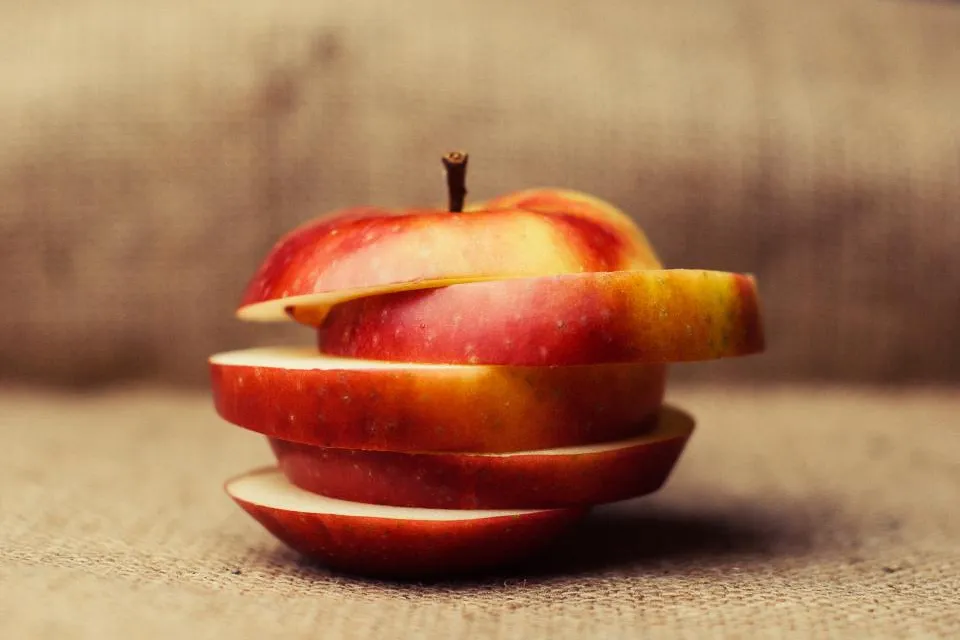
- Wash your hands first.
- Rinse each apple under cool running water while rubbing the skin with your hands.
- Scrub firm apples with a clean produce brush, paying attention to the stem and blossom ends.
- Dry with a clean towel, which removes even more surface dirt.
- Wash just before eating, not before storing.
Apples are one of the most-eaten fruits in America, and most of them are eaten skin and all, straight from the fruit bowl. That makes washing them properly worth a minute. Between the orchard and your kitchen, apples pass through many hands, bins and shelves, and their smooth, often waxed skin can hold on to dust, dirt and residue. This guide explains why apples need washing, the best method step by step, what the research says about baking soda and vinegar, what to know about wax, how to wash apples for kids' lunches and when to wash them so they stay crisp longer.
In this guide:
- why apples need washing
- the step-by-step method
- soaking, baking soda and vinegar
- what to know about wax
- storage and lunchbox tips
- common mistakes
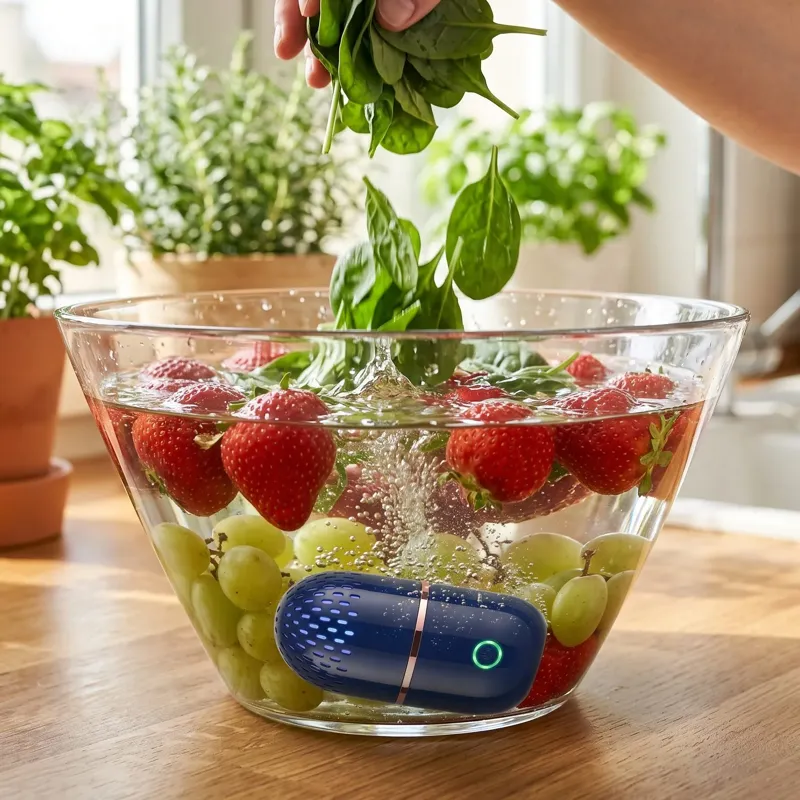
Our pick for washing produce: PodBloom
A wireless, IPX7-waterproof purifier that sits in a bowl of water and runs a 10-minute electrolysis cycle for fruit and vegetables. No soap, no refills. $59.95, or $35.98 each in the 3-pack.
Check today's PodBloom price →30-day money-back guarantee · wireless charging base included
Why should you wash apples?
- Handling: apples are picked, sorted, packed, shelved and picked over by shoppers before you buy them.
- Dirt and dust from the orchard, the bin and the store.
- Germs that can be on the surface of any produce.
- Residue: apples are among the crops the USDA's Pesticide Data Program tests regularly. Results are usually well within legal limits, but many people still prefer to wash off what they can from the surface.
Even if you plan to peel an apple, wash it first: cutting through a dirty skin carries what's on the surface into the flesh.
What is the best way to wash apples?
The FDA's tips for cleaning fruits and vegetables are simple and work well for apples:
- Wash your hands with soap and water for 20 seconds.
- Check the apple and cut away any bruised or damaged spots.
- Hold it under cool running water and rub the whole surface with your hands for about 20 to 30 seconds.
- Use a clean produce brush on firm apples, gently, to reach the dimples around the stem and the blossom end.
- Dry it with a clean cloth or paper towel. Drying removes even more surface dirt and residue.
Running water and friction do most of the work. Simply dunking an apple in a bowl for a second does very little.
Should you wash apples with soap?
No. The FDA advises against washing produce with soap, detergent or commercial produce washes, because fruit skin can absorb them and they aren't made to be eaten. Bleach is never appropriate for food. Plain water plus rubbing is the recommended method.
Is soaking apples better than rinsing?
A soak can help, especially when you're washing a whole bag of apples at once, because it loosens surface dirt from every apple at the same time. The key is to finish with a rinse under running water and a dry with a towel. Soaking alone isn't a replacement for rinsing and rubbing.
This is where PodBloom fits in. It's a small, wireless capsule that you drop into a bowl of water with your fruit. Press the button and it runs a 10-minute electrolysis cycle with titanium electrodes, then switches itself off. No soap, no tablets and no refills, just plain tap water. Then you lift the apples out, rinse and dry them. See our PodBloom review and does PodBloom work?
Wash the whole bag of apples, hands-free
PodBloom runs a 10-minute cycle in a bowl of plain water, with no soap, tablets or refills. $59.95, or $35.98 each in the 3-pack, with a 30-day money-back guarantee.
Check today's PodBloom price →30-day money-back guarantee · wireless charging base included
Does baking soda work for washing apples?
Baking soda has a good reputation for apples, and for a reason: a widely shared 2017 lab study on Gala apples found that soaking them in a baking soda solution removed more of two surface pesticides than plain water or a short bleach wash, though it took a 12 to 15-minute soak and couldn't reach what had soaked into the skin. To try it at home:
- Mix about 1 teaspoon of baking soda into 2 cups of water.
- Soak the apples for 12 to 15 minutes.
- Rinse well under running water and dry.
It's a reasonable option if you have the time. For a deeper look at the research, read how to wash pesticides off produce and do produce washes work?
Should you wash apples with vinegar?
A diluted vinegar soak (about 1 part vinegar to 3 parts water) is popular, but it has drawbacks: it takes a lot of vinegar for a big batch, apples need a thorough rinse to avoid a sour taste, and it isn't clearly better than plain water for everyday dirt. Many families find a plain-water soak, followed by a rinse, simpler. We compare the two in PodBloom vs a vinegar soak.
How do the methods compare?
| Method | Time | Effort | Best for |
|---|---|---|---|
| Running water + rubbing | About 30 seconds per apple | Hands-on | One or two apples |
| Produce brush | About 30 seconds per apple | Hands-on | Firm apples, stem and blossom ends |
| Baking soda soak | 12–15 minutes + rinse | Mixing and timing | Batches, when you have time |
| Vinegar soak | Several minutes + thorough rinse | Measuring, possible taste | Occasional use |
| PodBloom in plain water | 10 minutes + rinse | Hands-free | Whole bags, daily habit |
Are apples waxed, and should you remove the wax?
Apples make their own natural waxy coating, which helps them keep moisture. Much of it is lost when apples are washed after harvest, so packers often apply a thin food-grade coating to replace it and keep the fruit fresh and shiny. These coatings are approved for food and are safe to eat. You don't need to strip them off, but some people prefer to. Rinsing with warm (not hot) water and rubbing well, or scrubbing with a brush, removes some of the surface coating along with any dirt clinging to it. A dry towel rub afterward finishes the job.
Do organic apples need washing too?
Yes. Organic apples can still carry dirt, dust and germs from handling, and organic farms may use approved sprays. Wash organic and conventional apples the same way.
When should you wash apples?
Wash them just before eating or cutting, not when you get home from the store. Moisture left on the skin can speed up spoilage, and apples keep best dry and cold. If you do wash a batch ahead of time, for example for a fruit bowl or kids' snacks, dry each one thoroughly and eat them within a few days.
How do you store apples so they stay crisp?
- Refrigerate them in the crisper drawer. They can stay crisp for weeks, compared with days on the counter.
- Keep them apart from leafy greens if you can. Apples give off ethylene, which speeds the ripening and yellowing of some other produce.
- Sort them: one bruised or rotting apple affects the ones around it.
- Store whole and unwashed until you need them.
Want to cut down on plastic bags in the fridge? See how to store food without plastic.
Make washing fruit a daily habit
Drop PodBloom in a bowl of water with apples, grapes or berries, press the button and come back in 10 minutes. No refills. $59.95, with a 30-day money-back guarantee.
Check today's PodBloom price →30-day money-back guarantee · wireless charging base included
How do you wash and cut apples for lunchboxes?
- Wash and dry the apple as above.
- Cut it on a clean board with a sharp knife.
- To stop browning, dip the slices briefly in water with a squeeze of lemon, or in lightly salted water, then rinse quickly and pat dry.
- Pack them in a glass or stainless steel container instead of a plastic bag.
For more ideas, see plastic-free lunch boxes.
What are the most common apple-washing mistakes?
- A quick splash without rubbing the skin.
- Using soap or dish detergent.
- Skipping the stem and blossom ends, where dirt collects.
- Washing a whole bag before storing and putting them away damp.
- Forgetting to wash apples you'll peel.
- Using a dirty sink or an unwashed bowl for soaking.
- Skipping the final rinse after a soak.
Does the same method work for other fruit?
For firm fruit like pears, nectarines and plums, yes. Delicate fruit needs gentler handling. See our guides on how to wash strawberries, how to wash grapes and how to wash leafy greens.
Do apples have microplastics on them?
Studies have found microplastic particles in a range of fruit and vegetables, including apples, both on and inside the produce. Washing can remove what's on the surface, but not what's inside. Learn more in microplastics on fruit and vegetables.
What is a simple weekly routine for a family?
- Store apples unwashed in the fridge drawer.
- Each morning, take out the apples you'll eat that day.
- Rinse and rub them, or soak them in a bowl with PodBloom while you make breakfast.
- Rinse, dry and put them in the fruit bowl or lunchboxes.
Making it a quick daily habit is what really counts.
The bottom line
The best way to wash apples is simple:
- rinse under cool running water while rubbing the skin
- brush firm apples, especially the stem and blossom ends
- dry with a clean towel
- skip soap and bleach, and wash just before eating
- for a whole bag, soak first and finish with a rinse
PodBloom makes the soaking step hands-free: a 10-minute cycle in plain water, no refills. It's $59.95 for one, $47.98 each for two or $35.98 each for three, with a 30-day money-back guarantee.
Our pick for washing produce: PodBloom
A wireless, IPX7-waterproof purifier that sits in a bowl of water and runs a 10-minute electrolysis cycle for fruit and vegetables. No soap, no refills. $59.95, or $35.98 each in the 3-pack.
Check today's PodBloom price →30-day money-back guarantee · wireless charging base included
Frequently asked questions
What is the best way to wash apples?
Rinse each apple under cool running water while rubbing the skin, brush firm apples, then dry them with a clean towel.
Should I wash apples with soap?
No. The FDA advises against soap or detergent on produce. Plain water and rubbing are enough.
Does baking soda clean apples better?
A 2017 lab study found a 12 to 15-minute baking soda soak removed more of two surface pesticides than plain water, but it can't reach what's inside the skin.
Is the wax on apples safe?
Yes. Packers use food-grade coatings that are approved to eat. Rubbing under warm water removes some of it if you prefer.
Should I wash apples before storing them?
No. Store them unwashed in the fridge and wash them just before eating.
Can PodBloom wash apples?
Yes. Put the apples in a bowl of plain water with PodBloom, run the 10-minute cycle, then rinse and dry them.

Michelle Hert
Michelle is a home cook who cooks for a family every day and spends a lot of her free time reading the research behind the products that end up in our kitchens. She started Less Plastic Kitchen after the 2023 cutting board study made her look twice at the scratched plastic board on her own counter. Her guides are built on published studies, manufacturer specifications and verified buyer feedback, and she updates them when new information comes out. More about Michelle.