
- Disposable paper cups with a thin plastic lining, which can shed particles into hot drinks.
- Plastic lids and stir sticks in contact with hot coffee.
- Plastic pods and capsules, brewed at high heat.
- Plastic kettles, brewers and reusable plastic tumblers.
For many people, coffee is the one ritual they'd never give up. So it's worrying to hear that a morning latte might come with a side of microplastics. Headlines about paper cups, coffee pods and plastic lids have made a lot of coffee drinkers wonder whether their daily habit is quietly adding plastic to their diet.
The good news is that a few simple changes make a big difference. This guide explains where microplastics in coffee come from, what the research says about paper cups and pods, how different brewing methods compare and the easiest swaps for a lower-plastic coffee routine.
Where do microplastics in coffee come from?
| Source | Why it matters |
|---|---|
| Paper takeaway cups | Lined with a thin layer of polyethylene that can shed particles in hot liquid |
| Plastic lids | Hot coffee and steam contact the plastic while you drink |
| Coffee pods and capsules | Many are plastic or plastic-lined and brewed under heat and pressure |
| Plastic brewers and kettles | Water is heated or held in plastic parts |
| Plastic tumblers and bottles | Hot drinks in plastic for long periods |
| Water | Tap and bottled water can contain microplastics |
What does research say about paper cups?
A 2020 study in the Journal of Hazardous Materials by researchers at IIT Kharagpur poured hot water (about 85 to 90°C) into disposable paper cups and left it for 15 minutes. They reported that the plastic lining released around 25,000 micron-sized particles into 100 mL of water, and estimated that someone drinking three cups a day this way could ingest about 75,000 tiny particles. It was a lab study using ultrapure water rather than real coffee, so real-world numbers will differ, but it shows that hot liquid and plastic-lined cups are a combination worth avoiding when you can.
Are coffee pods a problem?
Many single-serve pods are made of plastic or have plastic components, and they're brewed with hot water under pressure, conditions that can increase the release of particles and chemicals from plastics. Aluminum pods often have a thin lacquer or plastic coating too. If you love the convenience, consider reusable stainless steel pods or a brewer with fewer plastic parts in the hot water path. See how heat affects plastic.
Which brewing methods are lowest in plastic?
| Method | Plastic contact | Tips |
|---|---|---|
| Pour-over (glass or ceramic) with paper filter | Low | Use a glass or stainless kettle |
| French press (glass and steel) | Low | Choose models without plastic in the hot zone |
| Stovetop moka pot (stainless steel or aluminum) | Low | Stainless avoids aluminum concerns |
| Espresso machine | Varies | Some have plastic water tanks; boilers are usually metal |
| Drip coffee maker | Medium | Look for glass carafes and fewer plastic parts |
| Plastic pod machines | Higher | Try reusable stainless pods |
Does your kettle matter?
Yes. Boiling water in a plastic kettle heats water in contact with plastic every day. A stainless steel or glass kettle is a simple swap. There's even a bonus: a 2024 study summarized by ScienceAlert found that boiling hard tap water and filtering out the limescale removed a large share of added micro- and nanoplastics. See do water filters remove microplastics?
How do you drink takeout coffee with less plastic?
- Bring a reusable cup made of stainless steel, glass or ceramic; many cafés accept them.
- Sit in and ask for a ceramic mug.
- Skip the lid if you're drinking it right away, or let the coffee cool slightly.
- Avoid letting hot coffee sit in a paper cup for a long time.
- Skip plastic stirrers; use a wooden one or none.
What's the easiest low-plastic coffee setup at home?
- A stainless steel or glass kettle.
- A glass or ceramic pour-over, or a glass and steel French press.
- Filtered water. See microplastics in drinking water.
- Ceramic or glass mugs, and a stainless steel travel tumbler.
- Beans stored in a glass or metal container.
What other kitchen swaps make the biggest difference?
Coffee is one daily habit; food prep is another. A 2023 study in Environmental Science & Technology estimated that chopping on plastic cutting boards releases microplastics with every cut, which can add up over a year. Swapping your board is one of the simplest ways to cut plastic from your meals. See plastic cutting boards and microplastics and how to avoid microplastics in the kitchen.
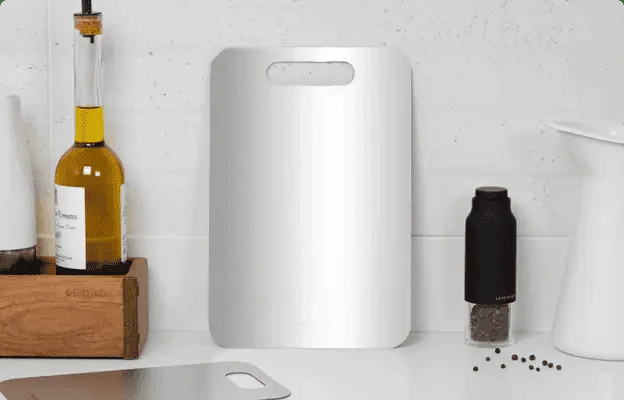
Which cutting board sheds no plastic?
Vanotium is a titanium cutting board with a non-porous surface that sheds no plastic, doesn't hold juices, stains or smells, is dishwasher-safe and resists scratches and warping. It needs no oiling. In October 2026 it was $66.66 for one board or $42.77 each in a four-pack, with a 30-day guarantee and tracked shipping in 5 to 7 days. Read our Vanotium review (4.6/5).

Another daily plastic source, gone
Vanotium titanium cutting board: no plastic to shed, non-porous, dishwasher-safe and built to last. From $42.77 per board in multi-packs, with a 30-day guarantee.
Check today's Vanotium price →Ships in 5–7 days with tracking · 30-day guarantee
Should you worry about microplastics in coffee?
Scientists are still working out what microplastics do in the body. The FDA says current evidence doesn't show that microplastics in food pose a risk to human health, while research continues. Many people still choose to reduce exposure where it's easy, especially when plastic meets heat, which is exactly the case with hot coffee. See microplastics health effects.
Does the same apply to tea?
Yes. Hot tea in paper cups, plastic tea bags and plastic infusers raise the same concerns. Loose-leaf tea in a stainless steel infuser or a glass teapot is the lowest-plastic option. See microplastics in tea bags.
What about iced coffee?
Cold drinks in plastic cups release fewer particles than hot drinks, because heat is a big driver of plastic breakdown. Still, plastic cups and straws add up. A glass or stainless steel tumbler with a metal or glass straw is an easy swap if iced coffee is your daily habit.
How do you make office coffee lower in plastic?
Many offices rely on pod machines and disposable cups. Keep your own ceramic mug at your desk, suggest a glass carafe drip machine or a French press for the team, and bring a stainless steel tumbler for coffee runs. If your office has a water cooler with plastic jugs, a filtered tap or a glass dispenser is a good alternative. Small changes at work can matter just as much as changes at home, since many people drink most of their coffee during the workday.
Do milk and creamers add plastic?
Milk and creamers are usually sold in plastic or plastic-lined cartons, and single-serve creamer cups are plastic too. Cold storage limits particle release compared with heat, but you can reduce packaging by choosing milk in glass bottles where available, buying larger containers instead of single-serve cups and frothing milk in a stainless steel pitcher rather than a plastic one.
Does the way coffee is packaged matter?
Most coffee bags are lined with plastic or foil to keep beans fresh, but beans are stored dry and at room temperature, which limits how much plastic transfers compared with hot liquids. If you want to reduce packaging, buy whole beans from a roaster that fills your own container, or transfer beans to an airtight glass or stainless steel canister at home, which also keeps them fresher. Grinding at home in a burr grinder with metal burrs avoids another layer of plastic contact, though many grinders have plastic hoppers; that's dry, room-temperature contact, so it's a lower priority than cups and kettles.
What does a simple low-plastic coffee routine look like?
- Fill a stainless steel or glass kettle with filtered water.
- Brew with a glass or ceramic pour-over, a glass and steel French press or a stainless moka pot.
- Drink from a ceramic or glass mug at home.
- Take coffee to go in a stainless steel or glass tumbler.
- Skip plastic lids and stirrers when buying coffee out.
None of these steps changes how your coffee tastes, and most of them make it taste better: stainless steel and glass don't hold old flavors the way plastic can.
Is cold brew lower in plastic?
Cold brew steeps at room temperature or in the fridge, so plastic in the brewer is exposed to far less heat than with hot brewing. Choose a glass jar or a glass and stainless cold brew maker anyway, and store the concentrate in glass.
The bottom line
Microplastics in coffee mostly come from plastic-lined cups, lids, pods and plastic brewing gear, especially with hot liquid. Drink from ceramic, glass or stainless steel, brew with glass or metal equipment, use filtered water and bring a reusable cup for takeout. Then apply the same idea to the rest of the kitchen, starting with your cutting board.
When you're ready to make the switch, Vanotium is our recommended titanium board. Check today's Vanotium price and multi-pack deals.
Sources
- Ranjan V.P. et al. Microplastics and other harmful substances released from disposable paper cups into hot water. Journal of Hazardous Materials, 2021.
- U.S. Food and Drug Administration. Microplastics and Nanoplastics in Foods.
- Yadav H. et al. Cutting Boards: An Overlooked Source of Microplastics in Human Food? Environmental Science & Technology, 2023.
Frequently asked questions
Is there microplastic in coffee?
Coffee can pick up microplastics from plastic-lined paper cups, plastic lids, pods, plastic brewers and kettles, and the water used to brew it.
Do paper coffee cups release microplastics?
A 2020 lab study found that the plastic lining of disposable paper cups released around 25,000 micron-sized particles into 100 mL of hot water over 15 minutes.
Are coffee pods full of plastic?
Many pods are plastic or plastic-lined and brewed under heat and pressure. Reusable stainless steel pods are a lower-plastic option.
What is the lowest-plastic way to make coffee?
Pour-over in glass or ceramic, a glass and steel French press or a stainless steel moka pot, using a stainless or glass kettle.
Is iced coffee in plastic cups a problem?
Cold drinks release fewer particles than hot ones, but glass or stainless tumblers avoid plastic altogether.
What other kitchen swap cuts microplastics?
Replacing plastic cutting boards. A titanium board like Vanotium sheds no plastic, from $42.77 per board in multi-packs.

Michelle Hert
Michelle is a home cook who cooks for a family every day and spends a lot of her free time reading the research behind the products that end up in our kitchens. She started Less Plastic Kitchen after the 2023 cutting board study made her look twice at the scratched plastic board on her own counter. Her guides are built on published studies, manufacturer specifications and verified buyer feedback, and she updates them when new information comes out. More about Michelle.