
- Prepare formula in a glass or stainless steel container, then pour it into the bottle once it has cooled.
- Rinse sterilized bottles with cooled boiled water.
- Don't microwave plastic bottles, and don't shake hot formula in them.
- Consider glass or stainless steel bottles.
- Replace plastic bottles that are scratched or cloudy.
Few things make parents worry like news about plastic in baby products. Babies are small, growing quickly and drink a lot of milk for their size, so it's natural to want to reduce anything unnecessary that reaches them. When a study reported that plastic baby bottles can release millions of microplastic particles during preparation, many parents started asking what they should change.
This guide explains what the research found, why heat matters, how to prepare formula and clean bottles with less plastic exposure while keeping them safe, how glass, stainless steel and plastic bottles compare, and other simple changes for the family kitchen. It's general information, not medical advice: your pediatrician is the best person to guide feeding decisions.
What did the baby bottle study find?
Researchers at Trinity College Dublin published a study in Nature Food in 2020 that tested polypropylene baby bottles, the most common type, under typical preparation conditions. They found that the bottles released microplastics during sterilizing and formula preparation, and that release increased sharply with higher water temperatures. The researchers estimated that infants could be exposed to large numbers of particles per day from bottle feeding, with variation between regions. They also tested practical changes and found that some preparation steps reduced release.
Why does heat matter so much?
Plastic softens at higher temperatures, and hot water speeds up the shedding of tiny particles from the inner surface of the bottle. Shaking hot liquid inside the bottle adds friction. In the study, bottles exposed to water at higher temperatures released many more particles than bottles used at lower temperatures. That's why most of the advice focuses on reducing how much hot water touches the plastic.
How can you prepare formula with less plastic?
- Follow safe formula guidance from your pediatrician and the formula label, including water temperature.
- Mix formula in a glass or stainless steel container instead of in the plastic bottle.
- Let it cool to the right feeding temperature in that container.
- Pour into the bottle once cool.
- Don't microwave formula or milk in plastic bottles; microwaves also heat unevenly and can create hot spots.
- Don't shake hot formula in a plastic bottle.
Never skip safety steps recommended for your baby. Some situations, like preparing formula for very young or premature babies, need specific temperatures for safety, so ask your pediatrician what's right for your family.
How should you clean and sterilize bottles?
- Clean bottles thoroughly after each feed, as your pediatrician recommends.
- After sterilizing with hot water or steam, the study suggested rinsing bottles with cooled, previously boiled water to wash away particles released during sterilizing.
- Let bottles air dry on a clean rack.
- Avoid harsh scrubbing that scratches the inside of plastic bottles.
How do glass, stainless steel and plastic bottles compare?
| Bottle | Pros | Cons |
|---|---|---|
| Glass | No plastic in the bottle; easy to see residue; doesn't hold smells | Heavier; can break (silicone sleeves help) |
| Stainless steel | Durable, unbreakable, no plastic in the bottle | Can't see the milk level; some have plastic parts |
| Polypropylene plastic | Light, cheap, widely available | Releases microplastics with heat; scratches and clouds |
| Silicone | Soft, unbreakable, squeezable | Less research on particle release |
Most bottles still have plastic or silicone nipples, rings and caps. That's normal; the biggest difference comes from avoiding hot liquids in plastic. See is silicone safe?
When should you replace a plastic bottle?
Replace plastic bottles that are scratched, cloudy, cracked or stained, or that have absorbed smells. Worn plastic is more likely to shed particles and harder to clean. Replace nipples according to the manufacturer's guidance, or sooner if they're torn, sticky or thinning.
Are microplastics harmful to babies?
Scientists don't yet know how microplastics affect infants. The FDA says current evidence does not demonstrate that levels found in foods pose a health risk, while research continues. The study's authors emphasized that parents shouldn't panic or stop feeding their babies, and that simple preparation changes can reduce exposure. See microplastics health effects.
What about breast milk storage?
If you pump, store breast milk according to your pediatrician's or lactation consultant's guidance. Glass bottles or containers are a good plastic-free option. When warming stored milk, place the container in a bowl of warm water instead of microwaving it, and avoid heating milk in plastic bags or bottles.
How do you reduce plastic when starting solids?
- Store homemade purées in small glass jars or stainless steel containers.
- Freeze portions in silicone trays, then transfer to glass jars.
- Warm food in a glass bowl, not in plastic.
- Use stainless steel or bamboo bowls and spoons.
- Prepare baby food on a cutting board that doesn't shed plastic.
See how to store food without plastic and glass vs plastic containers.
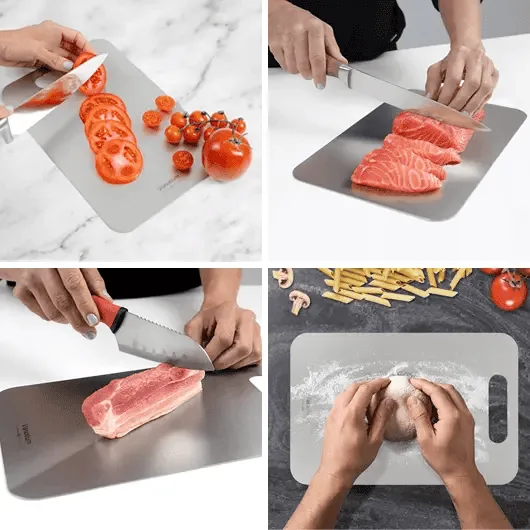
Why does the cutting board matter for families?
When babies start eating the same foods as the family, everything chopped in the kitchen ends up on their plate too. A 2023 study in Environmental Science & Technology found that chopping on plastic boards releases microplastics with every cut, and estimated that this could add up to tens of grams per person per year.
Vanotium is a titanium cutting board with a non-porous surface that sheds no plastic, doesn't hold juices or odors and goes in the dishwasher, which makes it easy to keep hygienic. It resists scratches and warping and is lightweight. In October 2026 it was $66.66 for one board, $116.66 for two or $42.77 each in a four-pack, with a 30-day guarantee and tracked shipping in 5–7 days. Read our Vanotium review (4.6/5).

A plastic-free board for family meals
Vanotium titanium cutting board: no plastic to shed, non-porous and dishwasher-safe. From $42.77 per board in multi-packs, with a 30-day guarantee.
Check today's Vanotium price →Ships in 5–7 days with tracking · 30-day guarantee
What about sippy cups and toddler dishes?
As babies grow, plastic sippy cups, plates and bowls often replace bottles. Stainless steel cups and plates are unbreakable, last for years and contain no plastic. Avoid putting hot food in plastic toddler dishes, and replace them when they become scratched. Melamine plates, which look like plastic, shouldn't be used in the microwave. See is melamine safe?
How do you manage bottle feeding on the go?
When you're out, it's tempting to mix formula with hot water directly in a plastic bottle. A simple alternative is to carry hot water in an insulated stainless steel flask and premeasured powder in a small stainless container, then mix in a stainless or glass cup and pour into the bottle once it has cooled to the right temperature. Always follow your pediatrician's advice about preparing formula away from home, since safe handling matters most.
Should parents feel guilty about plastic bottles?
No. Plastic bottles are used by millions of families, and feeding your baby is what matters. The point of the research isn't to scare parents but to show that a few simple steps, like mixing formula in glass and rinsing after sterilizing, can reduce exposure. Make the changes that are realistic for your family, one at a time.
What's a simple checklist for parents?
- Mix formula in glass or stainless steel, then pour into the bottle once cool.
- Rinse bottles with cooled boiled water after sterilizing.
- Don't microwave plastic bottles or shake hot formula in them.
- Replace scratched or cloudy bottles.
- Consider glass or stainless steel bottles.
- Store baby food and leftovers in glass.
- Prepare family meals on a plastic-free board.
For more ideas, see how to avoid microplastics in the kitchen and plastic-free kitchen swaps.
How do you choose a new bottle?
If you decide to switch, look for a bottle that fits your baby's feeding style and your routine. Glass bottles are easy to clean and inspect, and a silicone sleeve protects against drops and improves grip. Stainless steel bottles are unbreakable and great for older babies and travel, though you can't see the milk level. Check that the nipple flow suits your baby's age, that the bottle works with your sterilizer or dishwasher, and that replacement nipples are easy to find. Many parents keep a mix: glass at home and stainless steel for outings.
The bottom line
Polypropylene baby bottles can release microplastics, especially with hot water. You can reduce exposure by mixing formula in glass or stainless steel, letting it cool before pouring it into the bottle, rinsing bottles after sterilizing, avoiding the microwave and replacing worn bottles. Glass and stainless steel bottles are good alternatives. Always follow your pediatrician's advice on safe preparation, and reduce plastic in family meals too.
For a plastic-free family cutting board, our pick is Vanotium. Check today's Vanotium price and multi-pack deals.
Sources
- Li D. et al. Microplastic release from the degradation of polypropylene feeding bottles during infant formula preparation. Nature Food, 2020.
- U.S. Food and Drug Administration. Microplastics and Nanoplastics in Foods.
- Yadav H. et al. Cutting Boards: An Overlooked Source of Microplastics in Human Food? Environmental Science & Technology, 2023.
Frequently asked questions
Do plastic baby bottles release microplastics?
Yes. A 2020 Nature Food study found polypropylene bottles release microplastics, especially with hot water.
How can I reduce microplastics when making formula?
Mix formula in a glass or stainless steel container, let it cool, then pour it into the bottle. Follow your pediatrician's guidance.
Should I rinse bottles after sterilizing?
The study suggested rinsing with cooled, previously boiled water to wash away particles released during sterilizing.
Are glass baby bottles better?
Glass and stainless steel bottles avoid plastic in the bottle itself; glass is heavier and benefits from a silicone sleeve.
Can I microwave a plastic baby bottle?
It's best not to. Microwaving heats unevenly and heat increases microplastic release.
When should I replace plastic baby bottles?
When they're scratched, cloudy, cracked, stained or smell, and follow the maker's guidance for nipples.

Michelle Hert
Michelle is a home cook who cooks for a family every day and spends a lot of her free time reading the research behind the products that end up in our kitchens. She started Less Plastic Kitchen after the 2023 cutting board study made her look twice at the scratched plastic board on her own counter. Her guides are built on published studies, manufacturer specifications and verified buyer feedback, and she updates them when new information comes out. More about Michelle.