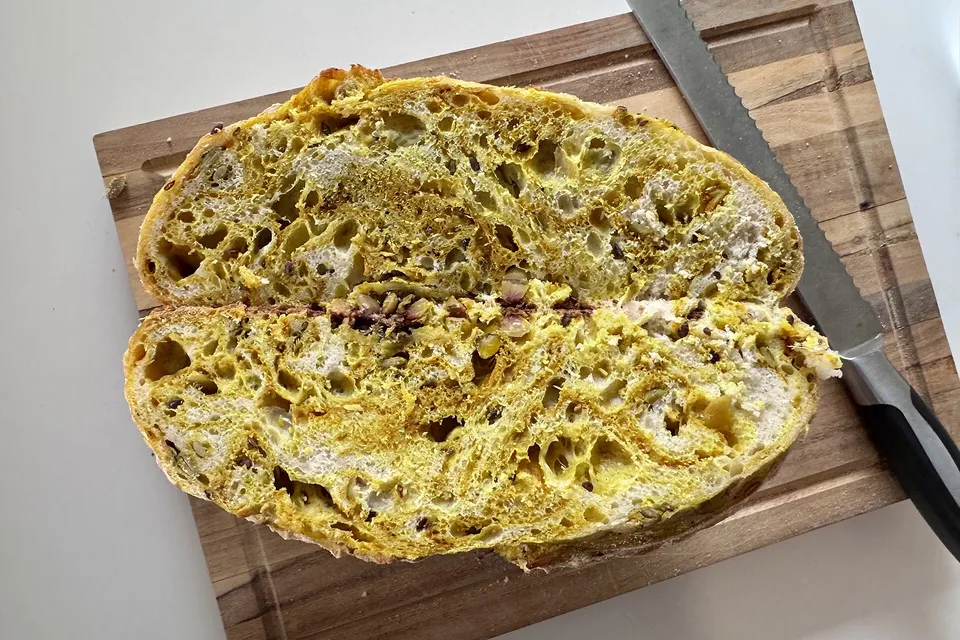
- Wood (maple, walnut, beech, olive): gentle on serrated knives, holds crusty loaves steady and looks great on the table.
- Crumb-catcher boards: slatted tops over a tray that collects crumbs.
- Size: at least 12 to 16 inches long for full loaves.
- Keep it dry: bread boards rarely need heavy washing; brush off crumbs and wipe.
Slicing a crusty sourdough or a warm baguette is one of the small pleasures of home cooking, but the wrong board makes it messy: crumbs everywhere, a board that slides, a knife that skids on a hard surface. Bread is a dry, low-risk food, so a bread board has different needs from a board for raw chicken. This guide explains which materials work best for bread, what size to choose, how to handle crumbs, how to care for a bread board and why it's worth keeping bread separate from raw meat prep.
Why have a separate bread board?
- Food safety: bread is eaten without cooking, so it should never touch a surface used for raw meat without thorough sanitizing.
- Flavor: bread can pick up onion, garlic or fish smells from a shared board.
- Crumbs: a dedicated board handles crumbs without mixing with other prep.
- Serving: a nice wooden board goes straight to the table.
The USDA recommends using one board for fresh produce and bread and a separate one for raw meat, poultry and seafood. See color-coded cutting boards.
Which materials work best for bread?
| Material | For bread | Notes |
|---|---|---|
| Hardwood (maple, walnut, beech) | Excellent | Gentle on knives, steady, attractive |
| Olive wood | Excellent | Beautiful grain, great for serving |
| Bamboo | Good | Hard and light; can be tough on knives |
| Titanium | Fine | Hygienic, but harder on serrated edges; better for meat and fish |
| Plastic | OK | Can shed microplastics; less attractive |
| Glass | Poor | Very hard on knives and slippery |
Why is wood the classic choice?
Wood has a slight give that's kind to bread knives and helps hold the loaf in place while you saw through a hard crust. Since bread is dry, wood stays clean with a simple brush and wipe, so the extra care wood normally needs for wet, raw foods isn't an issue. A good wooden bread board can last for decades. See how to care for a wood cutting board.
What about crumb-catcher boards?
Crumb-catcher boards have a slatted top over a tray. As you slice, crumbs fall through into the tray, which you empty into the trash or compost. They keep counters and tables much tidier, especially with crusty breads. Look for a tray that slides out easily and a top that sits firmly.
What size should a bread board be?
Choose a board at least as long as your typical loaf plus a few inches, often 12 to 16 inches long and 8 to 10 inches wide. Baguettes need a longer, narrower board. A board with a little extra space gives room for slices to fall without landing on the counter. See cutting board size guide.
Which knife works best?
A serrated bread knife with a long blade (about 8 to 10 inches) saws through crust without crushing the soft crumb. Use long, gentle strokes and let the teeth do the work. Serrated knives are hard to sharpen at home, so a softer wooden board helps them stay sharp longer.
How do you care for a bread board?
- Brush or shake off crumbs after each use.
- Wipe with a damp cloth; wash with warm soapy water only when needed.
- Dry upright, never soak or dishwash.
- Oil with food-safe mineral oil every month or two.
Can you cut warm bread on a wood board?
Yes. Many bakers let bread cool at least partly first, since cutting very hot bread can make the crumb gummy. Wood handles warmth well. Steam from very hot bread can leave a little moisture on the board, so let it dry before storing.
Can a bread board double as a serving board?
Absolutely. Wooden bread boards look great on the table with butter, olive oil or cheese. For cheese and charcuterie ideas, see best cheese board material.

The board for everything that isn't bread
Vanotium titanium cutting board: non-porous, dishwasher-safe and microplastic-free, ideal for raw meat, fish and strong foods. From $42.77 per board in a 4-pack, with a 30-day guarantee.
Check today's Vanotium price →Ships in 5–7 days with tracking · 30-day guarantee
What's a smart cutting board setup?
Many cooks keep a wooden board for bread, fruit and serving, and a non-porous, dishwasher-safe board for raw meat, fish, onions and garlic. That way the wood stays dry and clean, and the messy jobs go in the dishwasher. Vanotium is a titanium board that's non-porous, dishwasher-safe and sheds no plastic, with a 30-day money-back guarantee. Read our Vanotium review and titanium vs wood cutting board.
What's best for sourdough and crusty bread?
Crusty loaves need a board that holds still and a long serrated knife. A heavy hardwood board or a crumb catcher works best. Place the loaf on its side for round boules, or cut in half first and slice each half flat side down for more control.
What about soft sandwich bread?
Soft bread is easy on any board. A smaller wooden board near the toaster or bread box is handy. If you make sandwiches with deli meat, cheese and vegetables, a separate prep board keeps the bread board dry and crumb-free.
How do you remove butter or jam stains from a wood bread board?
Wipe with warm soapy water, rinse and dry. For greasy spots, a little baking soda paste helps. Re-oil once fully dry. Avoid soaking or putting the board in the dishwasher.
Where should you store a bread board?
Store it upright or hanging so air reaches both sides. Many people keep a bread board on the counter next to the bread box, ready to use. Keep it out of direct sun and away from the stove, which can dry and crack wood.
Is a bread board a good gift?
Yes. A beautiful wooden bread board, especially paired with a good bread knife or a fresh loaf, is a thoughtful gift for bakers. For cooks who want a plastic-free prep board, see gifts for home cooks and titanium cutting board as a gift.
Is a plastic board OK for bread?
It works, but plastic boards can shed tiny particles as the knife cuts into them, according to research in Environmental Science & Technology, and they're less attractive for serving. If you're reducing plastic in the kitchen, bread is an easy place to switch to wood. See wood vs plastic cutting board.
What mistakes should you avoid?
- Using the raw meat board for bread.
- Soaking or dishwashing a wood bread board.
- Cutting on glass with a serrated knife.
- Storing a damp board flat.
- Using a board that's too small for your loaves.
How thick should a bread board be?
About 3/4 inch to 1.5 inches is a good range. Thicker boards stay put and resist warping; thinner boards are lighter and easier to store. For serving at the table, a medium thickness looks substantial without being heavy.
Is a handle useful?
Boards with a handle or cut-out grip are easier to carry to the table and hang on a hook. Make sure the cutting area is still long enough for your loaves.
Should you choose edge-grain or end-grain wood?
End-grain boards are very gentle on knives and self-healing, but they're thicker, heavier and more expensive. Edge-grain boards are lighter and more affordable. For bread, either works well; edge grain is usually plenty.
Which oil should you use?
Food-grade mineral oil or a board cream (mineral oil with beeswax). Avoid cooking oils like olive or vegetable oil, which can go rancid and smell.
How do you keep crumbs off the counter without a crumb catcher?
Place the board on a clean tea towel; when you're done, gather the towel and shake crumbs into the compost or outside for the birds. A board with a slight lip or groove around the edge also keeps crumbs in. A quick brush with a small hand brush finishes the job.
Do you need a lot of boards?
No. Two or three boards cover most kitchens: one wooden board for bread and serving, one easy-to-sanitize board for raw meat and fish, and optionally one for produce.
What's a quick bread board checklist?
- Hardwood or olive wood surface.
- 12 to 16 inches long (longer for baguettes).
- Crumb catcher or a lip, if you like.
- Used only for bread, fruit and serving.
- Brushed, wiped and oiled regularly.
How much should a good bread board cost?
A solid hardwood bread board is usually affordable and lasts for many years with basic care. Crumb catchers and handcrafted olive wood boards cost more but make lovely gifts. Spending a little more on dense hardwood pays off in durability.
What's the takeaway?
Keep one good wooden board just for bread, and a separate easy-clean board for raw meat and fish.
The bottom line
For bread, a hardwood board is hard to beat: gentle on serrated knives, steady and beautiful. Choose one long enough for your loaves, consider a crumb catcher, brush it clean and keep it separate from raw meat prep.
For raw meat, fish and strong foods, our pick is Vanotium. Check today's Vanotium price and multi-pack deals.
Sources
- USDA FSIS. Cutting Boards and Food Safety.
- Yadav et al., 2023. Microplastics from cutting boards, Environmental Science & Technology.
Frequently asked questions
What is the best cutting board for bread?
A hardwood board like maple, walnut, beech or olive wood.
Do I need a separate board for bread?
Yes, keep it separate from raw meat for food safety and flavor.
What size should a bread board be?
About 12 to 16 inches long, longer for baguettes.
What is a crumb catcher board?
A slatted top over a tray that collects crumbs.
How do I clean a wooden bread board?
Brush off crumbs, wipe with a damp cloth and oil it occasionally.
Is a glass board good for bread?
No, it's slippery and very hard on serrated knives.

Michelle Hert
Michelle is a home cook who cooks for a family every day and spends a lot of her free time reading the research behind the products that end up in our kitchens. She started Less Plastic Kitchen after the 2023 cutting board study made her look twice at the scratched plastic board on her own counter. Her guides are built on published studies, manufacturer specifications and verified buyer feedback, and she updates them when new information comes out. More about Michelle.