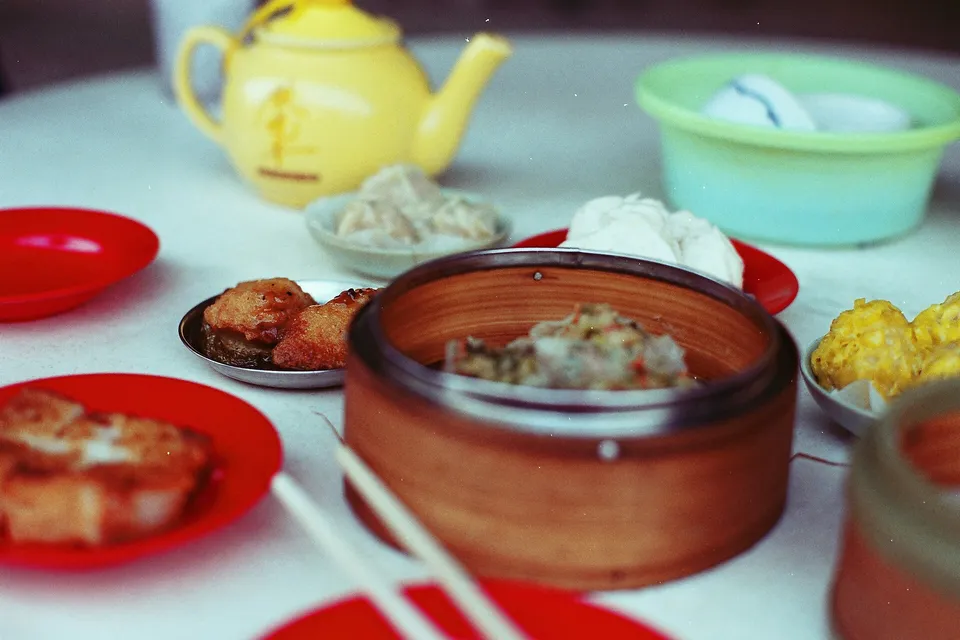
- Bamboo: affordable, renewable and attractive, but porous, hand-wash only, needs oiling, and most boards are glued strips that can crack or split over time.
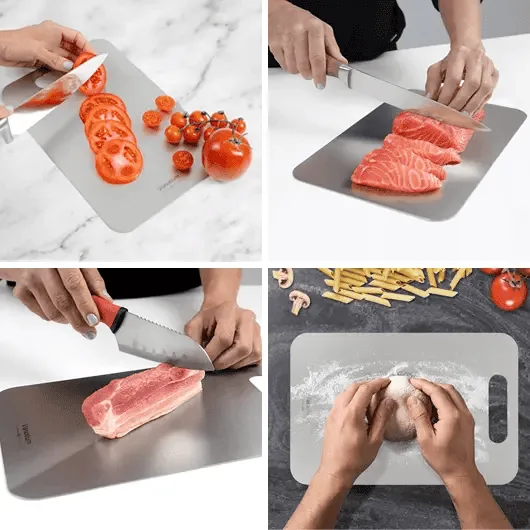
- Titanium: non-porous, dishwasher-safe, no oiling, doesn't hold odors or stains, won't warp or crack and sheds no plastic.
Bamboo cutting boards became popular as an eco-friendly alternative to plastic: bamboo grows fast, the boards are inexpensive and they look warm and natural on the counter. Titanium boards are newer, built around a different idea: a non-porous, plastic-free surface that's easy to clean and lasts for years with almost no care. If you're replacing a plastic board, both are on the shortlist.
This guide compares bamboo and titanium on hygiene, microplastics, glue, knife care, maintenance, durability, sustainability and price, and explains which board suits which job.
How do bamboo and titanium compare?
| Factor | Bamboo | Titanium |
|---|---|---|
| Plastic | None in the wood, but glue binds the strips | None |
| Porous? | Yes | No |
| Dishwasher | No, hand wash only | Yes |
| Maintenance | Regular oiling | None beyond washing |
| Odors and stains | Can absorb them | Resists them |
| Warping and cracking | Possible with water or heat | Warp-proof, won't crack |
| Knife feel | Hard; harder on knives than most wood | Firm; hone regularly |
| Price | Low | Higher upfront |
| Sustainability | Renewable plant | Durable, long-lasting metal |
Which is more hygienic?
Bamboo is denser than many woods, but it's still porous. Juices from raw meat and fish can soak into the surface and into knife marks, especially as the board ages and the finish wears. That's why bamboo needs careful hand washing, thorough drying and regular oiling. Titanium is non-porous: juices stay on the surface and wash away, and it can go straight into the dishwasher. The USDA Food Safety and Inspection Service advises cleaning boards thoroughly after raw meat and replacing boards with hard-to-clean grooves. For raw proteins, titanium is the easier board to keep truly clean. See the best cutting board for raw meat.
What about the glue in bamboo boards?
Bamboo stalks are hollow, so bamboo boards are made by slicing the stalks into thin strips and gluing them together under pressure. The type and quality of adhesive varies by manufacturer, and many boards don't specify what they use. As boards age, get wet repeatedly or go through heat, glue lines can weaken and strips can separate. If you choose bamboo, look for a brand that states it uses food-safe adhesive. Titanium boards have no glued layers to worry about. See bamboo cutting board pros and cons.
Which is easier on knives?
Bamboo is harder than most hardwoods, and the silica in bamboo fibers makes it relatively tough on knife edges compared with maple or walnut. Titanium is also firm, so with either board you'll want to hone your knife every week or two. Use a slicing motion, avoid hard chopping and keep cleavers for a dedicated block. See do titanium cutting boards dull knives?
How much care does each need?
Bamboo boards should be hand washed with warm, soapy water, dried immediately and stored upright. They need oiling with food-grade mineral oil or board cream regularly, especially when they start to look dry. Never soak them or put them in the dishwasher, which can warp and crack them. Titanium needs none of that: rinse it, wash it or put it in the dishwasher, and dry it to avoid water spots. See how to clean a titanium cutting board.
Which lasts longer?
A well-cared-for bamboo board can last a few years, but cracks, splits, warping and dark stains are common reasons people replace them. Titanium boards are designed to be scratch-resistant and warp-proof, and they won't crack, swell or absorb stains. Fine surface marks may appear with use, but the board stays flat, non-porous and hygienic for many years. See when to replace a cutting board.
Which is more sustainable?
Bamboo is a fast-growing, renewable plant, which is a real environmental plus. But a board that cracks and is replaced every couple of years creates waste too. Titanium is mined and processed, which has its own footprint, but a single titanium board can replace several bamboo or plastic boards over its lifetime. The most sustainable board is the one you'll keep using for the longest time.
Which handles odors and stains better?
Garlic, onions, fish, beets and turmeric can leave lingering smells and stains on bamboo, especially once the surface is scratched. Lemon and salt scrubs help, but they don't always fully remove them. Titanium's non-porous surface doesn't absorb odors or colors, so the next thing you cut, like fruit or bread, won't taste like last night's garlic.
Which board suits which job?
| Job | Better choice |
|---|---|
| Raw meat, poultry and fish | Titanium |
| Garlic, onions and strong flavors | Titanium |
| Bread and pastries | Bamboo or titanium |
| Serving cheese and snacks | Bamboo (warm look) or titanium |
| Daily low-maintenance prep | Titanium |
| Tight budget, light use | Bamboo |
Which titanium board do we recommend?
Vanotium is a titanium cutting board with a non-porous surface that sheds no plastic, doesn't hold juices, stains or odors, is waterproof and fast-drying, and goes in the dishwasher. It's designed to be scratch-resistant and warp-proof, heat-resistant enough to use as a trivet and lightweight. In October 2026 it cost $66.66 for one board, $116.66 for two or $42.77 each in a four-pack, with a 30-day guarantee and tracked shipping in 5–7 days. Read our Vanotium review (4.6/5).

No oiling, no cracking, no plastic
Vanotium titanium cutting board: non-porous, dishwasher-safe and odor-resistant. From $42.77 per board in multi-packs, with a 30-day guarantee.
Check today's Vanotium price →Ships in 5–7 days with tracking · 30-day guarantee
Do either of them shed microplastics?
Neither sheds plastic like a polyethylene board. A 2023 study in Environmental Science & Technology estimated that plastic boards can release tens of grams of microplastics per person per year, so switching to either bamboo or titanium removes that source. With bamboo, the open question is the adhesive between strips; with titanium, there's no plastic or glue at all. See plastic boards and microplastics.
How does the cost compare over time?
Bamboo boards are inexpensive, but if you replace one every year or two, the cost adds up, along with oil and the time spent maintaining them. A titanium board costs more upfront but is built to last for years with nothing but washing. In multi-packs, Vanotium drops to $42.77 per board. See are titanium cutting boards worth it?
Can you use both?
Yes, and many cooks do: a bamboo or wood board for bread and serving, and a titanium board for raw meat, fish and everyday chopping. Using different materials also makes it easy to keep raw proteins and ready-to-eat foods on separate boards. See color-coded cutting boards.
How do you keep a bamboo board in good shape if you have one?
- Hand wash right after use with warm, soapy water.
- Dry immediately and store upright.
- Oil monthly, or whenever it looks dry.
- Never soak it or put it in the dishwasher.
- Retire it when it cracks, splits or stays stained.
Which bamboo myths should you know about?
- "Bamboo is antibacterial." Bamboo fibers have some natural properties, but a bamboo board still needs thorough cleaning, especially after raw meat.
- "Bamboo is a wood." It's actually a grass, which is why boards are made from glued strips.
- "Bamboo is gentle on knives." It's harder than most wood and contains silica, so it's tougher on edges than maple or walnut.
Which looks better on the counter?
Bamboo has a warm, natural look that many people love, especially for serving bread, cheese and snacks at the table. Titanium has a clean, modern, brushed-metal look that suits contemporary kitchens. If looks matter to you, keep a bamboo or wood board for the table and use titanium for the messy work behind the scenes.
Which is lighter?
Bamboo boards are fairly light for their size, but thick ones get heavy. Titanium boards are thin and light, which makes them easy to lift to the sink, load into the dishwasher and store in a drawer.
Why do bamboo boards warp?
Warping happens when one side of the board absorbs more moisture than the other, for example after soaking, a dishwasher cycle or drying flat. The fibers swell unevenly and the board cups or twists. Glue lines can also weaken. Drying bamboo upright and oiling it regularly reduce warping. Titanium doesn't absorb water, so it can't warp this way.
Is bamboo safe for raw chicken?
It can be, with careful hand washing in hot, soapy water, thorough drying and replacing the board once it's deeply scratched. Many cooks prefer a non-porous, dishwasher-safe board for raw poultry because it's simpler to get completely clean.
Which makes a better gift?
Bamboo is a nice small gift; a titanium board is a longer-lasting upgrade most cooks don't buy themselves.
The bottom line
Bamboo is an affordable, renewable board that looks great for bread and serving, but it's porous, needs oiling and hand washing, and glued strips can crack over time. Titanium is non-porous, dishwasher-safe, odor-resistant and built to last for years with almost no care. For raw meat, fish and everyday prep, titanium is the better board.
Ready for an upgrade? We recommend Vanotium. Check today's Vanotium price and multi-pack deals.
Sources
- USDA Food Safety and Inspection Service. Cutting Boards and Food Safety.
- Yadav H. et al. Cutting Boards: An Overlooked Source of Microplastics in Human Food? Environmental Science & Technology, 2023.
Frequently asked questions
Is titanium better than bamboo?
For hygiene, cleaning and lifespan, yes. Bamboo is lighter on the wallet but can crack and needs oiling.
Is bamboo a good cutting board?
It's affordable and renewable, but it's hard, uses glues and can split over time.
Can bamboo go in the dishwasher?
No. Heat and water make bamboo crack and warp. Titanium is dishwasher-safe.
Do bamboo boards contain glue?
Most are made of strips glued together, so the adhesive matters.
Which is easier on knives?
Both are firm surfaces. Hardwood is gentlest; hone your knife regularly on either.
Which lasts longer?
Titanium, because it doesn't crack, warp or split.

Michelle Hert
Michelle is a home cook who cooks for a family every day and spends a lot of her free time reading the research behind the products that end up in our kitchens. She started Less Plastic Kitchen after the 2023 cutting board study made her look twice at the scratched plastic board on her own counter. Her guides are built on published studies, manufacturer specifications and verified buyer feedback, and she updates them when new information comes out. More about Michelle.