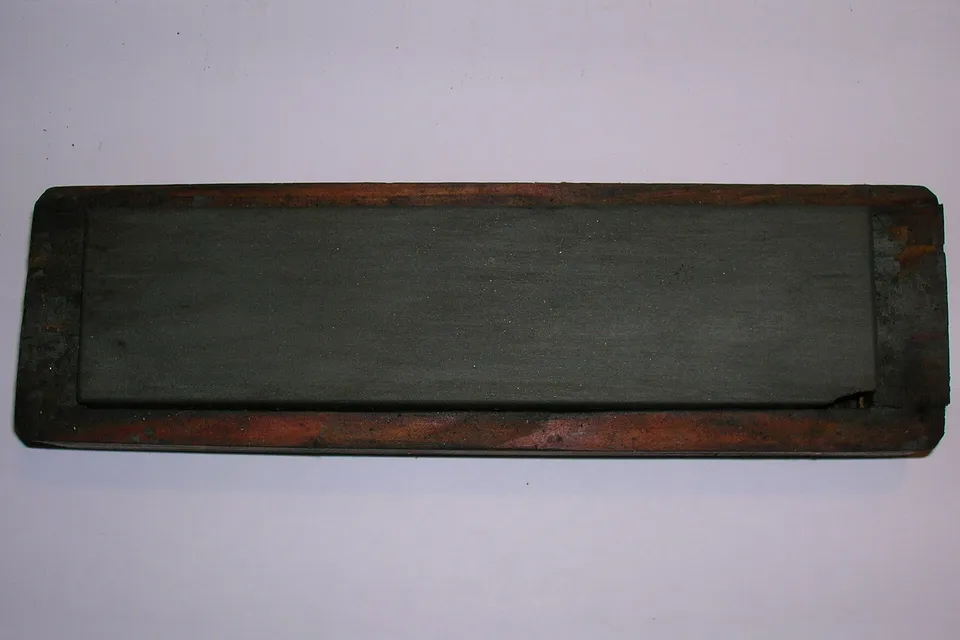
- 12 to 15 degrees per side: Japanese-style chef knives, santokus and slicers. Very sharp, needs gentle use.
- 17 to 20 degrees per side: most Western and German chef knives. A good balance of sharpness and durability.
- 20 to 25 degrees per side: heavy-duty knives, cleavers and outdoor knives that take abuse.
- Match the existing angle when you can. Re-grinding to a new angle takes much longer.
- Consistency matters more than the exact number: holding the same angle on every stroke is what gives a sharp edge.
Anyone who has tried to sharpen a knife has run into the same question: what angle should I hold it at? Sharpening guides throw around numbers like 15, 17, 20 and "inclusive" angles of 30 or 40 degrees, and electric sharpeners come with fixed slots that may or may not match your knife. Getting the angle roughly right is the difference between an edge that glides through tomatoes and one that crushes them, and between an edge that lasts months and one that rolls in a week. This guide explains what the sharpening angle means, which angle suits which knife, how to find your knife's current angle, how to hold a steady angle on a whetstone, honing versus sharpening and the most common mistakes.
In this guide:
- what "sharpening angle" means
- angles by knife type
- how to find your knife's angle
- holding the angle on a whetstone
- honing, pull-through and electric sharpeners
- common mistakes
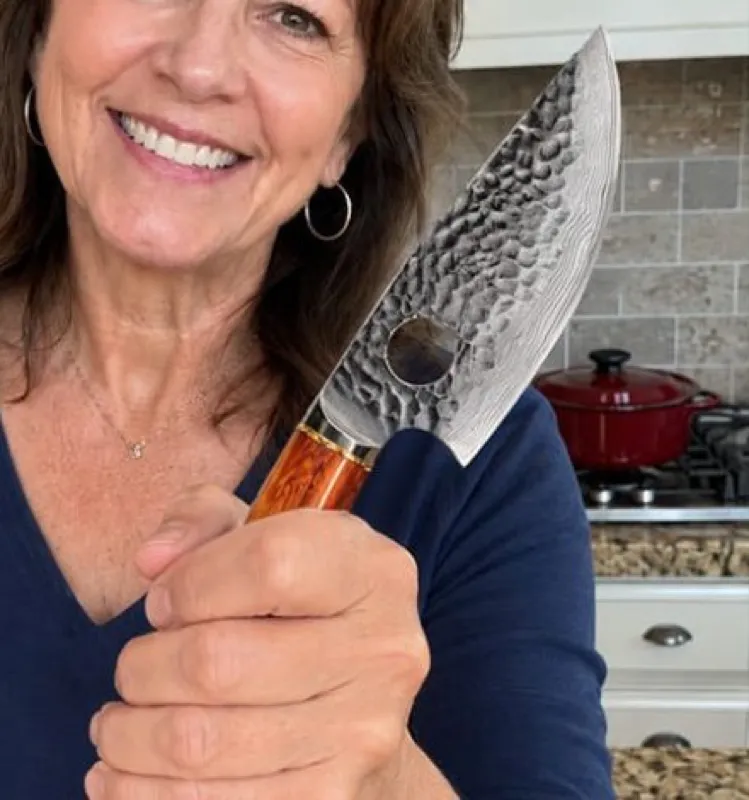
Pair it with: the Matsato Osuren chef knife
Hammered Japanese-style steel blade with a 12° edge, a finger hole for control and a pakka and acacia wood handle. $29.95 for one, or $19.98 each in the 4-pack.
Check today's Matsato price →60-day money-back guarantee · free recipe book with your order
What does knife sharpening angle mean?
The sharpening angle is the angle between the blade and the stone (or sharpener) on one side of the edge. Most kitchen knives are sharpened on both sides, so a knife sharpened at 15 degrees per side has an inclusive angle of 30 degrees. When a guide says "15 degrees," it almost always means per side. When it says "30 degrees," it often means the total.
| Per side | Inclusive (total) | Feel |
|---|---|---|
| 12° | 24° | Very sharp, delicate |
| 15° | 30° | Sharp, common for Japanese-style knives |
| 17–18° | 34–36° | Sharp and durable middle ground |
| 20° | 40° | Durable, classic Western edge |
| 25° | 50° | Very tough, less sharp |
Why does a lower angle cut better but dull faster?
A lower angle makes a thinner edge, which slices with less force. But thin metal at the very edge is also weaker, so it can roll or chip if it hits bone, frozen food or a hard cutting surface. A higher angle leaves more steel behind the edge, which lasts longer but needs more pressure to cut. Harder steel can hold a lower angle better than softer steel, which is one reason Japanese-style knives often use lower angles.
What angle should you use for each knife?
| Knife | Typical angle per side |
|---|---|
| Japanese-style chef knife (gyuto) | 12–15° |
| Santoku | 12–15° |
| Western/German chef knife | 17–20° |
| Paring knife | 15–20° |
| Boning and fillet knife | 15–20° |
| Bread knife (serrated) | Follow the bevel; usually sharpened with a rod |
| Cleaver | 20–25° |
| Pocket and outdoor knives | 20–25° |
If the manufacturer lists an angle, use it. If not, the table is a reasonable starting point. Read more about the two main knife styles in Japanese vs German chef knives and chef knife vs santoku.
How do you find your knife's current angle?
- Check the manufacturer's information on the box or website.
- Use the marker trick: color the edge bevel with a permanent marker, make a couple of light strokes on the stone and look. If the ink is removed evenly across the bevel, you're at the right angle. If only the top is removed, lower the angle; if only the very edge, raise it.
- Use an angle guide: inexpensive clip-on guides or a smartphone angle app can help you set the angle the first few times.
Pair it with: the Matsato Osuren chef knife
Hammered Japanese-style steel blade with a 12° edge, a finger hole for control and a pakka and acacia wood handle. $29.95 for one, or $19.98 each in the 4-pack.
Check today's Matsato price →60-day money-back guarantee · free recipe book with your order
How do you hold a steady angle on a whetstone?
- Soak or wet the stone as its instructions say, and set it on a damp towel so it doesn't slide.
- Find the angle: hold the knife at 90 degrees to the stone, halve it to 45, halve again to about 22, then lower slightly for 15 to 17. Or stack two coins under the spine as a guide.
- Lock your wrist and move from the shoulder, so the angle doesn't rock.
- Use light, even pressure with your fingertips spread along the blade.
- Sweep the whole edge, from heel to tip, so the curve near the tip gets the same angle.
- Count strokes and do the same number on each side.
- Feel for a burr, a tiny lip on the opposite side, which tells you that side is done.
- Finish on a finer grit and remove the burr with a few light alternating strokes.
For a full walkthrough, see how to sharpen a chef knife.
What's the coin trick for 15 degrees?
On a typical chef knife with a blade around 1.5 to 2 inches tall, raising the spine about the thickness of two stacked US quarters gives roughly 15 degrees. Three or four coins gets closer to 20. It's an approximation, since blade height changes the angle, but it's a handy way to build muscle memory.
Do pull-through and electric sharpeners use the right angle?
| Tool | Angle | Notes |
|---|---|---|
| Whetstone | Any angle you hold | Most control; takes practice |
| Guided sharpening system | Set precisely | Very consistent; slower to set up |
| Pull-through sharpener | Fixed, often 15 or 20° | Quick, but can remove more metal; match it to your knife |
| Electric sharpener | Fixed slots | Fast; choose a model with the right angle for Japanese knives |
| Honing steel or ceramic rod | Same as the edge | Realigns the edge between sharpenings |
Using a 20-degree pull-through on a 12- or 15-degree Japanese-style knife will slowly change the edge to 20 degrees, which makes it feel less sharp.
What's the difference between honing and sharpening?
Honing straightens a rolled edge without removing much metal. Do it often, even before each use, with a honing rod held at the same angle as the edge. Sharpening grinds new metal to make a fresh edge. Most home cooks need to sharpen only a few times a year if they hone regularly. For Japanese-style knives, a ceramic rod is gentler than a ridged steel.
Can you change a knife's angle?
Yes, but it takes time. Lowering the angle means grinding away a lot of metal to create a new bevel, usually on a coarse stone. Raising the angle is quicker. For most people, it's easiest to keep the factory angle. If you want a more durable edge on a thin knife, some sharpeners add a slightly higher "micro-bevel" right at the very edge.
What are the most common angle mistakes?
- Rocking the wrist, which rounds the edge
- Lifting the handle at the tip, which makes the tip duller or rounder
- Pressing too hard, which makes the angle drift
- Different angles on each side, which makes the knife steer while cutting
- Using the wrong fixed-angle sharpener for the knife
- Skipping the burr: if you don't raise a burr, the edge isn't fully sharpened
Does your cutting board affect the edge?
Yes. Glass, stone and ceramic boards dull edges very quickly. Wood and softer surfaces are gentler. Titanium boards are harder than wood, so many cooks keep a wood board for heavy prep and use a titanium board for raw meat, fish and quick jobs. More in do titanium cutting boards dull knives? and the best knife for a titanium cutting board.
How do you test the edge after sharpening?
- Paper test: slice a sheet of printer paper; a sharp edge glides without tearing.
- Tomato test: the edge should bite into the skin without pressing.
- Light test: look straight down at the edge under a lamp; a dull or rolled edge reflects light as a thin bright line.
How do you keep the edge longer?
- hone regularly at the same angle
- wash by hand and dry right away; avoid the dishwasher
- don't scrape food across the board with the edge; use the spine
- store in a block, on a magnetic strip or in a sheath
- use the right knife for bones and frozen food
See how to hold a chef knife for a grip that protects the edge, and Matsato Osuren knife care for care tips specific to hammered blades.
Where does the Matsato Osuren fit in?
The Matsato Osuren is a Japanese-style chef knife with a hammered blade, a 12° edge, a finger hole for control and a pakka and acacia wood handle. Because its edge is thin, sharpen and hone it at a low angle with a whetstone or ceramic rod rather than a 20° pull-through. It's $29.95 for one, or $19.98 each in the 4-pack, with a 60-day money-back guarantee. Read our Matsato Osuren review.
How do you sharpen safely?
Keep your fingers behind the edge, work slowly, and keep the stone stable on a towel or holder. Wipe the blade from spine to edge, never along the edge. Wash metal filings off the knife before using it on food, and keep children and pets away while you sharpen.
Does the type of steel change the best angle?
Yes. Harder steels, common in Japanese-style knives, can hold a thinner, lower-angle edge without rolling. Softer stainless steels, common in many Western knives, do better with a slightly higher angle because a thin edge would bend quickly. If you're not sure what steel your knife uses, start at the factory angle and watch how the edge behaves. If it rolls or chips often, raise the angle by a degree or two; if it feels dull too soon even with honing, the steel may simply need more frequent touch-ups. Wikipedia's overview of sharpening explains how edge geometry and abrasives work together.
Which whetstone grits do you need?
| Grit | Use |
|---|---|
| 200–600 (coarse) | Repairing chips or changing the angle |
| 800–1,500 (medium) | Regular sharpening of a dull edge |
| 3,000–6,000 (fine) | Refining and polishing the edge |
| 8,000+ (very fine) | Mirror polish; optional for home cooks |
A combination stone of about 1,000 and 6,000 grit covers most home kitchens. Keep the same angle as you move from one grit to the next, or the finer stone won't reach the edge you created. Learn more about sharpening stones and their types.
The bottom line
Knife sharpening angles:
- 12 to 15 degrees per side for Japanese-style knives and santokus
- 17 to 20 degrees for most Western chef knives
- 20 to 25 degrees for cleavers and heavy-duty knives
- match the existing angle and keep it consistent on both sides
- hone often, sharpen a few times a year and protect the edge with a gentle board
The Matsato Osuren comes with a 12° edge, $29.95 or $19.98 each in the 4-pack, with a 60-day money-back guarantee.
Pair it with: the Matsato Osuren chef knife
Hammered Japanese-style steel blade with a 12° edge, a finger hole for control and a pakka and acacia wood handle. $29.95 for one, or $19.98 each in the 4-pack.
Check today's Matsato price →60-day money-back guarantee · free recipe book with your order
Frequently asked questions
What angle should I sharpen my kitchen knife?
About 12 to 15 degrees per side for Japanese-style knives and 17 to 20 degrees per side for most Western chef knives.
Is 15 or 20 degrees better?
15 degrees is sharper but more delicate; 20 degrees is more durable but needs more force. Match the knife's existing angle.
What does inclusive angle mean?
It's the total angle of both sides. A knife sharpened at 15 degrees per side has a 30-degree inclusive angle.
How do I know what angle my knife is?
Check the maker's information, or color the bevel with a marker and see where a few light strokes remove the ink.
Can I use a pull-through sharpener on a Japanese knife?
Only one with a matching low angle. A 20-degree slot will slowly change a 15-degree edge.
How often should I sharpen my knife?
Most home cooks sharpen a few times a year and hone regularly between sharpenings.

Michelle Hert
Michelle is a home cook who cooks for a family every day and spends a lot of her free time reading the research behind the products that end up in our kitchens. She started Less Plastic Kitchen after the 2023 cutting board study made her look twice at the scratched plastic board on her own counter. Her guides are built on published studies, manufacturer specifications and verified buyer feedback, and she updates them when new information comes out. More about Michelle.