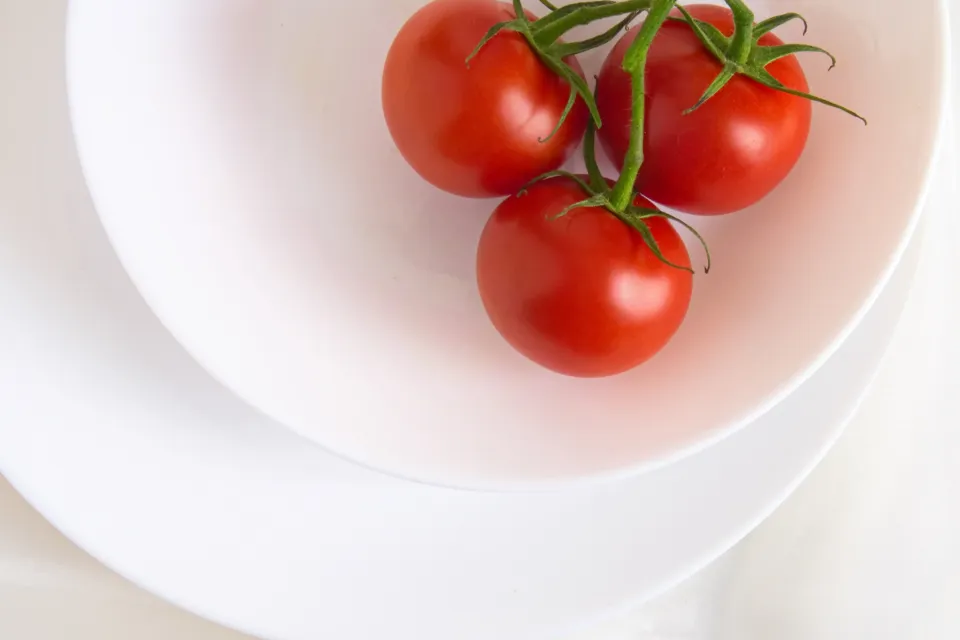
- Wash right before eating or cooking, not before storing.
- Wash your hands and remove stems and leaves.
- Rinse under cool running water, gently rubbing the skin with your fingers.
- Pay attention to the stem scar, where dirt can collect.
- Dry with a clean towel before cutting.
- Cut away bruises or soft spots.
Tomatoes look clean and shiny, so many people slice them straight from the bag. But tomatoes are handled by many people between the field and your kitchen, and their smooth skin can carry soil, dust, residues and germs from hands and surfaces. Because they're often eaten raw in salads, sandwiches and salsa, washing them properly is a small habit that matters. This guide explains the best way to wash tomatoes, how to handle cherry tomatoes and tomatoes on the vine, whether to use vinegar or baking soda, what about pesticide residue and wax, how to store tomatoes so they stay fresh and the mistakes that make them spoil faster.
In this guide:
- why tomatoes need washing
- step-by-step washing
- cherry, grape and vine tomatoes
- vinegar, baking soda and produce washes
- pesticides and wax
- storage and mistakes
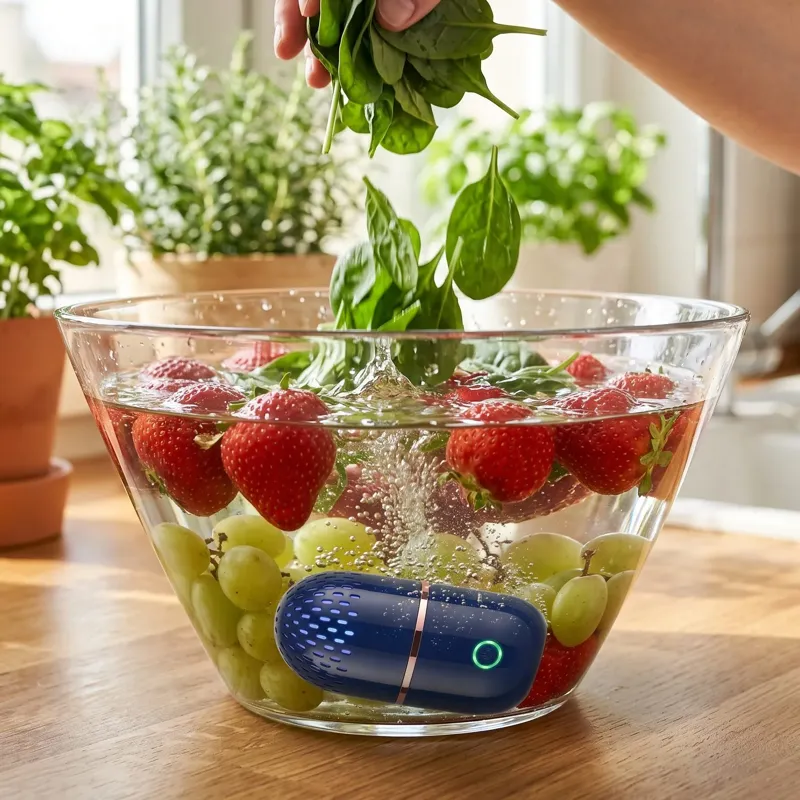
Our pick for washing produce: PodBloom
A wireless, IPX7-waterproof purifier that sits in a bowl of water and runs a 10-minute electrolysis cycle for fruit and vegetables. No soap, no refills. $59.95, or $35.98 each in the 3-pack.
Check today's PodBloom price →30-day money-back guarantee · wireless charging base included
Why should you wash tomatoes?
- they're handled at farms, packing houses and stores
- soil and dust can stick to the skin and stem area
- shoppers touch them at the store
- they're usually eaten raw, without cooking to kill germs
- cutting an unwashed tomato can carry dirt from the skin into the flesh
The FDA recommends washing all produce under running water before eating, cutting or cooking. Its 7 tips for cleaning fruits and vegetables cover the basics.
How do you wash tomatoes step by step?
- Wash your hands with soap and water for 20 seconds.
- Remove stems and leaves; they can hold dirt.
- Hold each tomato under cool running water. Water slightly warmer than the tomato is also fine; avoid very cold water on warm tomatoes.
- Rub the skin gently with your fingers. Tomatoes bruise easily, so no brushes.
- Clean around the stem scar, the small dip at the top.
- Pat dry with a clean towel or paper towel.
- Cut away bruised, cracked or soft spots.
- Use a clean cutting board and knife.
How do you wash cherry and grape tomatoes?
Put them in a colander and rinse under cool running water, rolling them gently with your hand so all sides are rinsed. Remove any stems, split ones or moldy ones. Spread them on a towel to dry. If they came in a plastic clamshell, wash them in a colander rather than inside the box. You can also soak them for a few minutes in a bowl of clean water, then rinse. See how to wash grapes for a similar small-fruit method.
What about tomatoes on the vine?
Keep vine tomatoes on the stem until you use them; they often last longer that way. When ready, pull them off and wash each tomato. The vine itself is not usually eaten, so you don't need to wash it, but don't let the stems drip into salads.
Our pick for washing produce: PodBloom
A wireless, IPX7-waterproof purifier that sits in a bowl of water and runs a 10-minute electrolysis cycle for fruit and vegetables. No soap, no refills. $59.95, or $35.98 each in the 3-pack.
Check today's PodBloom price →30-day money-back guarantee · wireless charging base included
Should you wash tomatoes with vinegar or baking soda?
| Method | What it does | Notes |
|---|---|---|
| Running water + rubbing | Removes dirt and many germs | The method the FDA recommends |
| Baking soda soak | May help remove some surface residues | Rinse well afterward |
| Vinegar soak | Popular, but adds little beyond water for most produce | Can leave a taste; rinse well |
| Soap or detergent | Not recommended | Can soak into produce and cause stomach upset |
| Commercial produce wash | Varies | Not required; rinse well |
More detail: do produce washes work? and PodBloom vs a vinegar soak.
Do tomatoes have pesticide residues?
Conventionally grown tomatoes can carry small amounts of pesticide residues. Regulators set limits on these, and washing under running water with rubbing removes some surface residue, though not residues inside the fruit. Buying organic, choosing local tomatoes in season or growing your own are options if you want to reduce exposure. Learn more in how to wash pesticides off produce.
Are tomatoes waxed?
Some tomatoes sold in stores may have a thin food-grade coating to keep moisture in, though it's less common than on apples or citrus. These coatings are approved for food use. Rinsing and rubbing under warm-ish water is enough. If you prefer, peel tomatoes for sauces by blanching them briefly in boiling water and slipping off the skins.
Should you wash tomatoes before storing them?
No. Wash tomatoes right before you use them. Moisture on the skin while stored can encourage mold and make them spoil faster. If you do wash them early, dry them completely before storing.
How should you store tomatoes?
- keep whole, ripe tomatoes at room temperature, out of direct sun, stem side down
- refrigerate only very ripe tomatoes you can't use in a day or two, and bring them to room temperature before eating for better flavor
- store cut tomatoes covered in the fridge and use within a couple of days
- keep them away from raw meat and its juices
- use glass containers rather than plastic wrap for cut tomatoes
More ideas in how to store food without plastic.
What about cutting tomatoes safely?
A sharp knife slices tomato skin cleanly without crushing the fruit. Use a clean board that you haven't just used for raw meat, or wash it first with hot, soapy water. A dull knife slips on tomato skin and is a common cause of kitchen cuts. See the best cutting board for vegetables and how to sharpen a chef knife.
How do you wash garden tomatoes?
Garden tomatoes often have more soil, especially if they touched the ground. Brush off loose dirt outdoors, rinse well under running water and check for insects or holes. Cracked tomatoes should be used quickly or cooked. Discard any with mold.
What mistakes should you avoid?
- washing before storing
- using soap, detergent or bleach
- scrubbing with a stiff brush, which bruises the skin
- soaking cut tomatoes, which washes out flavor
- cutting on a board used for raw meat without washing it
- keeping ripe tomatoes in a sealed plastic bag
Where does PodBloom fit in?
For cherry tomatoes and mixed produce, a quick soak before rinsing can be convenient. PodBloom is a wireless, IPX7-waterproof purifier that sits in a bowl of water and runs a 10-minute electrolysis cycle for fruit and vegetables. There's no soap or refills. Afterward, rinse and dry the tomatoes as usual. It's $59.95, or $35.98 each in the 3-pack, with a 30-day money-back guarantee. Read our PodBloom review.
How can kids help wash tomatoes?
Washing cherry tomatoes is a great first kitchen job for children. Show them how to rinse in a colander and roll the tomatoes gently, then pat them dry on a towel. It teaches good hygiene and gets them interested in eating vegetables.
How do you avoid cross-contamination with tomatoes?
Raw tomatoes often end up next to raw meat on the counter, especially when making burgers, tacos or sandwiches. Keep them apart: cut tomatoes first on a clean board, or use a separate board for raw meat. Wash hands, knives and boards with hot, soapy water after touching raw meat, poultry or seafood. The USDA explains how to keep cutting boards safe and when to replace them. Store cut tomatoes above raw meat in the fridge, never below, so juices can't drip onto them. See the best cutting board for raw meat and color-coded cutting boards.
How do you prep tomatoes for salsa and salads?
- Wash and dry the tomatoes as above.
- Core them with a small knife, removing the hard stem area.
- For salsa, scoop out some seeds and juice so it isn't watery.
- Dice with a sharp knife on a clean board.
- Salt diced tomatoes lightly and let them drain in a sieve for a few minutes for fresher, less watery salads.
- Keep finished salsa covered in the fridge and eat it within a few days.
Do you need to wash tomatoes for sauce?
Yes. Even if you'll cook them, washing removes soil and residue from the skin before you cut, and cooking doesn't fix dirt. For sauces, many cooks blanch washed tomatoes in boiling water for 30 to 60 seconds, then move them to ice water and slip off the skins. If you use canned tomatoes instead, see microplastics in canned food for what to know about can linings.
What about tomatoes at the store salad bar?
Pre-cut tomatoes at salad bars and in grab-and-go containers are convenient but should be kept cold and eaten quickly. At home, keep them refrigerated, check the date and discard any that smell sour or look slimy. The FDA's guide to selecting and serving produce safely recommends choosing cut produce that is refrigerated or surrounded by ice.
How do you wash heirloom and large tomatoes?
Heirloom and beefsteak tomatoes often have deep folds, cracks near the stem and thin skins that bruise easily. Hold each one under gentle running water, letting the water run into the folds, and rub lightly with your fingertips. Turn it upside down so water drains from the stem area. Pat dry and cut out any cracked, scarred or soft spots, which spoil first. Because large tomatoes are often sliced for sandwiches and burgers, use them within a day or two of cutting.
The bottom line
To wash tomatoes:
- wash just before eating or cooking, not before storing
- rinse under cool running water while rubbing gently with your fingers
- clean around the stem scar and dry before cutting
- skip soap and bleach; vinegar and baking soda are optional
- store whole tomatoes at room temperature and cut ones in the fridge
PodBloom runs a 10-minute soak cycle in a bowl of water, $59.95 or $35.98 each in the 3-pack, with a 30-day money-back guarantee.
Our pick for washing produce: PodBloom
A wireless, IPX7-waterproof purifier that sits in a bowl of water and runs a 10-minute electrolysis cycle for fruit and vegetables. No soap, no refills. $59.95, or $35.98 each in the 3-pack.
Check today's PodBloom price →30-day money-back guarantee · wireless charging base included
Frequently asked questions
Should you wash tomatoes before eating?
Yes. Rinse them under cool running water and rub gently with your fingers right before eating, cutting or cooking.
Should you wash tomatoes with soap?
No. Soap and detergent can soak into produce. Running water and gentle rubbing are recommended.
Does vinegar clean tomatoes better?
A vinegar soak adds little beyond water for most produce and can leave a taste. Rinse well if you use it.
How do you wash cherry tomatoes?
Rinse them in a colander under running water, rolling them gently, then spread them on a towel to dry.
Should you wash tomatoes before storing them?
No. Moisture during storage encourages mold. Wash right before use.
Should tomatoes be refrigerated?
Keep whole ripe tomatoes at room temperature. Refrigerate only very ripe or cut tomatoes.

Michelle Hert
Michelle is a home cook who cooks for a family every day and spends a lot of her free time reading the research behind the products that end up in our kitchens. She started Less Plastic Kitchen after the 2023 cutting board study made her look twice at the scratched plastic board on her own counter. Her guides are built on published studies, manufacturer specifications and verified buyer feedback, and she updates them when new information comes out. More about Michelle.